On 6/2, Associate Professor Doctor Nguyen Quang Bac, Head of the Infectious Obstetrics Department, stated that this was a complex case due to the patient's young age and developing reproductive organs. The biggest challenge for the doctors was to completely remove the tumor, manage the infection, and simultaneously preserve the ovary and uterus as much as possible to ensure the child's future ability to become a mother.
The patient was transferred from Thai Binh to Central Obstetrics and Gynecology Hospital in critical condition, suffering from a high fever of 39 degrees Celsius, severe abdominal pain, distended abdomen, and exhaustion. Tests revealed signs of a serious infection. Two days prior, the family had taken the child to a private clinic after noticing her abdominal pain. There, the clinic doctor diagnosed an ovarian tumor and performed an aspiration, drawing about 100 ml of fluid. However, following this procedure, the patient's health did not improve but deteriorated rapidly.
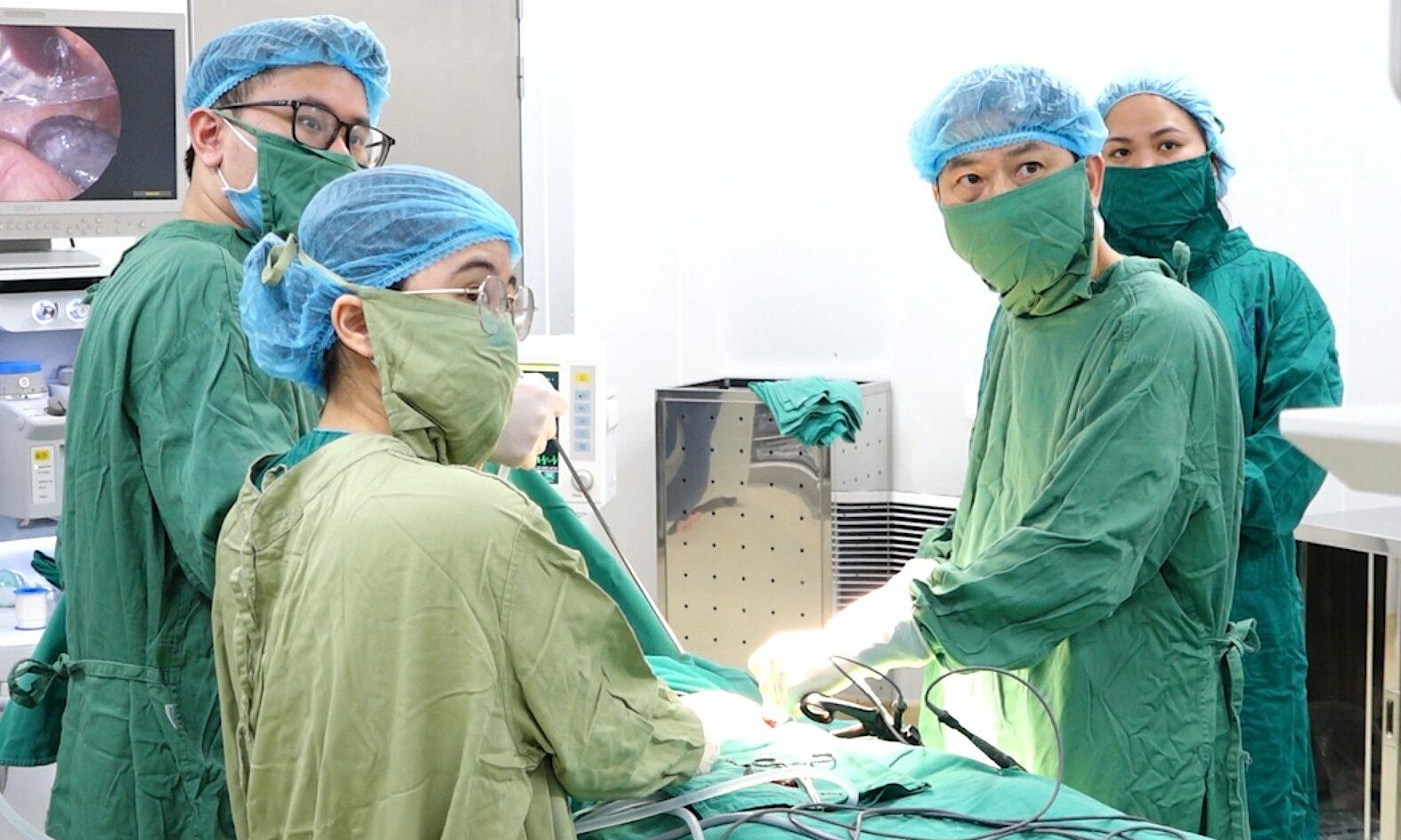 |
Doctors performing surgery on the patient. Photo: Hospital provided
At Central Obstetrics and Gynecology Hospital, doctors identified that the girl had a twisted ovarian tumor, approximately 15 cm in size. The previous aspiration carried the risk of spreading the infection, while the torsion caused a lack of blood supply, leading to ovarian necrosis and a life-threatening situation. The patient was immediately transferred to the Infectious Obstetrics Department for intensive treatment with broad-spectrum antibiotics and fever reduction to stabilize her condition before surgery.
After two days of monitoring and effective infection control, the team decided to perform laparoscopic surgery. Exploratory images during the operation revealed the tumor had twisted one full turn, had turned dark purple, and was covered with pseudomembranes, adhering to the greater omentum, showing signs of necrosis. The surgeons meticulously dissected the tumor, controlled blood vessels, and removed the mass while preserving as much healthy ovarian tissue as possible. The surgery was successful, allowing the child to retain her uterus and ovary.
According to Associate Professor Bac, this case serves as a warning about the risks of inappropriate interventions for ovarian tumors in children. Accurate diagnosis and timely treatment at specialized medical facilities are crucial for saving patients' lives and protecting their future reproductive health. Parents should exercise caution when choosing healthcare providers for children, especially when abnormal abdominal pain occurs.
Le Nga