Hanh's ultrasound, hormone tests, and ovulation tracking results consistently returned normal. Doctors advised her husband, Hung, to undergo a semen analysis, but he steadfastly refused. Despite Hanh changing her diet, taking numerous supplements, and timing intercourse around ovulation, she did not conceive. Two further examinations at other hospitals confirmed her reproductive health was completely normal.
Only when their marriage faced collapse did Hung finally accompany his wife to the Reproductive Support Center, Tam Anh General Hospital (IVF Tam Anh). Tests revealed he had azoospermia, a condition where semen contains no sperm, despite his otherwise normal health and sexual function.
Doctor of Clinical Specialization I Le Duc Thang stated that male and female infertility factors are roughly equal, each accounting for about 40%. However, many women still seek infertility examinations alone, often due to the misconception that infertility is solely a female issue. This prejudice not only complicates treatment but also places a significant psychological burden on the wife.
For men, a semen analysis is a simple, low-cost test, yet it is crucial for diagnosing infertility. Many men, however, refuse this test due to embarrassment, overconfidence, or fear of judgment. Consequently, their wives often undergo numerous complex, expensive, and invasive procedures. Some husbands delay reproductive health checks, and by the time the actual cause is identified, the wife's ovarian reserve may have diminished, missing the optimal "golden time" for effective treatment, leading to more costly and prolonged interventions.
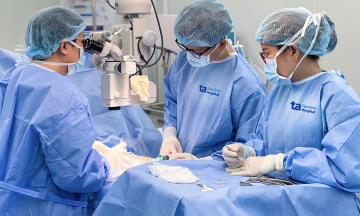
Hung underwent microsurgery using the micro-TESE technique to retrieve sperm from his testicles. Under an inverted microscope magnified 300 times, doctors identified active seminiferous tubules and successfully collected two tubes of sperm. These healthy sperm were then injected into oocyte cytoplasm for in vitro fertilization, resulting in three day-5 embryos and four day-6 embryos.
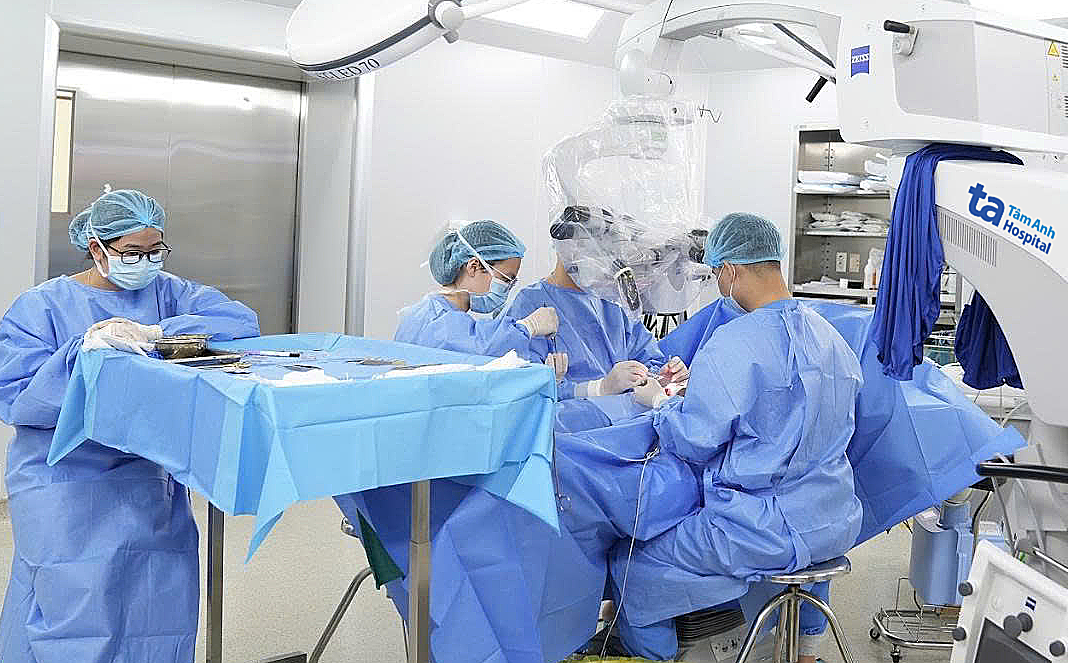 |
Micro-TESE surgical team searching for seminiferous tubules under an inverted microscope. *Photo: IVF Tam Anh* |
When Hanh's uterine lining was favorable, doctors transferred one day-5 embryo, leading to a successful pregnancy. In early May, the couple welcomed their daughter. The remaining embryos were cryopreserved.
Doctor Thang advises couples who have not conceived after one year of regular, unprotected intercourse to seek infertility examinations together. Male reproductive health is increasingly affected by modern lifestyles, including late nights, stress, frequent alcohol and tobacco use, sedentary habits, environmental pollution, and delayed marriage. The World Health Organization (WHO) previously recommended a sperm density standard of 20 million sperm per milliliter of semen; this benchmark has now decreased to just 15 million.
Additionally, declining sperm quality can result from age and hormonal imbalances. As men age, sperm often exhibit changes in morphology and motility. Inflammatory conditions, varicocele, ejaculation disorders, nutrient deficiencies, excessive sexual activity, or exposure to toxic work environments can also negatively impact semen quality.
Thanh Ba