Upon receiving an emergency call from Mr. Tanh's family, Dr. Le Quang Thang, Head of the Emergency Unit at Tam Anh General Clinic District 7, and his team arrived at the patient's home approximately 5 minutes later. The doctor observed a profusely bleeding head wound and a torn left ear on the patient, provided first aid, and then transferred him to the hospital for further examination.
Dr. Nguyen Chan Dong from the Emergency Department stated that upon arrival at the hospital, Mr. Tanh was conscious and responsive, with slight facial drooping but no paralysis. The occipital region had a subgaleal hematoma measuring approximately 8x6 cm, accompanied by a small laceration, and the left earlobe had an open wound about 1 cm.
Doctors diagnosed Mr. Tanh with a transient ischemic attack (TIA) and soft tissue damage to the head from the fall. The brain MRI scan did not show cerebral infarction or cerebral hemorrhage, but images indicated possible narrowing of the right posterior cerebral artery segment and a subgaleal hematoma in the left parietal region measuring 18x85x64 mm.
 |
The emergency team on their way to the patient's home. Photo: Tam Anh General Clinic District 7 |
The emergency team on their way to the patient's home. Photo: Tam Anh General Clinic District 7
Mr. Tanh suffered from hypertension, diabetes, and coronary artery disease, having had a stent placed two years prior. "These are all risk factors for ischemic stroke", Dr. Dong said.
A transient ischemic attack is a temporary disruption of blood supply to the brain that does not cause permanent brain damage or acute cerebral infarction. According to Dr. Dong, TIA can be a warning sign of an ischemic stroke. However, imaging showed that the subgaleal hematoma was soft tissue damage after trauma, with no signs of intracranial hemorrhage or acute brain injury requiring surgery.
Symptoms of a transient ischemic attack include: facial drooping, weakness or numbness on one side of the body, blurred vision, loss of balance, slurred or difficulty speaking, and facial asymmetry. These signs often appear and then disappear, making it easy for patients to overlook them.
Mr. Tanh had his head and earlobe wounds treated and continued to be monitored for consciousness, neurological signs, and hematoma status. He was discharged the same day with a follow-up appointment.
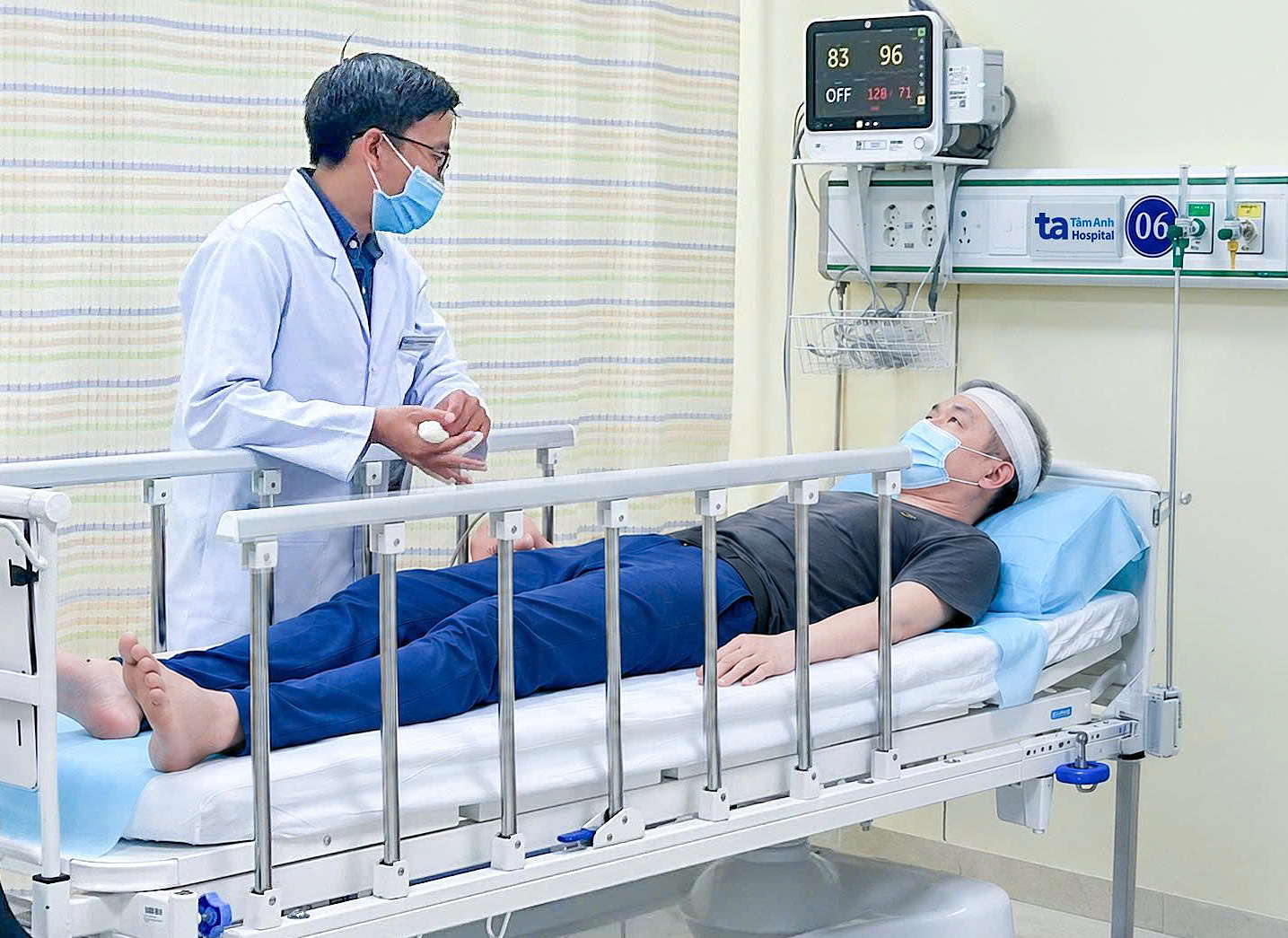 |
Dr. Dong examining Mr. Tanh. Photo: Tam Anh General Clinic District 7 |
Dr. Dong examining Mr. Tanh. Photo: Tam Anh General Clinic District 7
According to Dr. Dong, chronic diseases such as hypertension, diabetes, and dyslipidemia can silently damage blood vessel walls, promote atherosclerosis, and gradually narrow the vessel lumen. When blood flow to the brain decreases, patients may experience transient ischemic attacks.
The doctor recommends that individuals with hypertension, diabetes, dyslipidemia, or cardiovascular disease should manage underlying conditions, take medication as prescribed, and have regular check-ups to reduce stroke risk. If sudden facial drooping, weakness or numbness on one side, difficulty speaking, blurred vision, dizziness, loss of balance, or altered consciousness occurs, it is crucial to call for emergency medical help and transport the patient to a facility capable of stroke emergency care.
Nhu Ngoc
*The patient's name has been changed
| Readers can ask questions about neurological diseases here for doctors to answer. |