Sensitive skin, prone to redness, burning, or with a history of folliculitis, can still undergo laser hair removal in specific cases. However, a doctor must assess the skin condition before treatment. This assessment helps select the appropriate method, laser settings, and post-care routine, enhancing effectiveness and minimizing the risk of irritation.
Folliculitis commonly affects the arms, legs, back, armpits, thighs, or buttocks. It manifests as red papules, inflammatory papules, or pustules around hair follicles, sometimes accompanied by itching, burning, or a stinging sensation. Post-inflammatory hyperpigmentation can persist. This condition is more common in individuals with sensitive skin, atopic dermatitis, hyperhidrosis, those who frequently shave or pluck hair, wear tight clothing, or experience prolonged friction. Many people worry that laser hair removal might irritate their skin or cause folliculitis to recur or worsen.
However, Fotona 6D laser hair removal can help improve folliculitis in suitable cases, especially when the inflammation is related to ingrown hairs, shaving, plucking, or blockages around hair follicles.
This technology uses a long-pulsed Nd:YAG 1064 nm laser, which targets hair follicles to reduce hair density and growth rate. This action helps limit ingrown hairs and recurring inflammatory episodes. Additionally, an Er:YAG 2940 nm laser can be combined to improve skin surface texture, helping to smooth rough and unevenly toned skin after inflammation. A cooling system during the treatment reduces the burning sensation, increasing comfort for individuals with sensitive skin.
It is important to note that not all cases can undergo laser hair removal immediately. If the treatment area has an acute infection, widespread redness and inflammation, pustules, oozing, abrasions, open wounds, or pronounced skin irritation, doctors prioritize controlling the lesions and restoring the skin before considering laser treatment. Intervention when the skin barrier is unstable can increase the risk of burns, irritation, post-inflammatory hyperpigmentation, or prolong healing.
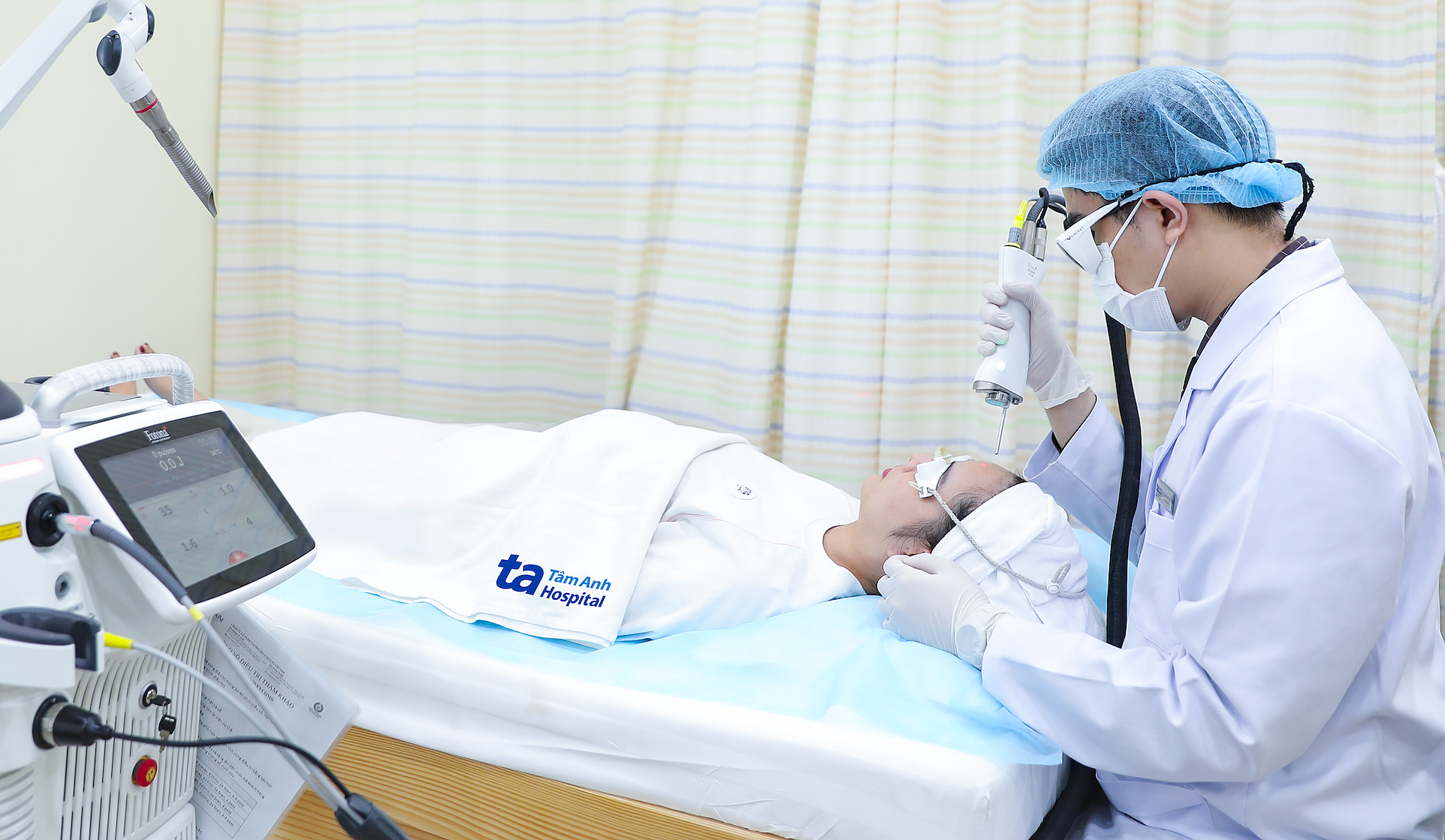 |
Dr. Tri performs 6D laser facial hair removal for a woman. Illustration: Tam Anh General Clinic District 7. |
Each skin type and condition requires assessment to select the appropriate wavelength, energy levels, and treatment mode. Individuals with darker or sensitive skin, if treated with unsuitable parameters, may face an increased risk of prolonged redness, stinging, burning, or post-inflammatory hyperpigmentation.
When performed with correct indications, proper technique, and appropriate post-treatment skin care, the risk of dark spots, scars, or skin damage is typically low. After hair removal, the skin may experience slight redness, a warm sensation, or mild stinging for a few hours due to its response to laser thermal energy, but most cases improve quickly.
The risk of irritation, burns, or pigmentary disorders often increases when performing self-hair removal with unverified devices, using inappropriate energy levels, or incorrect skin care. Continuous shaving, waxing, or plucking while experiencing folliculitis can also prolong damage and increase recurrence.
To limit complications after laser hair removal, it is advisable to practice diligent sun protection, restorative moisturizing, and avoid friction in the treated area. For the first few days, avoid steaming, taking overly hot showers, exfoliation, or using irritating active ingredients.
Dr. Huynh Cong Tri
Dermatology - Aesthetic Dermatology Unit
Tam Anh General Clinic District 7
| Readers can submit questions about dermatology and aesthetic dermatology here for a doctor's response. |