


Answer:
The incidence of placenta previa and velamentous cord insertion is higher in IVF pregnancies compared to natural pregnancies. Placenta previa is a condition where the placenta attaches to the lower uterine segment or cervix, partially or completely covering the cervix, obstructing the baby's path during labor.
When this condition occurs, pregnant women should be aware of hai main risks. Thu nhat, vaginal bleeding due to uterine contractions detaching the placenta from the lower uterine segment. The bleeding may stop and then recur, sometimes accompanied by abdominal pain. Thu hai, if the placenta completely covers the cervix, vaginal delivery is not possible, requiring a cesarean section.
First-trimester ultrasound (11-13 weeks and 6 days) can detect placenta previa early. Approximately 30% of pregnancies have low-lying placenta or placenta previa in the first trimester. In the second trimester (14-27 weeks of pregnancy), this rate decreases to 10%. In the third trimester (28-37 weeks), the incidence of low-lying placenta or placenta previa is only about 1%. This means that over 90% of cases of low-lying placenta or placenta previa in the first trimester resolve to a normal placental position by the third trimester. However, in cases of complete placenta previa, where the placenta entirely covers the internal cervical os, the placental position rarely changes throughout the pregnancy.
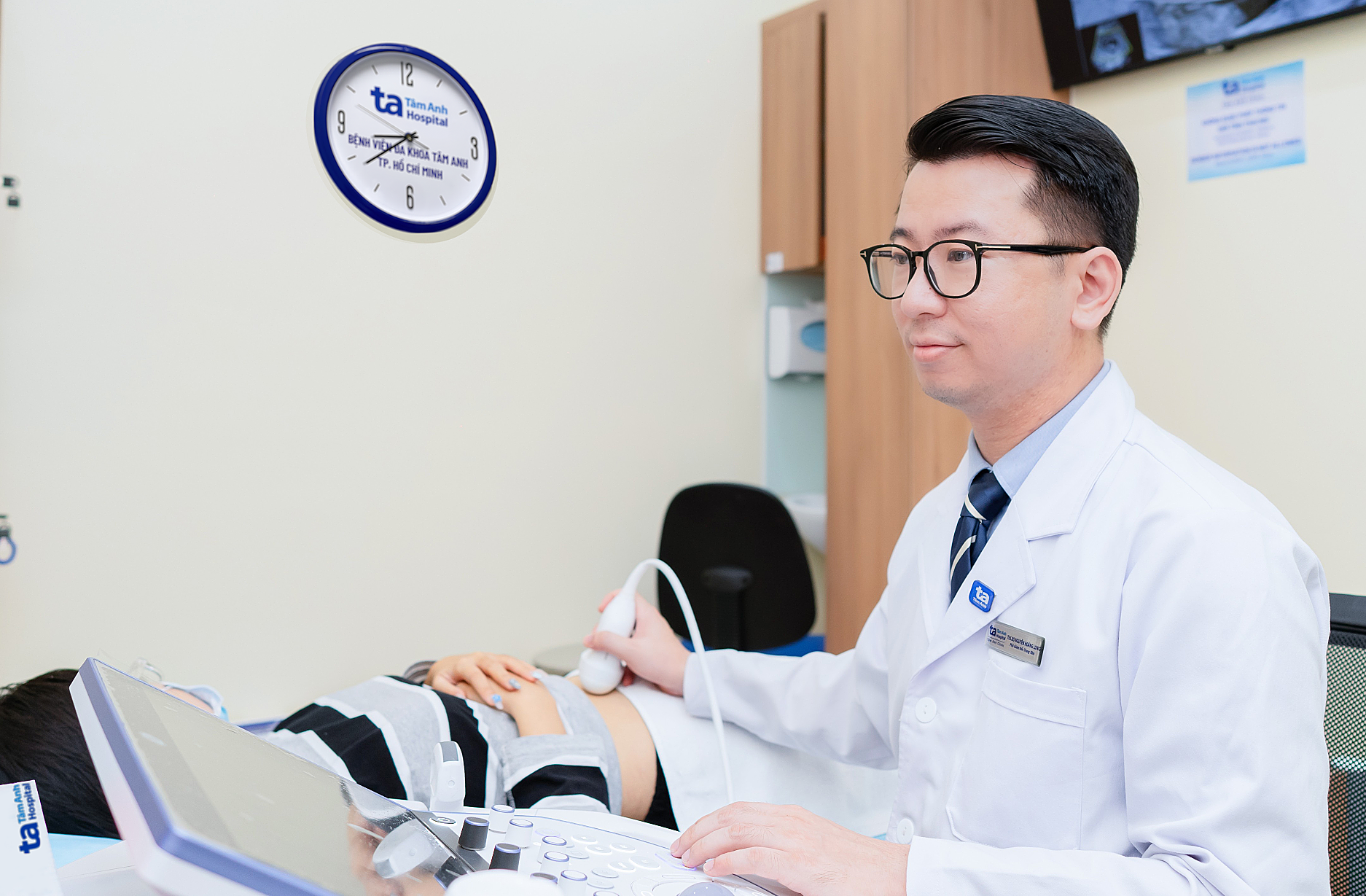 |
Doctor Nguyen Hoang Long performs an ultrasound for a pregnant woman. Illustration: Tam Anh District 7 General Clinic |
The umbilical cord's insertion point into the placenta plays a role in nutrient transfer from mother to fetus, with ba main types. Central cord insertion into the placenta is normal. Marginal cord insertion is when the umbilical cord attaches to the placenta within 20 mm of its edge, increasing the risk of fetal growth restriction by 1,2-1,5 times compared to central cord insertion. Velamentous cord insertion occurs when the umbilical cord attaches to the amniotic membranes or the placental margin, increasing the risk of fetal growth restriction and slow growth by about 2-3 times compared to central cord insertion.
A low-lying placenta near the cervix with velamentous cord insertion at the lower placental edge (vasa previa) is very dangerous. When uterine contractions occur, these blood vessels can rupture, causing severe hemorrhage and potentially leading to the death of both mother and fetus. Therefore, expectant mothers require close monitoring and often have an indication for proactive cesarean delivery.
In your case, the fetus has a 2-3 times higher risk of being small or having slow growth compared to normal. However, it is necessary to precisely determine if this is complete placenta previa or a low-lying placenta, and whether the cord insertion is at the upper or lower edge of the placenta. The pregnant woman should visit a specialized medical center with adequate equipment for doctors to evaluate, monitor, and intervene promptly.
Doctor Nguyen Hoang Long
Fetal Medicine Specialist
Tam Anh District 7 General Clinic
| Readers can send questions about obstetrics and gynecology here for doctors to answer. |


