


Initially, Ms. My was diagnosed with interstitial lung disease and received symptomatic treatment. Over the past two years, the skin on both her hands began to peel, thicken, and crack, leading to a dermatitis diagnosis. More recently, she experienced severe shortness of breath, progressive muscle weakness, weight loss, poor appetite, and difficulty walking.
Doctor Nguyen Phuc Tan, from the Clinical Immunology Department at Tam Anh General Hospital, TP HCM, suspected the patient had unusual symptoms related to an autoimmune disease. Specialized tests confirmed Ms. My had anti-synthetase syndrome. This autoimmune disease is estimated to affect about 9 out of 100,000 people and typically causes dermatitis, muscle weakness, and lung damage.
 |
Doctor Tan consults with Ms. My. Photo: Tam Anh General Hospital |
Doctor Tan explained that autoimmune diseases like anti-synthetase syndrome are often missed or diagnosed late because symptoms do not appear simultaneously but rather scatter across different stages. Many cases begin with lung damage, while skin or muscle symptoms remain subtle. Patients are often examined and treated for individual symptoms, despite it being an autoimmune disease affecting multiple organs at once. Interstitial lung disease, in particular, can be a symptom of various other conditions.
"The disease is easily misdiagnosed as a common respiratory illness or dermatitis," Doctor Tan explained. The patient's treatment regimen was adjusted to focus on controlling the systemic immune response. The goal was not only to improve lung function but also to restore muscle strength and manage the persistent hand skin lesions. The patient received individualized immunosuppressants and anti-inflammatory medications.
During the first weeks, due to her weakened condition over many years, Ms. My often felt fatigued and short of breath with mild exertion. The doctor designed a nutrient-rich diet, along with breathing exercises and gentle physical activity, to help the patient regain muscle strength. Respiratory function, inflammatory markers, and medication response were closely monitored during successive follow-up appointments.
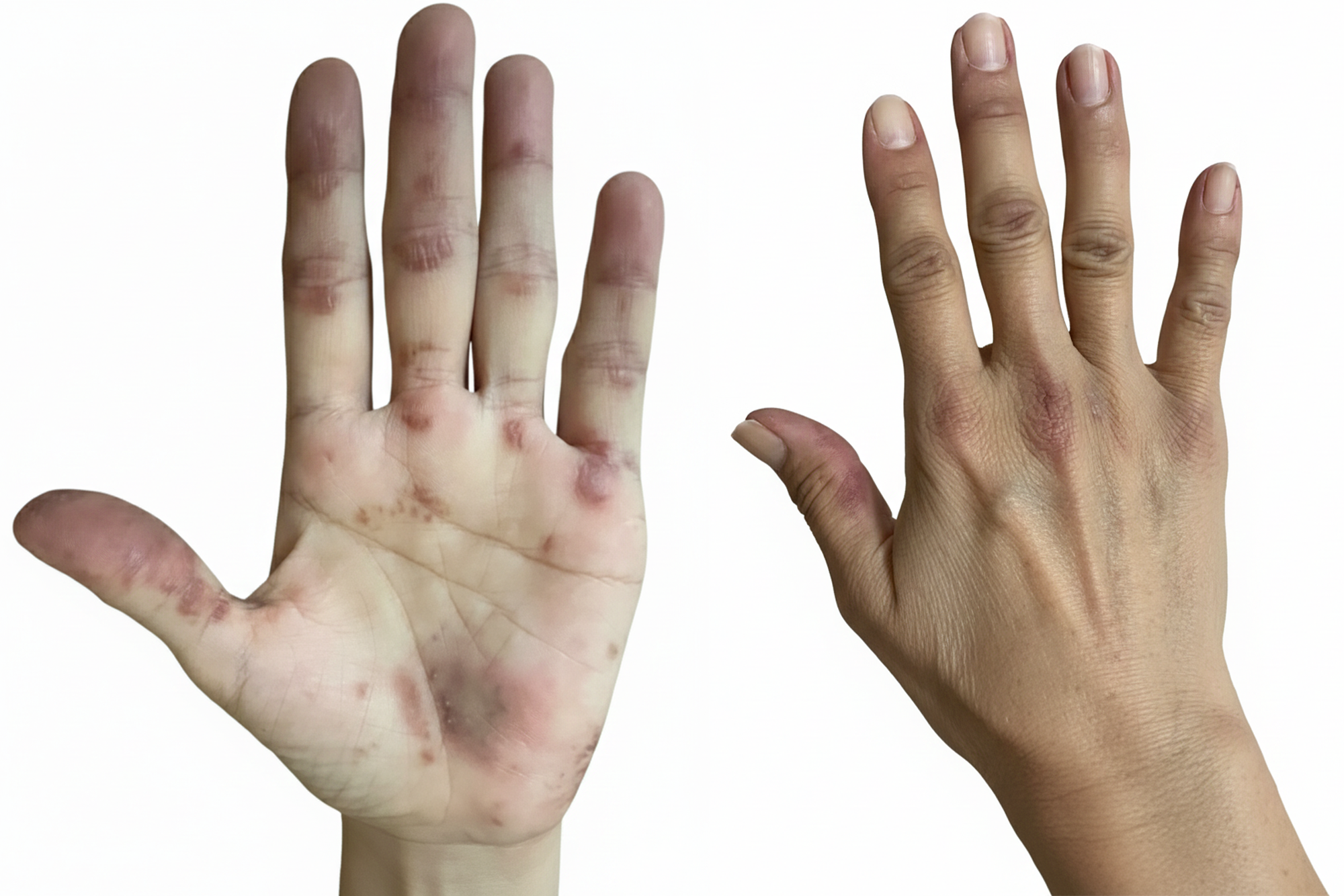 |
Ms. My's hands showed peeling, erythema, and thickening for over two years. Photo: Tam Anh General Hospital |
According to Doctor Tan, treatment requires careful medication dose adjustments based on the patient's response. Insufficient immune control could allow lung damage to progress silently. Conversely, overly strong medication risks side effects and weakens the body's resistance. Therefore, the regimen was adjusted incrementally to control both dermatomyositis and prevent further progression of interstitial lung disease.
After over six months of treatment, Ms. My's shortness of breath gradually improved, and skin lesions showed reduced peeling and discomfort. She is currently monitored once every two months to assess her condition and adjust medication. However, this is a chronic disease requiring long-term treatment and lifelong monitoring to prevent recurrence and progressive lung complications.
Doctor Tan advises that individuals experiencing prolonged, unexplained dry cough and shortness of breath, accompanied by muscle weakness, muscle pain, or unusual skin lesions on their hands, should seek examination at a Clinical Immunology specialist. Early detection allows for correct treatment, limits progressive lung damage, and improves quality of life.
Minh Huong
* The patient's name has been changed.


