Ms. Tu had planned to start a family and have children after marriage. However, nearly two years after the onset of her illness, she lost the strength to hold objects.
Initially, Ms. Tu experienced a dull ache in her joints, and a few dark skin patches appeared on her shoulders. These patches gradually spread to her arms, becoming stiffer and drier, while the joint pain increased in intensity and frequency. She sought treatment at various facilities and was diagnosed with systemic scleroderma. However, she did not respond to treatment, and her condition worsened. Feeling exhausted and discouraged, Ms. Tu decided to stop her medication, hoping her body would "heal itself," which only made the disease more severe.
Within two months, she developed esophageal sclerosis, making it impossible to swallow even water or milk. She became severely emaciated, losing nearly 20 kg and weighing less than 30 kg, leading to two admissions to the intensive care unit (ICU). At one point, doctors advised her family to prepare for the worst.
 |
Ms. Tu’s hands are swollen and stiff at the joints, making it impossible to grasp or flex due to her illness. Photo: Tam Anh General Hospital |
Ms. Tu’s hands are swollen and stiff at the joints, making it impossible to grasp or flex due to her illness. Photo: Tam Anh General Hospital
Associate Professor, Doctor Hoang Thi Lam, Head of the Clinical Immunology Department at Tam Anh General Hospital, Ho Chi Minh City, stated that Ms. Tu sought care when her disease was already in an advanced stage. She presented with complications including heart arrhythmia, interstitial lung disease, Raynaud's phenomenon, polyarthritis, diffuse skin hardening, esophageal sclerosis, and severe physical and mental exhaustion, with a low prognosis for survival.
According to Associate Professor Lam, scleroderma is an autoimmune disease that occurs when the immune system malfunctions, attacking and destroying the body's healthy tissues and cells. The disease progresses in a complex manner, often overlooked or treated symptomatically, organ by organ. Scleroderma not only causes skin to thicken and harden but also damages internal organs. Without treatment, the immune mechanism continues to operate uncontrollably, silently accumulating fibrosis.
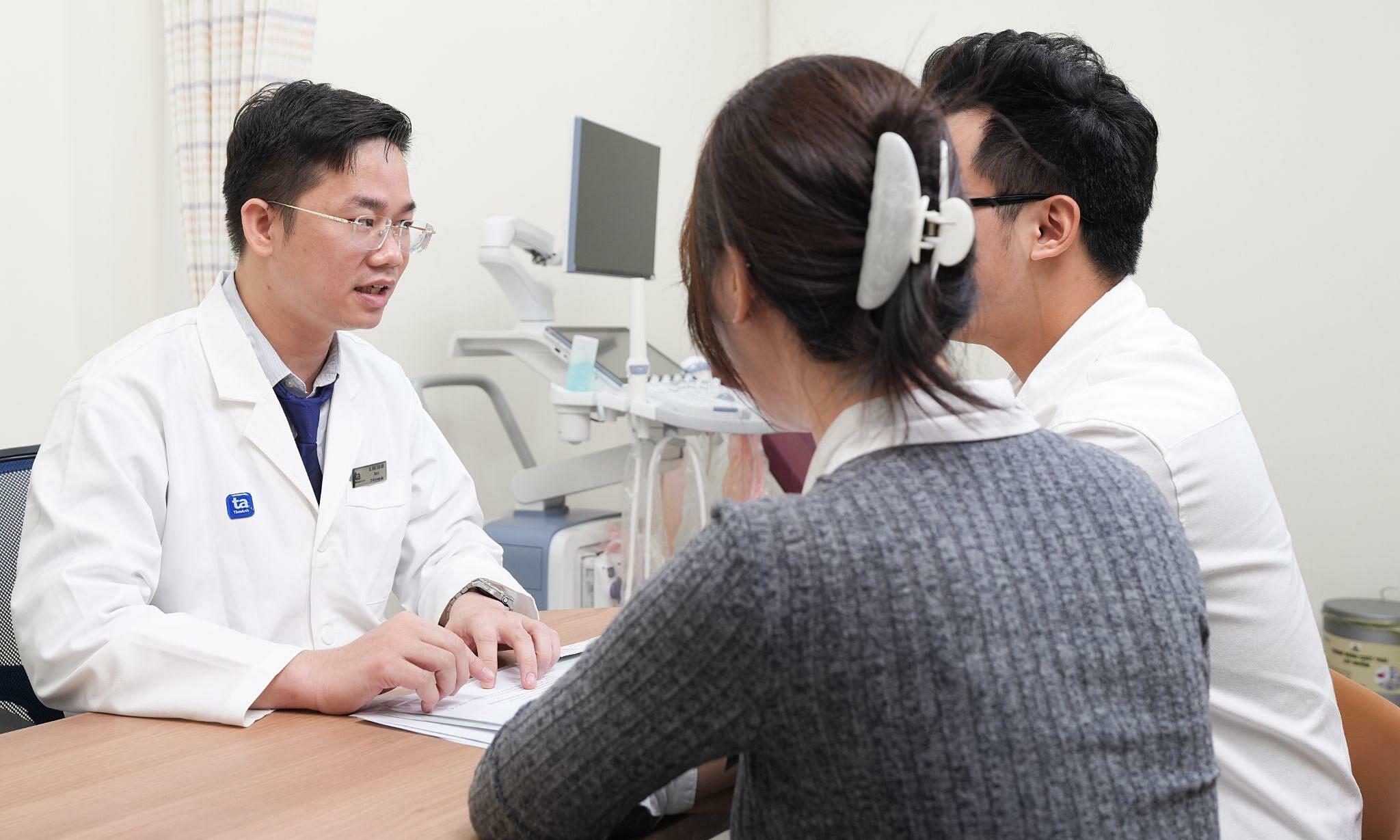
Ms. Tu stopped her medication for approximately 5 months, causing the damage to her esophagus, heart, joints, lungs, and skin to advance rapidly, with severe and sudden disease manifestations. Associate Professor Lam discussed a long-term treatment plan with Ms. Tu and her husband, emphasizing the critical goal of achieving stable disease control and preventing further damage.
Doctors developed a treatment protocol focused on controlling immune dysfunction with tiered immunosuppressants. The choice of medication was based on the extent of damage to the heart, interstitial lung tissue, esophagus, and the degree of skin fibrosis at each stage. Doctors closely monitored the patient's clinical response and inflammatory markers.
She received specialized treatment for each affected organ, including control of heart arrhythmia, a protocol to preserve lung function, medication to reduce reflux and improve esophageal motility, combined with control of arthritis and restoration of hand movement. The patient also received nutritional support to improve her overall condition, facilitating the treatment process.
 |
Ms. Tu’s husband accompanies her to every follow-up appointment. Photo: Tam Anh General Hospital |
Ms. Tu’s husband accompanies her to every follow-up appointment. Photo: Tam Anh General Hospital
During the first three months of treatment, Ms. Tu could only swallow soft, mashed, or pureed food. Her hands remained stiff, but the pain and stiffness gradually decreased. Her health stabilized, and she no longer required emergency hospitalization. After more than half a year of adhering to the protocol, she can now live almost normally but still needs to continue long-term treatment.
Doctor Lam noted that if symptoms such as cold fingertips, thick and hard skin, prolonged difficulty swallowing, severe heartburn, persistent cough, or unexplained shortness of breath appear, it is essential to consult a clinical immunology specialist for timely detection and treatment.
Ms. Tu shared, "I am fortunate to have had my family by my side during my worst stage," expressing optimism that doctors predict she can live a healthy life with consistent treatment.
Minh Huong
*Character's name has been changed