Mr. Tam, a 70-year-old patient, was diagnosed with a ruptured lung abscess leading to empyema after experiencing chest and back pain for a week. Upon admission to Tam Anh General Hospital TP HCM, his condition was serious, with blood pressure at 93/61 mmHg and signs of respiratory failure. A CT scan confirmed a right-sided pleural effusion containing turbid yellow fluid, indicating a severe infection.
Dr. Bui Van Long, a specialist in general internal medicine at the hospital, explained the critical nature of empyema. He noted that the pleural cavity, the space between the lungs and chest wall, normally holds a small amount of fluid. This fluid enables the pleural membranes to glide smoothly during breathing. However, with infection, this fluid increases, becomes turbid, and fills with inflammatory cells, white blood cells, and bacteria. Unlike typical pleural effusion, where the fluid has turned into pus, antibiotics alone are often insufficient to resolve the infection completely.
 |
The turbid yellow fluid extracted from the patient's pleura indicates empyema. Photo: Tam Anh General Hospital
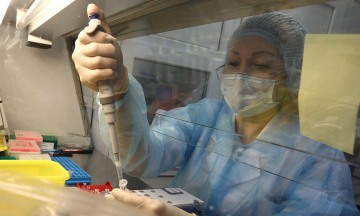
Given the severity, the patient underwent emergency surgery for right pleural cavity drainage to remove the infected fluid. Following the procedure, Mr. Tam received antibiotic treatment and pleural cavity irrigation through the drainage tube. Fluid culture results identified Staphylococcus aureus as the causative bacteria.
 |
The medical team from the Thoracic - Vascular Surgery Center performed emergency pleural drainage surgery on the patient. Photo: Tam Anh General Hospital
After nine days of treatment, Mr. Tam showed significant improvement, becoming conscious, responsive, and fever-free before being discharged. Dr. Long emphasized that empyema results from infections in the lungs or nearby structures. Patients typically present with symptoms similar to pneumonia, including fever, cough, chest pain, and shortness of breath. Chest pain from pleural damage often intensifies with deep breaths or coughing.
While chest pain can signal various conditions, Dr. Long advises seeking medical attention if chest pain persists, especially when accompanied by fever, shortness of breath, or significant fatigue, to determine the underlying cause.
Nhat Thanh
*Patient's name has been changed.
| Readers can submit questions about respiratory diseases here for doctors to answer. |