Ha regularly used pore strips or peel-off gels to remove blackheads, whiteheads, sebum, and dead skin cells. After a few months, the pores on her chin, forehead, and both sides of her nose became noticeably larger.
Doctor Nguyen Ngoc Tran, a specialist in Dermatology and Aesthetic Dermatology at Tam Anh General Hospital Ho Chi Minh City, states that enlarged pores require assessment alongside factors such as oil secretion levels, blockages, acne history, and skin structure.
Doctor Tran explains that the pores visible on a patient's face are primarily follicular ostia, where sebum reaches the skin surface. These are not structures that can actively "close" or "open." The size of pores depends on many factors: hair follicle size, sebum quantity, genetic predisposition, elasticity of the peripilar tissue, age, and cumulative sun exposure.
The forehead, chin, and both sides of the nose are areas with many sebaceous glands, making pores more visible. When skin produces excessive oil, experiences blockages, or loses firmness, the opening of the hair follicle may become more pronounced. Some cases also involve atrophic acne scars, which require differentiation from enlarged pores to select the appropriate treatment method.
Ha's frequent pore stripping, along with strong pulling or scrubbing, can irritate, dry, and inflame the skin, making the surface less smooth and pores more visible. Pore strips or peel-off gels can remove some keratin and sebum from the follicular ostia but do not control oil production or prevent recurrent blockages. The small dots often seen on the nose can also be sebaceous filaments, which are normal physiological structures, not blackheads.
Stopping pore stripping helps reduce irritation, but the extent of pore improvement depends on the skin's underlying factors. Appropriate topical products can help control oil, reduce blockages, and improve the skin's surface; however, their efficacy depends on the active ingredients, duration of use, and individual skin condition.
 |
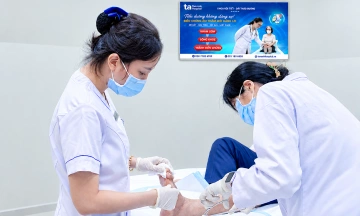
Doctor Tran uses microneedling RF technology to improve Ha's enlarged pores. Photo: Tam Anh General Hospital |
Ha underwent microneedling RF treatment for 4-6 sessions, once a month. This method uses microneedles to deliver radiofrequency energy into the target skin layer. The controlled thermal energy stimulates tissue, promoting collagen remodeling, which leads to firmer and more even skin, thereby improving the appearance of pores.
The doctor monitors the response during each session for necessary adjustments, as microneedling RF can cause redness, mild swelling, or small scabs. The procedure also carries risks of burns, infection, pigmentation changes, or scarring. Therefore, a specialized doctor must perform it at a medical facility, using appropriate equipment and parameters.
After 3 treatment sessions, Ha's pores gradually minimized, and her skin surface became smoother. The doctor advised her to practice gentle skin care, adequate moisturizing, and thorough sun protection to support skin recovery. During the initial days post-treatment, she needed to avoid scrubbing, exfoliating, or using irritating products.
Doctor Tran advises against overusing pore strips or peel-off gels, as frequent use or excessive force can cause skin irritation, dryness, and increased sensitivity, while the effects are primarily temporary and surface-level. Individuals with oily skin, many blackheads, or increasingly visible pores should consult a Dermatology and Aesthetic Dermatology doctor at a hospital to identify the cause, receive appropriate treatment, and avoid constantly changing products.
Minh Huong
*The character's name has been changed
| Readers can submit questions about dermatological and aesthetic skin conditions here for the doctor. |