After a karaoke session with business partners, Tran Minh, 39, from Ho Chi Minh City, developed small lesions on his tongue. Initially, he thought it was canker sores due to hot weather, so he self-medicated and changed his diet.
Two weeks later, the lesions grew larger, causing pain, burning, and bleeding easily when eating, also resulting in bad breath. Upon examination, a doctor diagnosed him with genital warts on his tongue.
Minh stated he had only engaged in some intimate contact during karaoke, not sexual intercourse. Therefore, he did not think he was at risk of a sexually transmitted infection. Receiving the diagnosis, he worried he might have infected his wife.
In another case, Phong, 36, from Nghe An, discovered warts around his penis while preparing to return home to visit family after more than three years working in Japan. He admitted to having unprotected sex. Three weeks later, a few small, rough, bleeding lesions appeared in his genital area. He attributed them to shaving or irritation, delaying his visit to a doctor.
 |
Minh did not expect his actions with hostesses at the karaoke bar to transmit genital warts. Photo: Vecteezy
Doctor Ngo Thi Ti Gon, a screening physician at VNVC Hiep Binh Phuoc Vaccination Center, explained that genital warts are caused by human papillomavirus (HPV), often involving types 6 and 11. The disease primarily spreads through vaginal, anal, or oral sexual contact, and direct skin-to-mucous membrane contact with an infected area.
Consequently, some individuals are still at risk of contracting the disease even without penetrative sexual intercourse. The virus can spread when the mouth, genitals, or skin with abrasions come into contact with HPV-containing lesions. Patients can also spread the infection to other body parts by touching a wart and then touching another area of skin or mucous membrane.
According to Doctor Gon, many people confuse genital warts with canker sores, skin tags, folliculitis, or skin irritation. In men, lesions can appear on the penis, scrotum, anus, mouth, tongue, or any area previously exposed to the virus. Initially, warts are often small, soft, and cause little pain. As they develop, their number can increase, forming clusters, which may bleed easily, itch, cause discomfort, or produce an odor.
Individuals with suspicious symptoms should not self-apply medication, burn warts at home, or conceal the disease. Improper self-treatment can lead to widespread lesions, infection, or delayed treatment. Patients need to visit a dermatology, andrology, gynecology, or sexually transmitted disease specialist for proper diagnosis and treatment.
Genital warts can recur after treatment because there is currently no medication to completely eliminate HPV from the body. Methods like topical creams, electrocautery, cryotherapy, laser treatment, or surgery primarily aim to remove existing lesions, reduce symptoms, and limit spread. Patients must adhere to their doctor's treatment plan and attend follow-up appointments, avoiding sexual activity during treatment or while lesions are present.
For individuals with a spouse or partner, doctors advise open discussion so both can seek examination if there is a risk of exposure. Concealing the disease can delay a partner's detection, lead to continued cross-infection, or miss the window for early treatment.
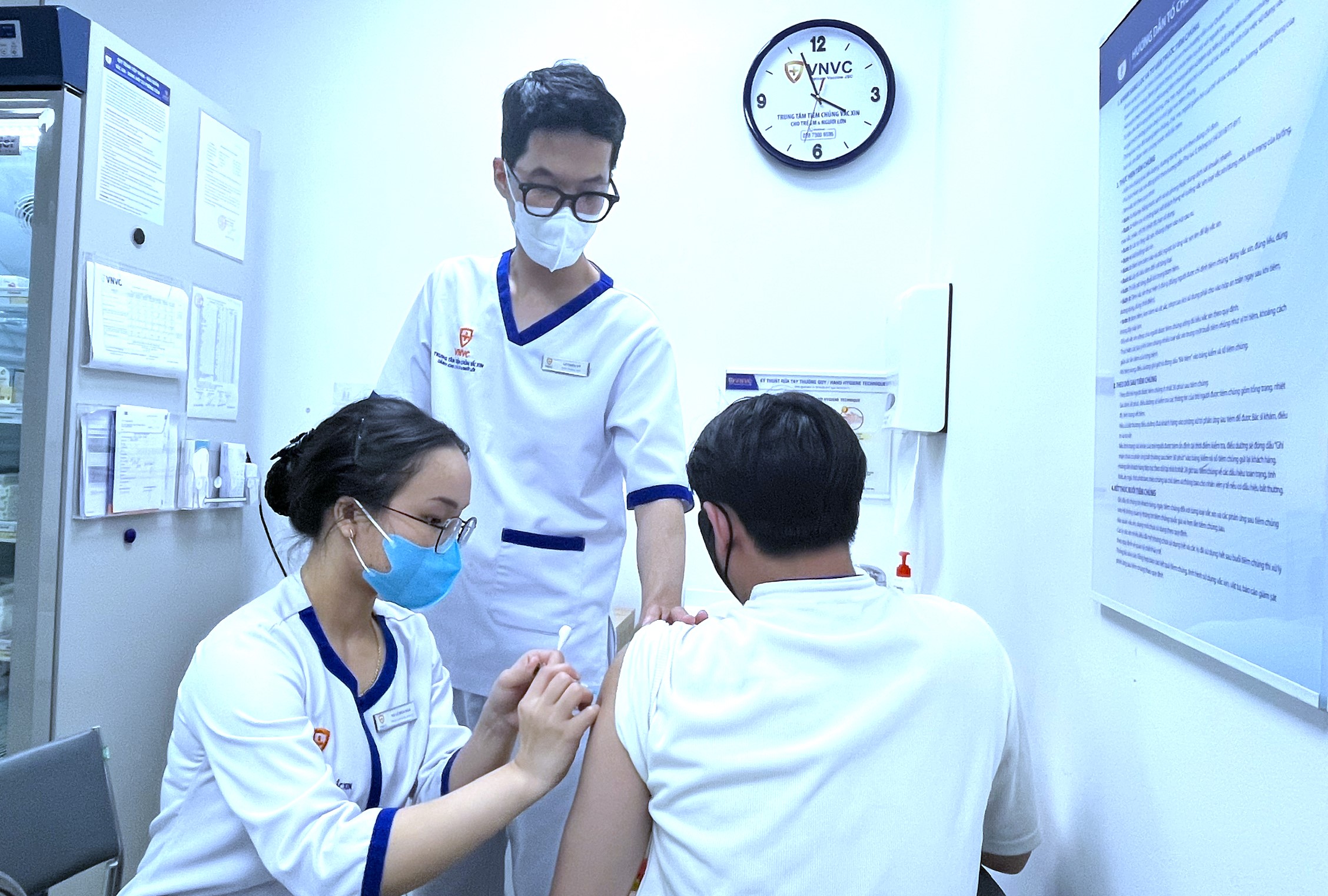 |
A young man receives the Gardasil 9 vaccine at VNVC Long Thanh My Vaccination Center to prevent genital warts and HPV-related cancers. Photo: Dieu Thuan
To prevent the disease, everyone should practice safe sex, limit the number of sexual partners, avoid sharing personal items that might be contaminated with bodily fluids, and maintain genital hygiene. Condoms reduce the risk of infection but do not offer complete protection, as HPV can still exist on uncovered skin areas.
Additionally, HPV vaccines can help prevent two HPV types, 6 and 11, which cause genital warts, and some HPV-related cancers. Vietnam currently uses two HPV vaccines: Gardasil and Gardasil 9. Gardasil 9 (which protects against 9 types: 6, 11, 16, 18, 31, 33, 45, 52, 58) is administered to both males and females aged 9 to 45. Children aged 9 to under 15 years require only two doses, 6 to 12 months apart. Individuals aged 15 to 45 years receive three doses within 6 months.
The vaccine is most effective when administered before exposure to the virus. Individuals who have had genital warts can still be advised by a doctor to get vaccinated to protect against other HPV types covered by the vaccine and prevent reinfection by types they have previously cleared.
Doctor Gon noted that HPV vaccines do not treat existing HPV infections, do not eliminate existing warts, and do not replace examination and treatment. Individuals with suspicious lesions still need to seek early medical attention for proper management.
Nhat Minh