Answer:
The kidneys filter blood and maintain water and electrolyte balance. While eating charcoal-grilled food does not immediately harm the kidneys, regularly consuming burnt, salty, high-fat grilled meats or processed meats can increase the risk of kidney disease and certain cancers over time.
When meat is grilled at high temperatures, especially over direct flames, compounds within the meat can form heterocyclic amines (HCAs). Higher temperatures and more charring lead to greater HCA formation. The US National Cancer Institute states that cooking meat above 150°C by grilling or frying generates more HCAs. The amount of this substance also depends on the type of meat, temperature, cooking time, and the doneness or charring level of the food.
Additionally, fat dripping onto charcoal creates smoke containing polycyclic aromatic hydrocarbons (PAHs), which can adhere to food. Both HCAs and PAHs have been shown to cause gene mutations in experimental studies, but the risk level depends on the type of meat, degree of charring, amount consumed, and frequency.
Grilled meats often contain high salt levels and are served with salty sauces. Processed meats like sausages, bacon, ham, and Chinese sausages are rich in sodium, fat, and additives. The World Health Organization (WHO) classifies these as Group one carcinogens, particularly for colorectal cancer. Consuming 50 g of processed meat daily increases the risk of colorectal cancer by approximately 18%.
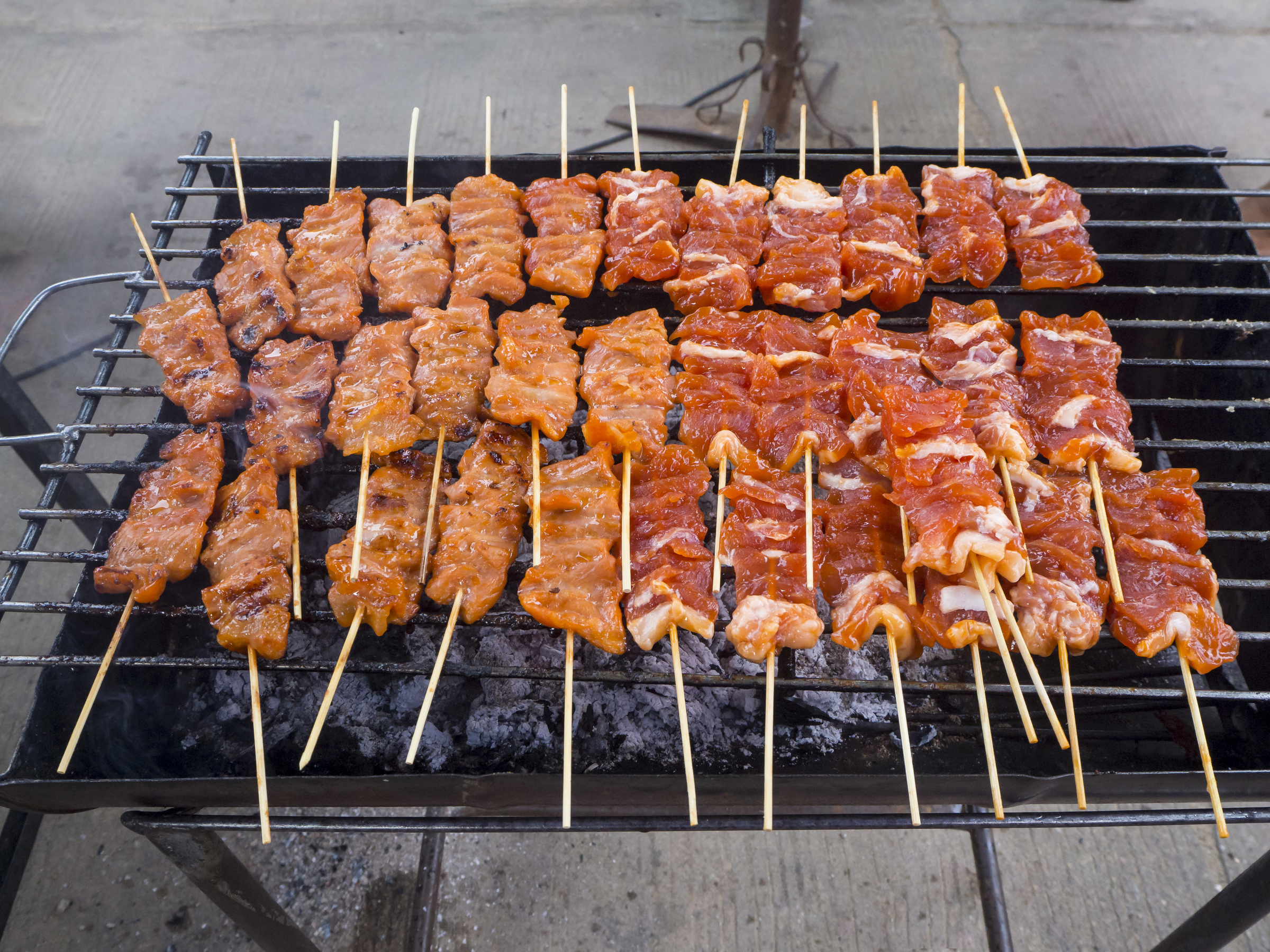 |
Regularly consuming burnt, high-salt, high-fat grilled meats and processed meats can increase cancer risk over the long term. *Illustration: Vecteezy*
To mitigate these risks, limit frequent consumption of grilled foods, prioritize lean meats, fish, and vegetables, and reduce intake of sausages, Chinese sausages, and other processed meats. When grilling, place food away from direct flames, prevent fat from dripping onto the charcoal, flip frequently, avoid overcooking, and consider pre-cooking to reduce heat exposure time. Always trim off charred portions, reduce salt in marinades and dipping sauces, and control meat portion sizes. Individuals with high blood pressure, diabetes, obesity, a history of kidney disease, or existing chronic kidney disease should undergo regular kidney function checks and maintain an appropriate diet.
Eating grilled food from street vendors also poses a risk of gastrointestinal infections due to unknown food origins, undercooking, poor preservation, or contamination. Fecal-oral pathogens like cholera, typhoid, hepatitis A, and rotavirus can cause abdominal pain, diarrhea, vomiting, fever, and dehydration. In severe cases, these can lead to electrolyte imbalance, shock, liver damage, or multi-organ failure.
Several of these diseases have preventive vaccines. Rotavirus can be prevented with three types of vaccines: Rotavin M1 (Vietnam), administered orally from six weeks to six months of age; Rotarix (Belgium) and Rotateq (US), given from six weeks to 24 weeks of age, with the US type extending to before eight months. The Morcvax vaccine (Vietnam) helps prevent cholera and is used for children over two years old and adults. Typhoid can be effectively prevented with the Typhoid VI vaccine (Vietnam) and Typhim VI (France), administered to children over two years old and adults.
For hepatitis A, vaccines include a monovalent type and a combined vaccine that also prevents hepatitis B. The monovalent dose is indicated for individuals from 12 months to under 16 years old or from 24 months to under 18 years old, depending on the vaccine type, with two doses administered at least six months apart. The combined dose is for children from 12 months old and adults.
Doctor Tran Huynh Tan
Medical Manager, VNVC Vaccination System
Readers can submit vaccine-related questions for a doctor to answer here.