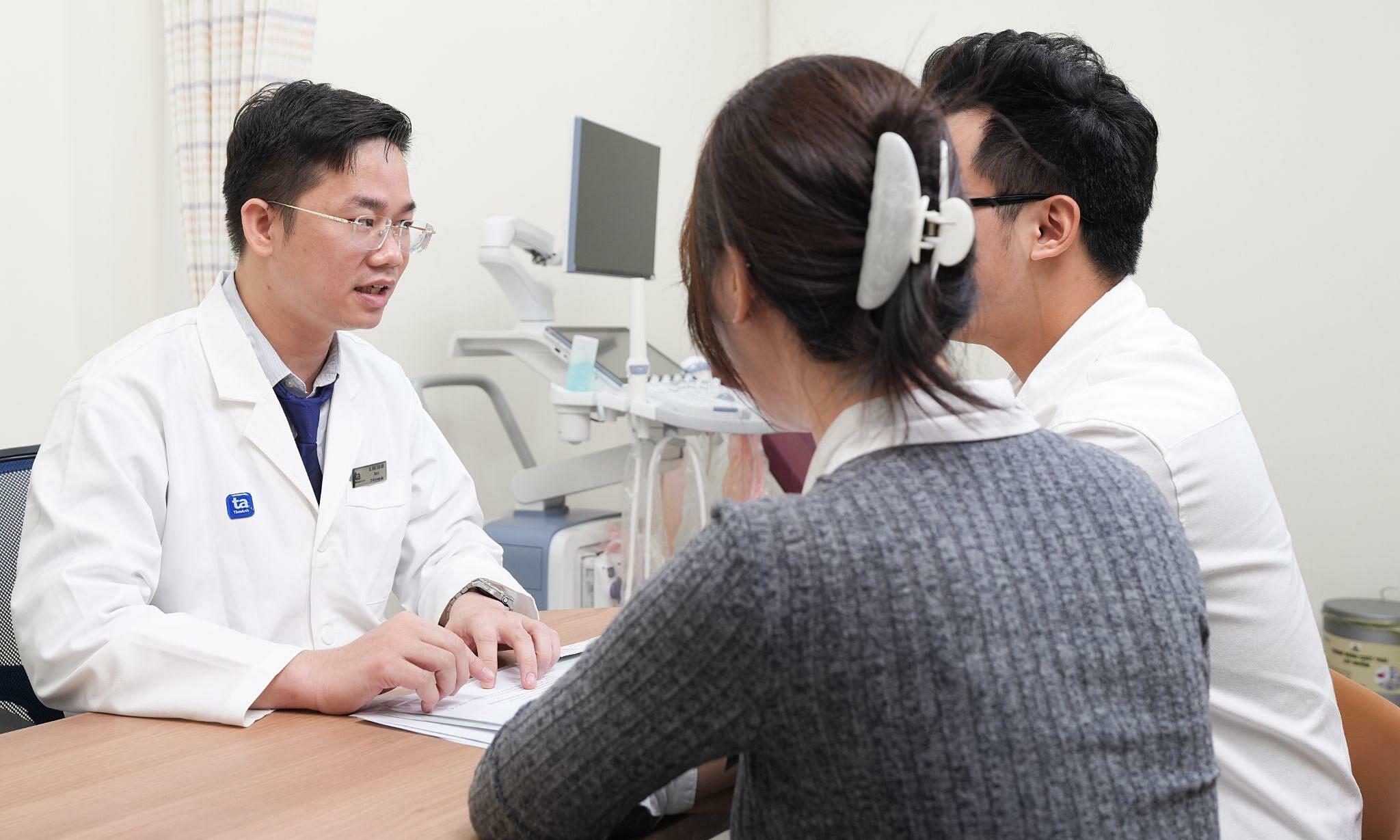
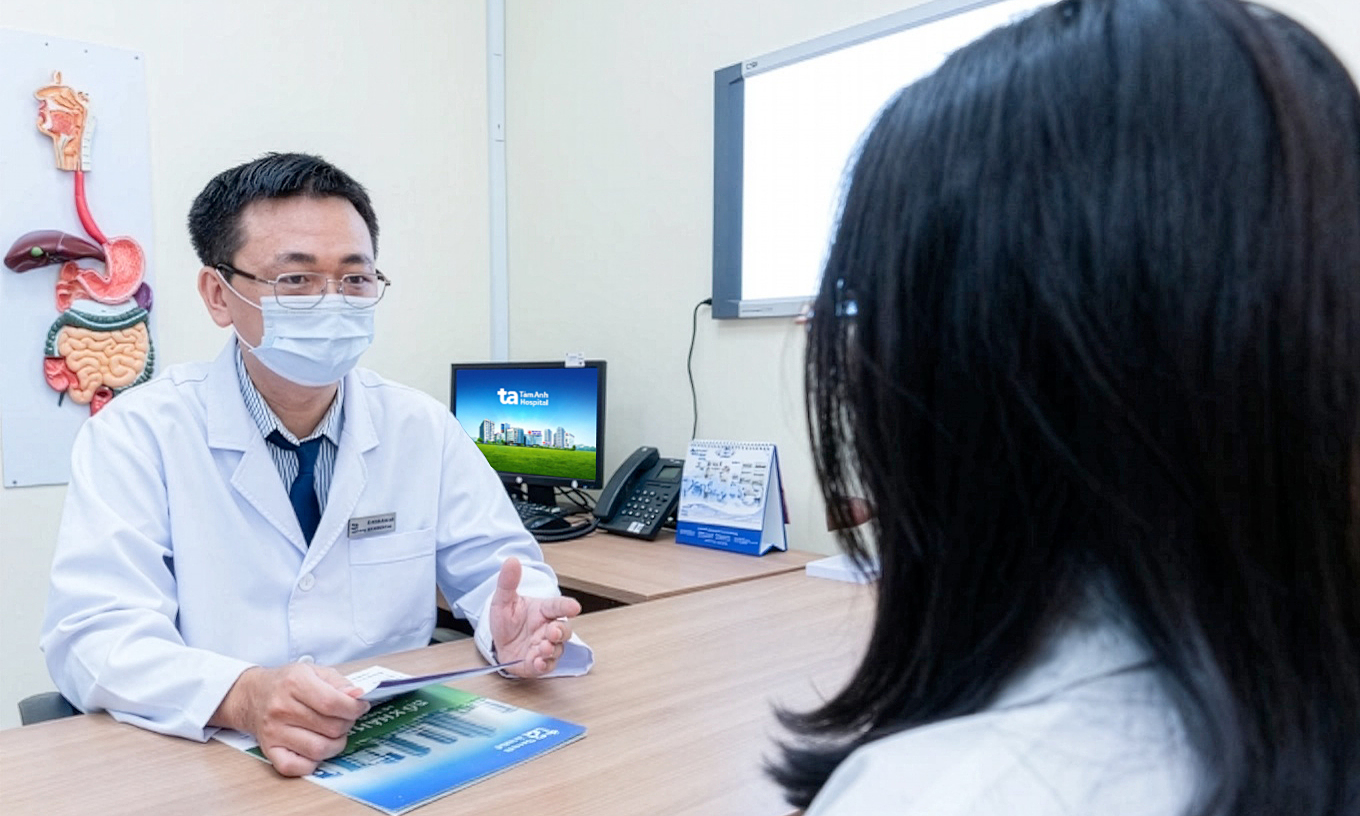
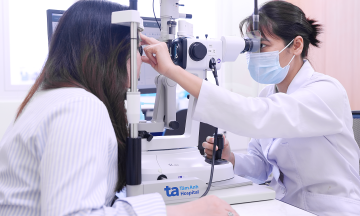
Hop's family history included colon cancer in her maternal grandfather and uncle, and multiple colon polyps in her mother. This prompted her to seek examination at Tam Anh General Hospital Hanoi, where Doctor Vu Truong Khanh, Head of the Department of Gastroenterology, Hepatology, and Pancreatology, noted that Hop had gastritis with multiple polyps and a Helicobacter Pylori (HP) infection.
Endoscopy results revealed numerous polyps, measuring 0,3 to 1,2 cm, scattered throughout her colon and rectum. Some polyps were removed during the procedure and sent for histopathology, which confirmed them as tubular adenomas.
According to Doctor Khanh, Hop suffers from familial adenomatous polyposis syndrome, which carries a high risk of progressing to colorectal cancer. To prevent complications, Doctor Khanh prescribed a partial colectomy, followed by regular monitoring to detect any remaining lesions early.
Polyps are benign lesions, but when they exceed 1 to 2 cm in size, the risk of colon cancer significantly increases. Familial adenomatous polyposis is a hereditary condition characterized by hundreds of polyps of varying sizes within the digestive tract. Over time, some polyps can undergo structural changes and become malignant if not detected and treated promptly.
Doctor Khanh emphasized that individuals with a family history of colon cancer or multiple polyps, including parents and siblings, require earlier screening, tailored to each specific case. Suspected cases of hereditary polyposis syndrome may need to begin endoscopy at a very young age, between 12 and 20 years old, and undergo close monitoring. Additionally, gene testing, endoscopy, and computed tomography (CT) scans are crucial for screening to detect polyps in other locations, such as the small intestine and duodenum.
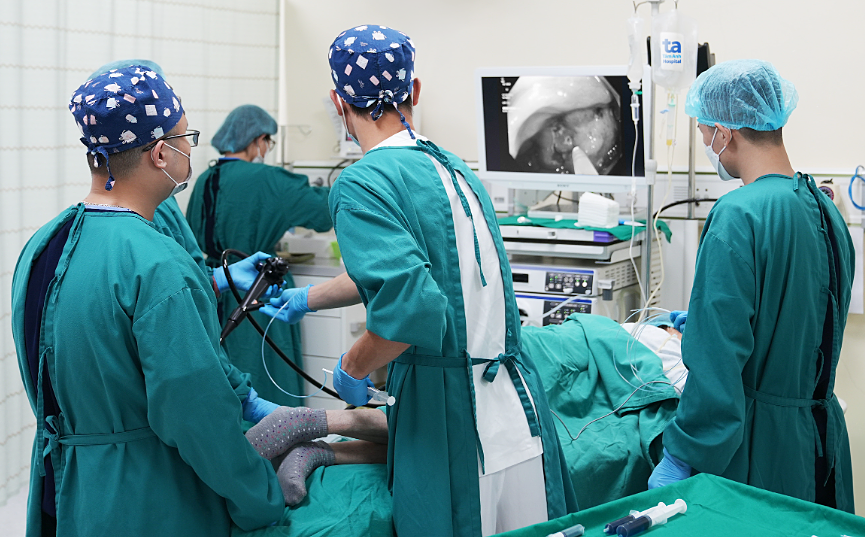 |
The team performing a colonoscopy on a patient. Photo: Tam Anh General Hospital |
Upon detection, doctors remove polyps via endoscopy and schedule regular follow-up appointments. The monitoring frequency depends on the number, size, and nature of the polyps, and may be shortened for high-risk polyps. If the disease is detected at a late stage, patients require colectomy combined with chemotherapy.
Besides regular check-ups, individuals with colon polyps should maintain a healthy lifestyle, increasing intake of vegetables, fruits, fish, and beans. Limiting alcohol, tobacco, red meat, sweets, and processed foods helps reduce the burden on the digestive system.
People experiencing symptoms such as: blood in stool, persistent changes in bowel habits, intermittent abdominal pain, loss of appetite, anemia, fatigue, or rapid weight loss should seek medical attention to determine the cause.
Ly Nguyen
*Patient's name has been changed.
| Readers can submit questions about digestive diseases here for doctors to answer. |