Speaking in parliament on 26/2, Deputy Prime Minister Gan Kim Yong announced that Singapore's total fertility rate (TFR) is projected to fall to a new record low of 0.87 in 2025, according to CNA. Previously, this index first dropped below one in 2023 to 0.97 and remained at that level throughout 2024.
Gan issued a stark warning, calculating that with the current birth rate of 0.87, 100 Singaporeans of this generation will only produce 44 children, further dwindling to 19 grandchildren in the next generation. As the number of women of childbearing age dwindles, the island nation will find it almost impossible to reverse this trend. Concurrently, the aging rate is accelerating. In 2025, one in five citizens will be over 65, a significant increase from the one in eight ratio recorded in 2015.
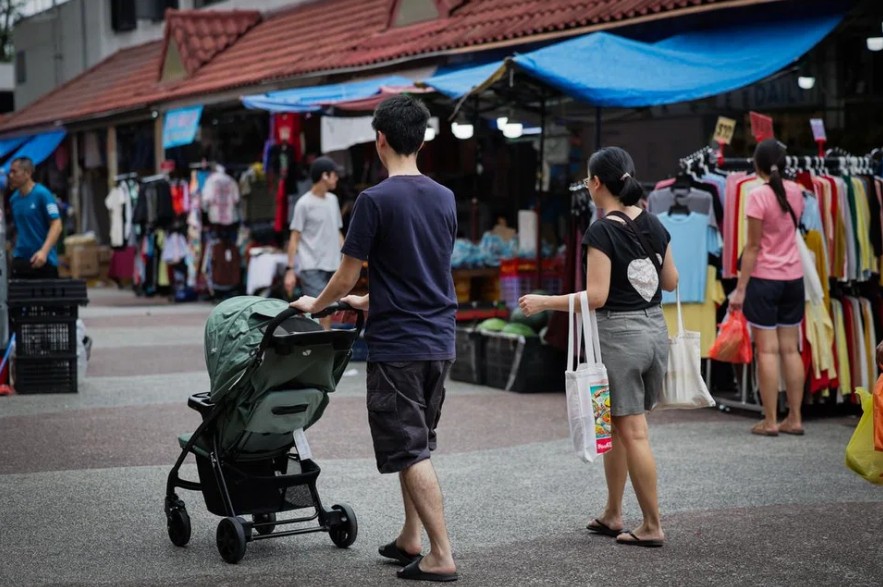 |
Singapore's preliminary resident total fertility rate decreased from 0.97 in 2024 to 0.87 in 2025, the nation's lowest in history. *Gin Tay*
At a macro level, Gan noted that a declining population means a reduction in Singapore's national vitality and economic strength. Economic growth and income will slow, while spending on healthcare and social welfare must increase to support the growing elderly community.
"This immense pressure affects not only the national level but also weighs heavily on individual households," he added. Additionally, the shortage of citizens makes it increasingly difficult for Singapore to meet security and defense requirements. Gan predicted that if officials do not introduce new measures, the domestic population size will begin to shrink as early as the 2040s.
To change this trajectory, Minister in the Prime Minister's Office Indranee Rajah argued that policies alone are insufficient. "What we need is a comprehensive reboot of our concepts of marriage and parenting," she said.
According to Indranee, Singapore needs a comprehensive reboot across three aspects: first, changing how society views and supports family formation; second, transforming the work environment to harmonize career and family life; and third, promoting individual contributions within the community.
Currently, the government has established an inter-agency task force to study increasing parental leave and financial support for parents. Authorities are also collaborating with businesses to create a balanced work environment, helping employees balance career development and nurture family life.
Despite efforts to boost the internal birth rate, the government acknowledges Singapore still requires a "tightly managed" flow of immigrants to compensate for the low birth rate. The nation expects to welcome about 25,000 to 30,000 new citizens annually over the next five years. Simultaneously, the permanent residency (PR) quota will be adjusted upwards to 40,000 people each year to ensure future resources.