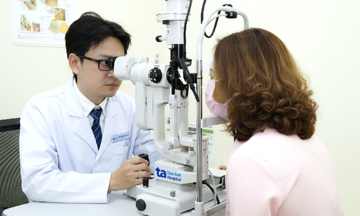
After over one week, Nhu's skin showed no improvement. She used daily exfoliating products, which made her skin even tighter, drier, and caused more prominent, patchy dark spots. Master of Medicine, Doctor Vu Thi Thuy Trang, a specialist in Dermatology and Aesthetic Dermatology at Tam Anh General Hospital, TP HCM, diagnosed Nhu with a severe sunburn and post-inflammatory hyperpigmentation. This condition resulted from high-intensity UV exposure, damaging skin cells and triggering an inflammatory response.
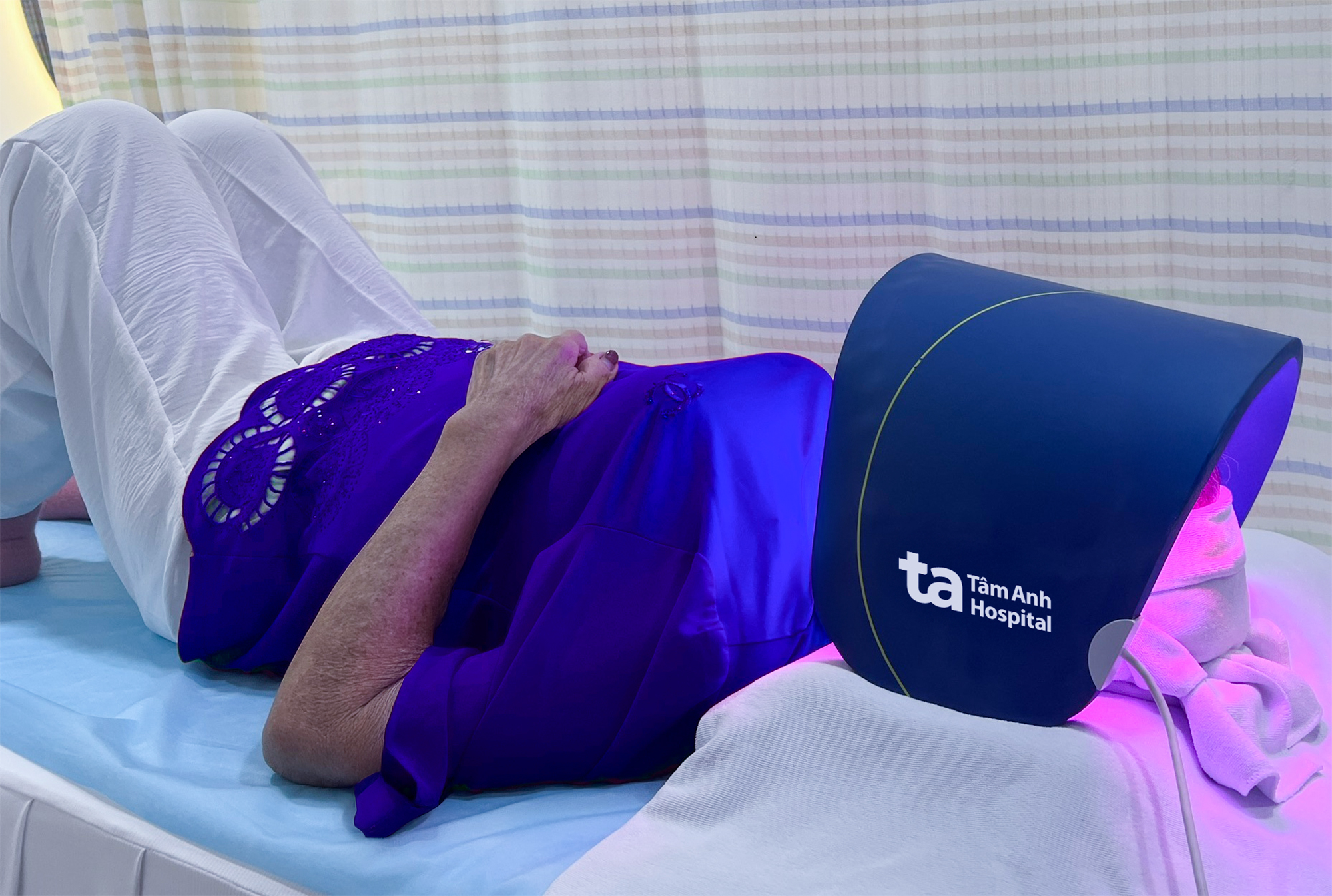 |
Nhu undergoing bio-led light therapy to accelerate skin recovery. Photo: Tam Anh General Hospital |
Doctor Trang did not immediately treat Nhu's pigmentation. The initial treatment focused on calming inflammation and restoring the skin. Nhu received restorative electrophoresis combined with bio-led light therapy to reduce redness and irritation, support cell regeneration, and restore the skin's protective barrier.
Once the skin was no longer hot or irritated, its surface stable, and peeling had stopped, Doctor Trang began treating the dark, patchy areas. This involved 3-5 sessions of pico pro laser treatment, spaced two weeks apart. This technology emits ultra-short pulses, selectively targeting melanin to break down pigment while minimizing thermal effects, making it suitable for sun-damaged skin.
After several treatment and recovery sessions, Nhu's skin gradually brightened and became more even-toned. However, the doctor noted that complete recovery would take more time, and continued monitoring for recurrence of hyperpigmentation was necessary.
According to Doctor Trang, after each Tet holiday, there is a significant increase in patients seeking treatment for issues such as atopic dermatitis, allergies, sunburn, rashes, hives, and acne. In the first three days following the Tet holiday, the department received over 100 cases related to allergies and hyperpigmentation, a nearly 40% increase compared to normal days. This is because many people travel to beaches, go on pilgrimages, or visit outdoor attractions during Tet, where they experience high UV index exposure for many hours. Additionally, lifestyle changes during Tet, such as lack of sleep, alcohol consumption, and diets high in sugar or processed foods, can contribute to systemic inflammation and alter the body's reaction threshold. For individuals with allergic predispositions, symptoms like hives or atopic dermatitis are more likely to appear or worsen.
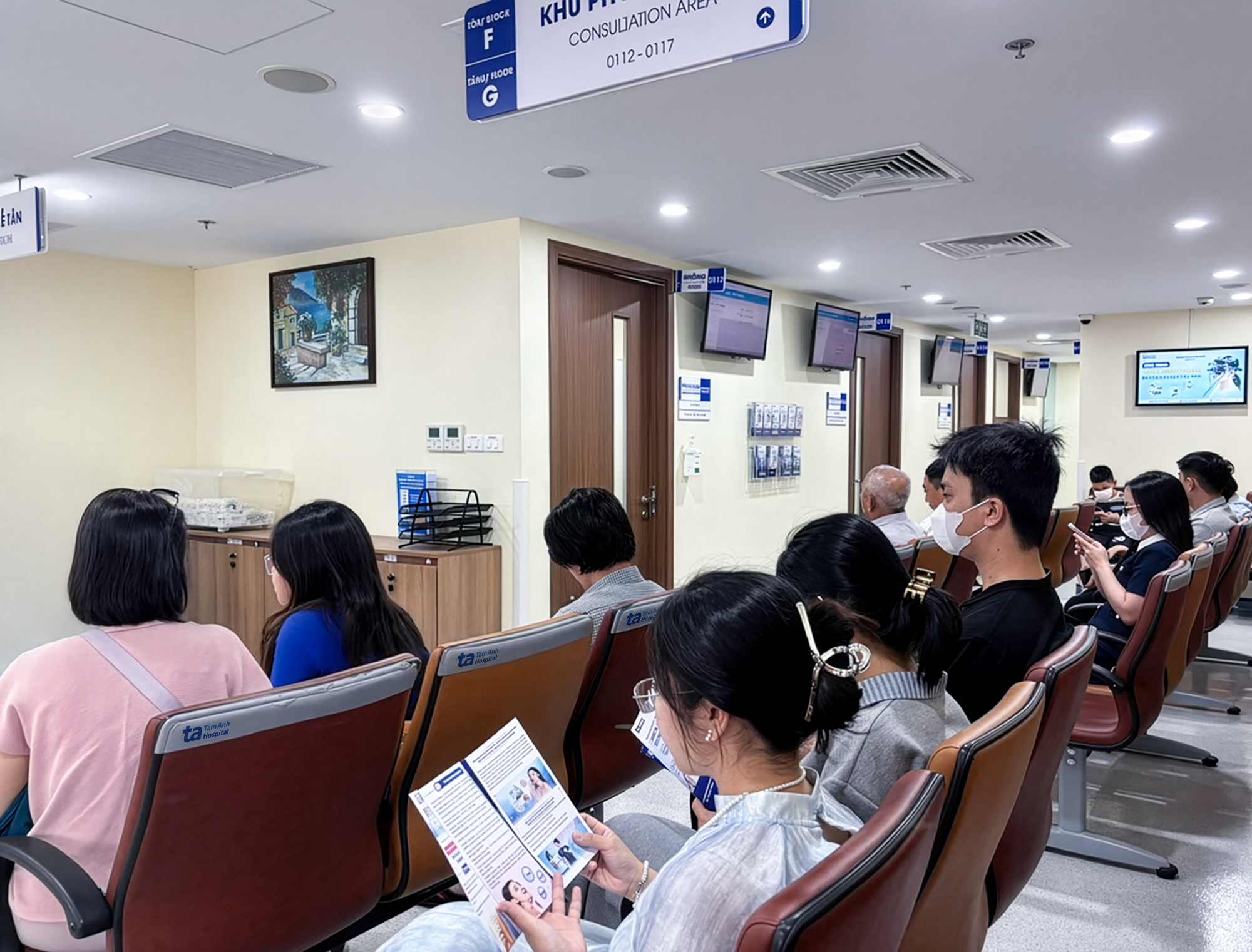 |
The number of patients seeking dermatology care at Tam Anh General Hospital significantly increases after Tet. Photo: Hospital provided |
Doctor Trang advises against waiting for sunburned skin to heal on its own if symptoms persist for more than two to three days, such as prolonged redness and irritation. The skin risks rapid darkening within a few days, increasing burning pain and stinging sensations, or uneven patchy dark spots.
A common mistake many people make is attempting to lighten their skin quickly with harsh exfoliation, chemical peels, high-concentration vitamin C, or whitening products immediately after sunburn. The priority should be to soothe and restore the skin's protective barrier and apply sun protection. Only after the skin stabilizes should pigment disorders be addressed with appropriate methods. Incorrect treatment can lead to prolonged darkening, increased risk of melasma, and accelerated skin aging. Patients should visit a hospital with a specialized Dermatology and Aesthetic Dermatology department for early examination, assessment of damage, and correct stage-specific treatment.
Minh Huong
*Character name has been changed