This figure, recorded by the Ministry of Health, was shared by Professor Pham Manh Hung, President of the Vietnam Society of Interventional Cardiology and Director of Cardiology Institute, 19-8 Hospital, at the "New Philosophy in Complex Coronary Artery Intervention" workshop on 22/8. According to Professor Hung, no official and comprehensive statistics are available yet; these numbers are based on research and practical treatment. He estimates that myocardial infarction, or acute coronary syndrome, accounts for about one-half of cardiovascular disease deaths, equivalent to more than 100,000 cases each year.
Myocardial infarction occurs when a coronary artery is suddenly blocked, typically by a blood clot forming on a ruptured atherosclerotic plaque. When oxygen-rich blood cannot reach the heart muscle, a part of the heart muscle is damaged, or even necrotizes, if revascularization is not performed promptly.
"Myocardial infarction is not only affecting older individuals but is increasingly seen in younger people," Professor Hung stated. Many patients in their 30s and 40s are admitted in severe conditions, including cardiogenic shock, cardiac arrest, and respiratory arrest, despite having no clear prior history of cardiovascular disease.
Beyond age and family history, primary risk factors are related to lifestyle and underlying conditions such as smoking, overweight, obesity, physical inactivity, hypertension, diabetes, dyslipidemia, and prolonged stress. These factors accelerate the process of atherosclerosis, which develops silently over many years, particularly in young individuals.
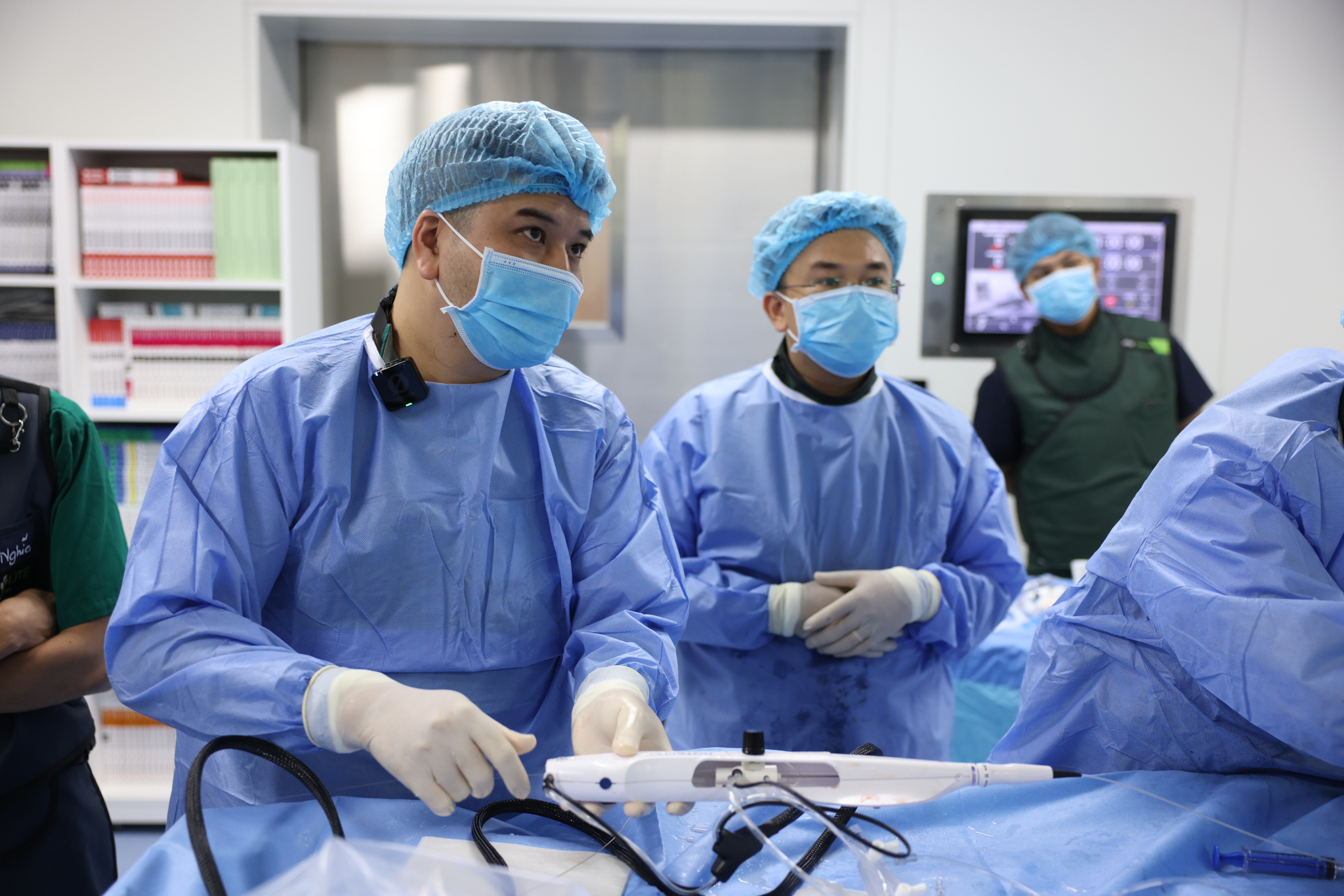 |
Doctors at 19-8 Hospital perform a cardiovascular intervention connected live to the workshop. Photo: Hospital provided |
In emergency myocardial infarction cases, time is critical for saving heart muscle. If a patient arrives at the hospital early, doctors can identify the blockage and revascularize the coronary artery through stent implantation or surgery if necessary.
However, Professor Hung noted that the goal of modern interventional cardiology is no longer simply to open the vessel and implant a stent. Doctors must determine if the lesion truly requires intervention, how to prepare the lesion, the appropriate number and type of devices, and minimize the amount of material left inside the vessel.
For instance, drug-coated balloons or bioresorbable scaffolds can be considered for suitable patients. In long and complex lesions, a hybrid approach combining selective stenting with drug-coated balloons is applied to achieve treatment efficacy while reducing the long-term presence of metal in the coronary arteries.
Another significant change is the increased use of intravascular imaging. At the Cardiology Institute, 19-8 Hospital, intravascular ultrasound (IVUS) and other intravascular imaging techniques are used to assess vessel wall structure, atherosclerotic plaque characteristics, calcification extent, actual artery size, and post-stent results. Compared to relying solely on two-dimensional images from angiography, these tools help doctors more precisely choose the intervention site and method, device size, and evaluate post-treatment outcomes. This represents a shift towards precise and personalized intervention.
"The success of an intervention does not lie in the number of stents or the complexity of the technique, but in choosing the optimal strategy for each patient, effectively treating the lesion, and limiting unnecessary interventions," Professor Hung emphasized.
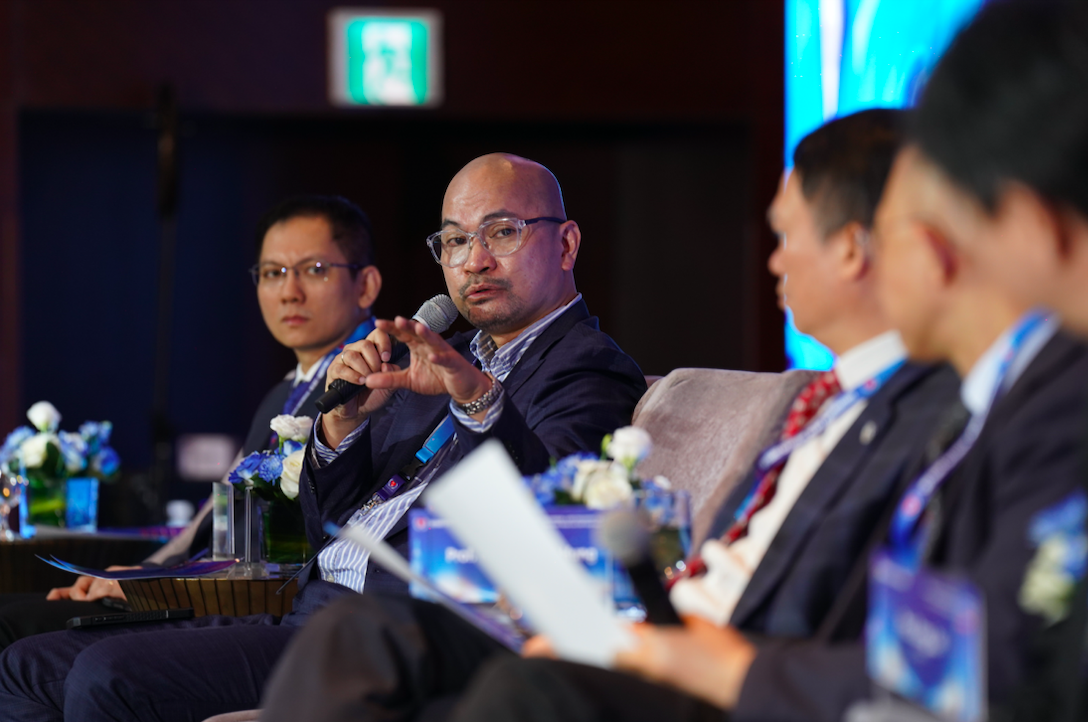 |
Vietnamese and international cardiology experts share insights at the workshop. Photo: Thu Phuong |
During the workshop, Vietnamese doctors demonstrated complex coronary artery intervention techniques. Images of an intervention case were transmitted live from the 19-8 Hospital's intervention room to the meeting, allowing attendees to observe the entire process from lesion assessment and intervention plan selection to post-procedure result verification.
Experts advise that early recognition of myocardial infarction or acute cardiovascular event signs helps patients receive timely examination and treatment. People should call emergency services immediately if they experience severe chest pain lasting over 15 minutes that does not subside with rest; rapidly increasing shortness of breath; cold sweats; dizziness, fainting, or loss of consciousness. Additionally, most risk factors can be controlled by quitting smoking, limiting alcohol consumption, eating a healthy diet, exercising, getting enough sleep, and managing stress and underlying conditions.
Le Nga