On 14/1, Major, Doctor Nguyen Van Dan from the Department of Oral and Maxillofacial Surgery and Reconstruction, Military Hospital 175, stated that the patient presented with a large ulcerative mass on the right edge of her tongue. The lesion had appeared long ago, but the patient thought it was just a common mouth sore and did not seek medical attention.
Biopsy and MRI results showed stage 4 squamous cell carcinoma of the right lateral tongue. The tumor had deeply invaded the tongue muscles and spread to the opposite side. Due to the extensive spread of the lesion, doctors had to remove nearly the entire tongue and perform bilateral neck dissection.
Due to the large post-operative defect, local flaps could not be used, so the team performed microsurgical tongue reconstruction using an anterolateral thigh flap. The surgery lasted nearly 10 hours, requiring delicate dissection and anastomosis of small blood vessels under a microscope. After surgery, the patient recovered steadily, the graft survived well, and tongue mobility gradually improved, facilitating eating, drinking, and daily activities.
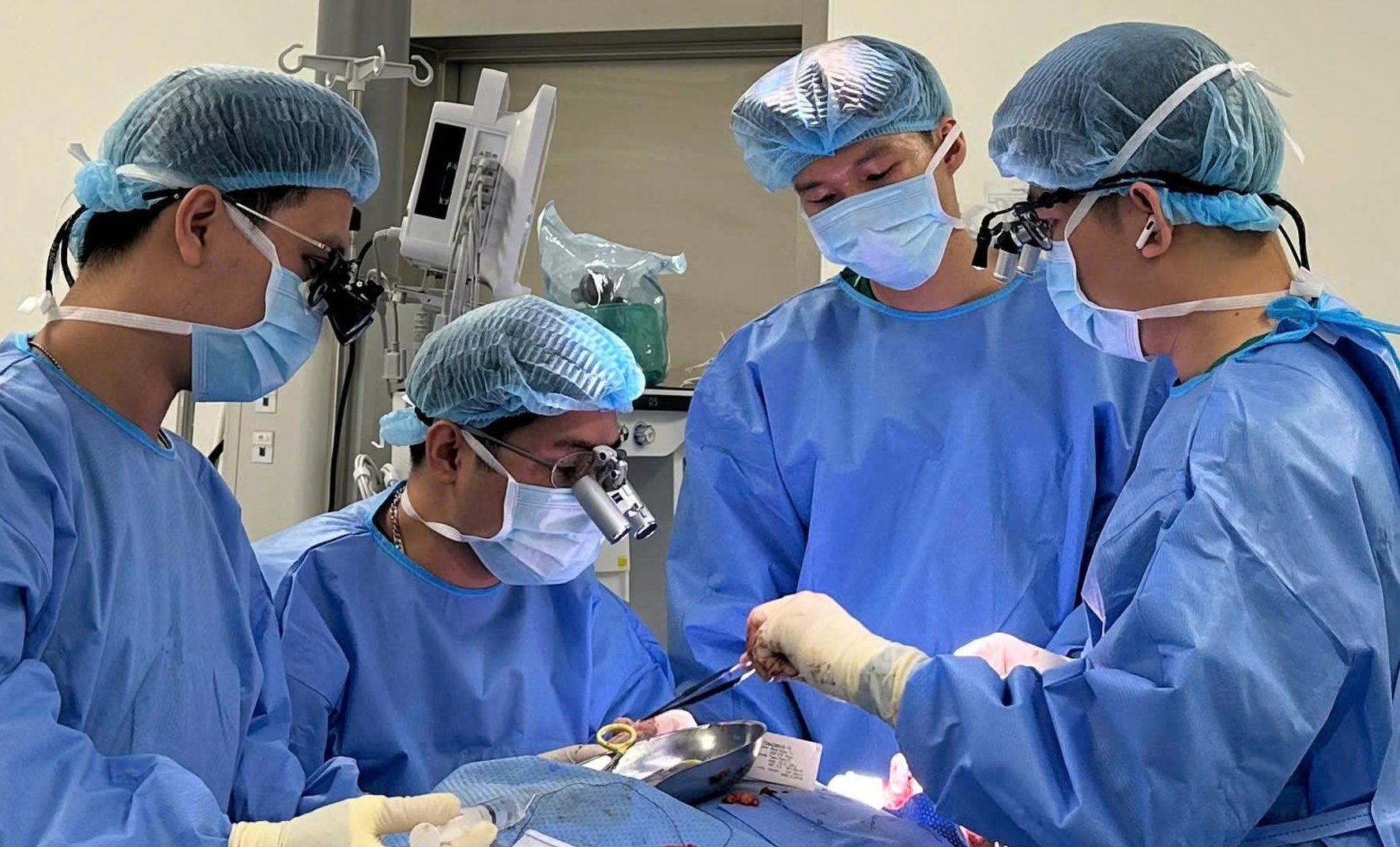 |
Doctors performing surgery and microsurgical tongue reconstruction for a cancer patient. Photo: Hospital provided.
Oral cavity cancer is one of the common head and neck cancers, ranking third after nasopharyngeal cancer and laryngeal cancer. The disease often has a silent onset, with initial symptoms that are not clear, such as persistent mouth sores, difficulty chewing, difficulty swallowing, mild sore throat, voice changes, or numbness in the tongue area.
Doctor Dan recommends not being complacent about abnormalities in the oral cavity. Early detection of tongue cancer helps reduce the extent of surgical intervention, preserve function, and improve prognosis. Risk factors that increase the likelihood of developing the disease include: smoking, alcohol consumption, betel nut chewing, poor oral hygiene, and potential links to HPV virus.
Le Phuong