Answer:
Nocturia is a common condition among individuals over 50 years old. Physiologically, as one ages, the kidneys' ability to concentrate urine decreases, bladder capacity shrinks, and bladder muscles contract less effectively. Concurrently, the production of antidiuretic hormone (ADH) lessens, causing the kidneys to continue producing urine at night, which leads to nocturia.
Urinating one to two times per night with a strong stream, no pain, and the ability to fall back asleep immediately afterward is often a normal sign of aging. However, waking to urinate two to three times nightly, accompanied by difficulty urinating, a weak stream, and fatigue, signals potential urinary system conditions such as benign prostatic hyperplasia, bladder stones, or urethral stricture. Additionally, nocturia can stem from other medical conditions like kidney failure, diabetes, cardiovascular disease, or infection.
 |
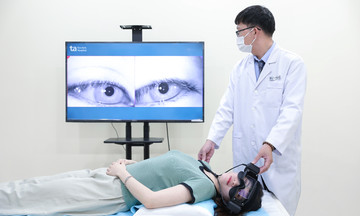
Dr. Pham Thanh Truc examines a patient. Illustrative photo: Tam Anh General Hospital Ho Chi Minh City
Individuals should visit a medical facility for specialized tests to accurately determine the cause, allowing doctors to provide appropriate treatment and prevent long-term complications. At Tam Anh General Hospital Ho Chi Minh City, comprehensive diagnostics including: urinary system ultrasound, cystoscopy, PSA testing (for prostate cancer screening), blood sugar tests, urinalysis, CT scans, and MRI scans facilitate quick and accurate diagnoses.
Doctors develop individualized treatment plans. If benign prostatic hyperplasia is the cause, mild or moderate cases can be managed medically with drugs that relax bladder neck smooth muscles or medications that reduce tumor size. For cases where the enlarged prostate is too large or has led to complications such as bladder stones or kidney failure, doctors may recommend surgical intervention using modern, minimally invasive techniques like transurethral resection of the prostate (TURP) with an electrocautery loop, transurethral surgery, or laser prostatectomy.
For underlying causes like diabetes or infection, effective blood sugar control and appropriate antibiotic use can significantly reduce nocturia. Patients should limit intake of water, tea, coffee, or alcohol before bedtime, consume more fruits and green vegetables, reduce fatty foods, and exercise regularly. If experiencing leg swelling, adopt the habit of elevating the legs in the afternoon or evening to facilitate earlier fluid return to circulation.
Dr. Pham Thanh Truc
Urology - Nephrology - Andrology Center
Tam Anh General Hospital Ho Chi Minh City
| Readers can submit questions about urinary conditions here for a doctor's response. |