


On 13/1, a representative from Military Central Hospital 108 reported that the three patients who received organs from the nurse are recovering well. Their vital signs remain stable, they are conscious, and breathing independently.
The medical council confirmed on 12/1 that the 46-year-old nurse died from brain death following a severe hemorrhagic stroke. Despite intensive efforts by medical staff, her condition did not improve. Her family, overcoming their grief, chose to donate her organs, offering a lifeline to patients facing critical illness.
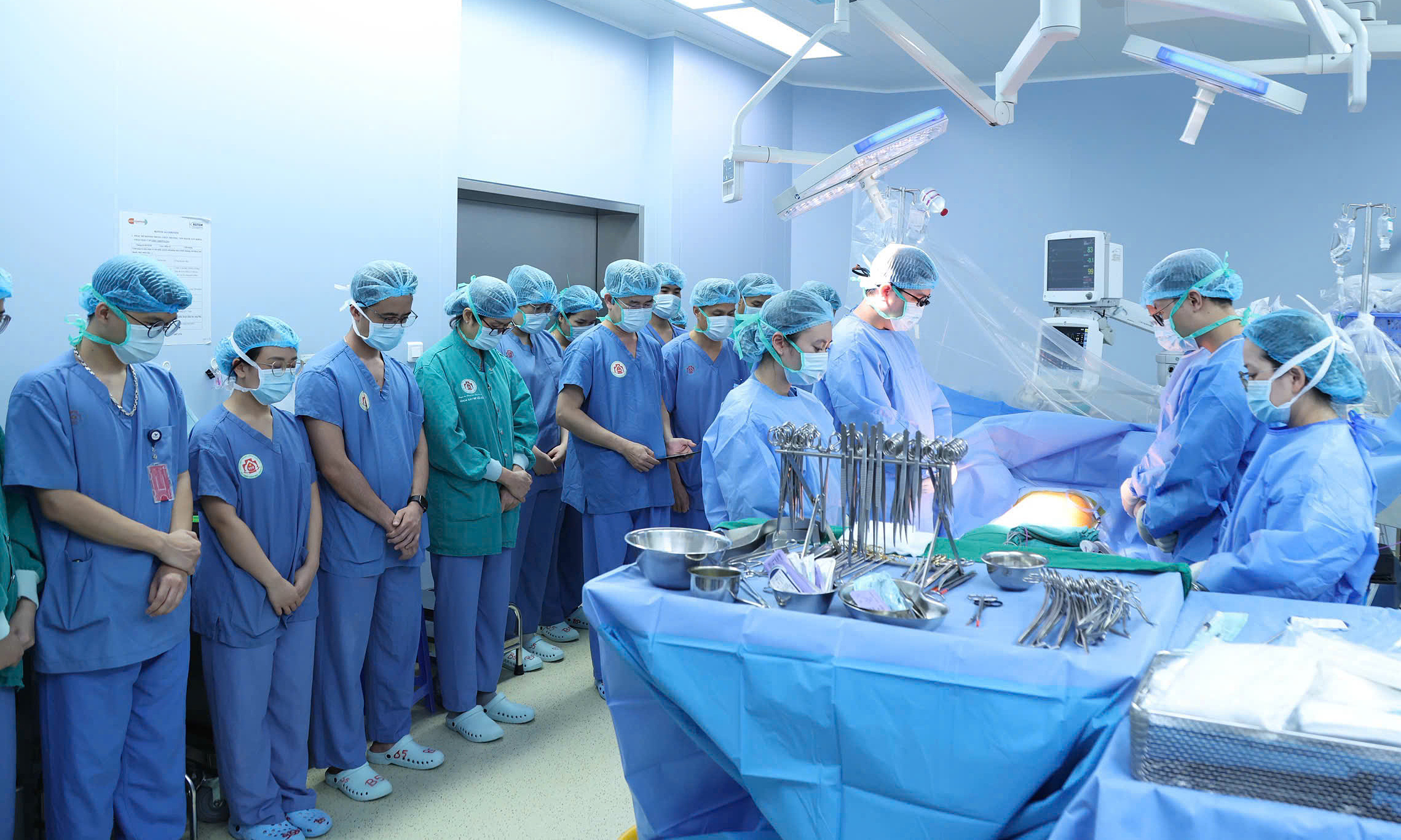 |
Medical staff bow in gratitude to the patient before surgery. Photo: Hospital provided.
Before the surgery, medical staff at Military Central Hospital 108 honored their colleague for her final humanitarian act. A team of specialists harvested her liver, two kidneys, and two corneas for immediate transplantation. The donated liver revived a 36-year-old man with hepatocellular carcinoma. The two kidneys offered new life to a 37-year-old woman and a 47-year-old man, both undergoing treatment for chronic kidney failure. The two corneas went to Hue Central Hospital to help patients with vision loss regain their sight.
Associate Professor, Doctor Vu Van Quang, Deputy Head of the Department of Hepatobiliary and Pancreatic Surgery, stated that his colleague, though gone, continues her life-saving mission through organ donation. Following the transplants, the hospital implemented intensive critical care protocols to ensure maximum safety for the recipients.
Doctor Le Trung Hieu, Deputy Director managing the Organ Transplant Center at Military Central Hospital 108, noted the hospital's expertise in complex procedures. It has performed 665 kidney transplants, 319 liver transplants, and dozens of heart, lung, and other organ transplants. The success rates and post-transplant survival times here match those of leading medical centers globally.
Vietnam's medical sector has performed over 9,500 organ transplants in the past 33 years. All current organ transplant techniques adhere to strict safety protocols and receive rigorous licensing from the Ministry of Health.
Le Nga


