Doctor Le Phuc Lien, Head of the Female Urology Unit at the Urology, Nephrology, and Andrology Center, Tam Anh General Hospital in Ho Chi Minh City (TP HCM), diagnosed Ms. Man with grade 4 genital prolapse. This is the most severe level, where all pelvic organs, including the anterior wall (bladder, urethra) and posterior wall (rectum, small intestine), completely prolapse outside the vagina. The prolapsed mass can lead to serious complications such as vaginal ulceration and infection, digestive complications, urinary tract infections, and necrotic prolapsed tissue.
Ms. Man had undergone sterilization surgery 20 years prior, followed by a total hysterectomy due to large uterine fibroids, and then an appendectomy, resulting in extensive inflammatory adhesions in her surgical area. She also suffers from diabetes and hypertension, which increase the risk of surgical site infections. Doctor Lien advised that the optimal treatment plan was robotic pelvic organ prolapse surgery using the Da Vinci Xi system.
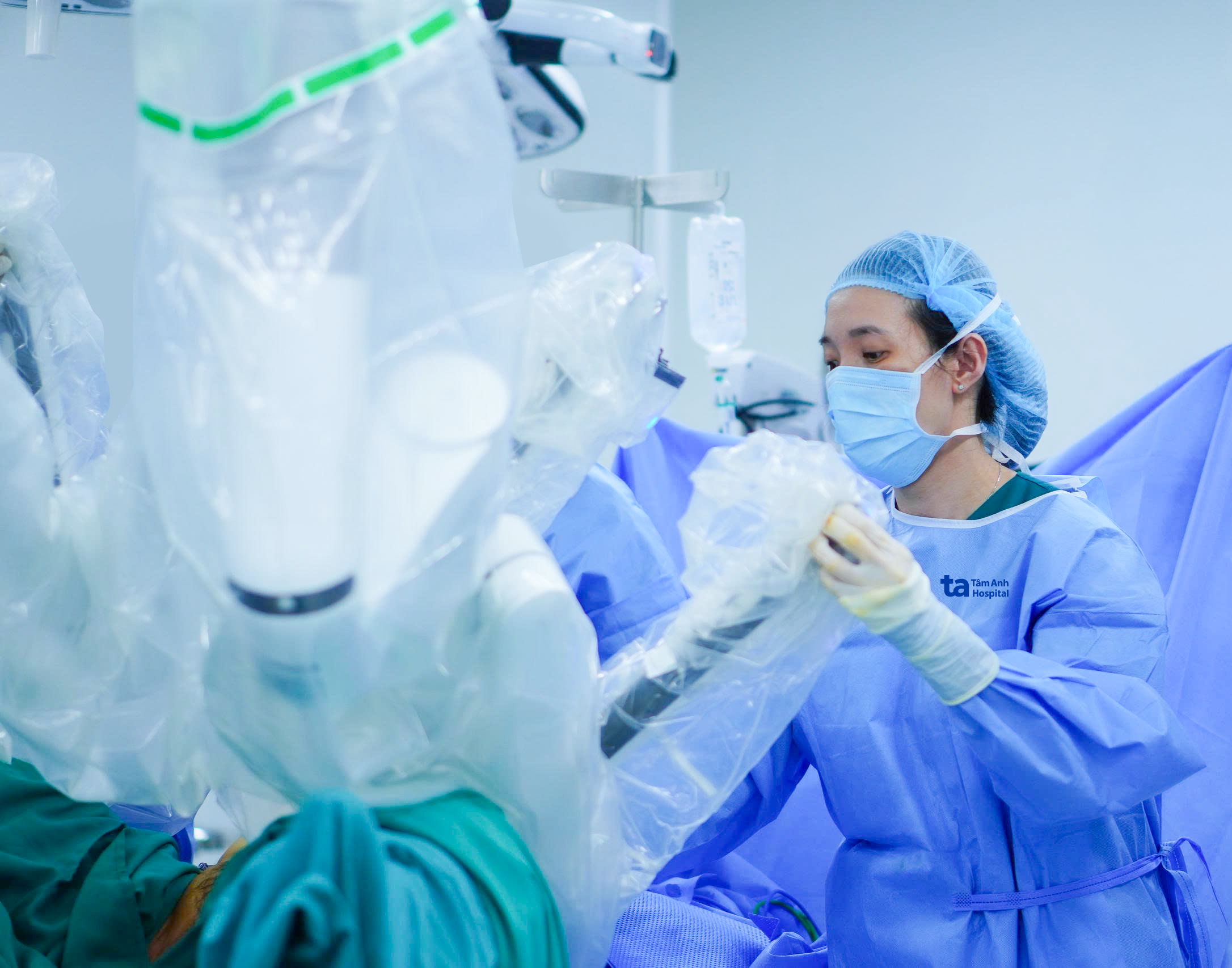 |
Doctor Lien performing surgery with the assistance of the Da Vinci Xi robot to treat Ms. Man’s genital prolapse. Photo: Tam Anh General Hospital
The patient's abdominal cavity had severe inflammatory adhesions, with visceral fat adhering to the abdominal wall at the site of her previous hysterectomy. Doctor Lien and his team first had to meticulously dissect the adhesions. Following this, they created trocar ports on the abdomen to insert robotic endoscopic instruments and access the surgical area. The four robotic arms of the Da Vinci Xi assisted the surgeon in dissecting and retracting adhesive areas and intestinal organs, then accurately placing and suturing a mesh to the sacral promontory to support the pelvic organs.
According to Doctor Lien, this method is challenging compared to open surgery or traditional laparoscopy due to the deep, narrow surgical field. Patients might endure a very long operation, or the condition could easily recur if the suturing is not precise. However, the robotic system provides magnified 3D images and precise maneuvers, allowing the surgeon to place the mesh accurately and perform meticulous suturing, resulting in much less pain than traditional open surgery.
Ms. Man recovered quickly and was discharged after three days. She needs to care for her intimate area to prevent infection, avoid squatting, refrain from heavy activity for 6-8 weeks, and abstain from sexual intercourse for two to three months post-surgery.
Doctor Lien stated that there are four levels of genital prolapse, ranging from moderate to severe. Grade 4 genital prolapse requires surgical intervention to prevent severe complications. Women who have given birth should seek medical examination if they experience signs of genital prolapse, such as urinary dysfunction, constipation, a feeling of heaviness or pressure in the lower abdomen or perineum, or a palpable prolapsed mass. To prevent prolapse, it is advisable to: eat plenty of fiber to avoid constipation, exercise and perform pelvic floor muscle strengthening exercises, maintain a healthy weight, and avoid lifting heavy objects to reduce pressure on the pelvic floor.
Ha Thanh
*Patient's name has been changed