Ha Anh Duc, Director of the Department of Medical Examination and Treatment Management, reports that Vietnam records over 182,000 new cancer cases each year. Despite a rapidly expanding treatment network, comprising about 10 specialized hospitals and dozens of satellite oncology centers, the system faces immense pressure. Leading facilities, such as K Hospital in Hanoi and Ho Chi Minh City Oncology Hospital, frequently experience overcrowding, necessitating continuous infrastructure expansion.
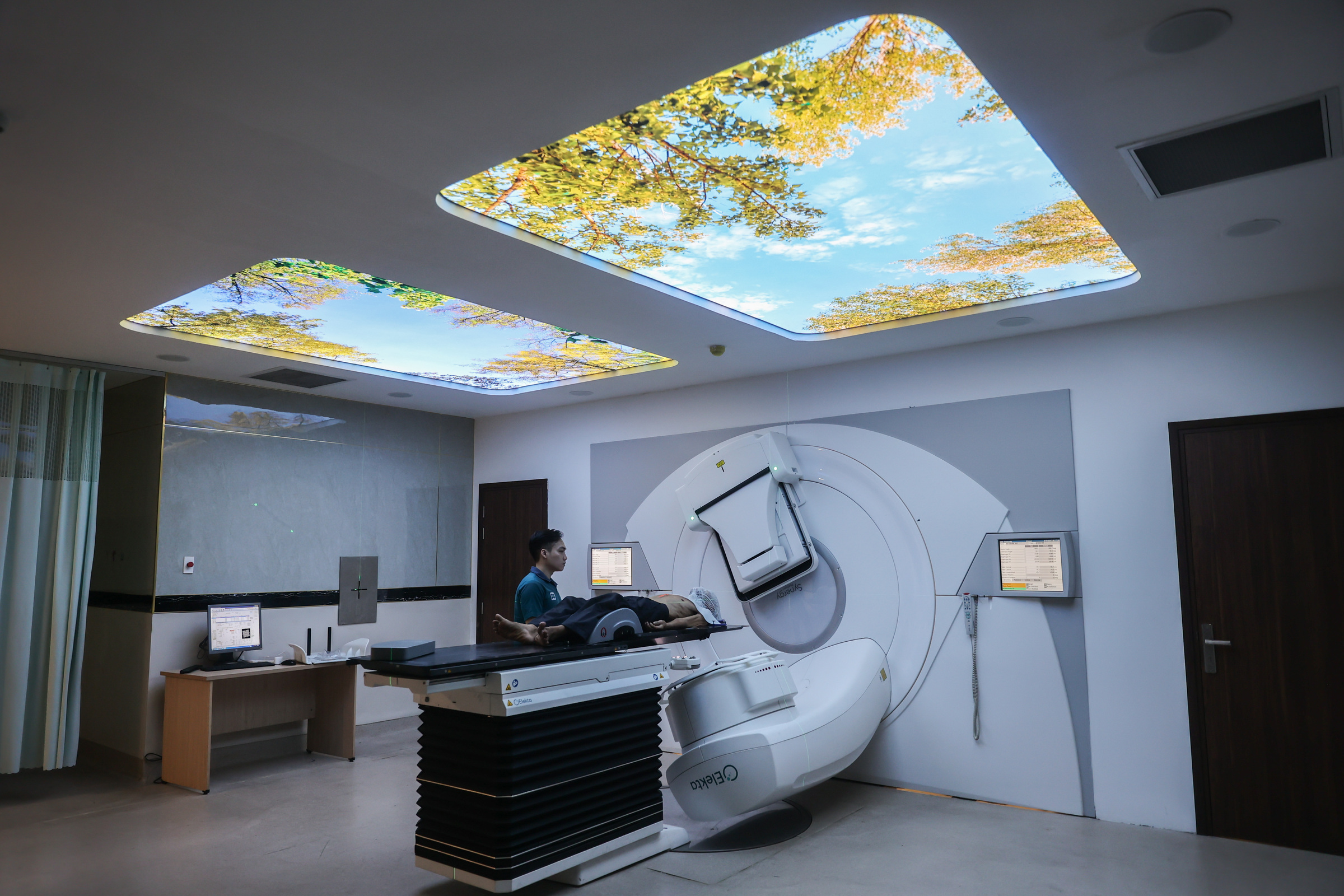 |
Radiation therapy for cancer patients at Ho Chi Minh City Oncology Hospital, facility 2. Photo: Quynh Tran |
Mr. Duc attributes the issue to significant gaps in early disease screening and detection. In developed nations like Japan, effective routine screening enables patients to detect cancer at early stages, maximizing the efficacy of advanced techniques such as proton therapy. Conversely, in Vietnam, when patients are admitted with metastatic tumors, even advanced technologies struggle to yield positive outcomes.
Doctor Diep Bao Tuan, Director of Ho Chi Minh City Oncology Hospital, provided specific evidence, stating that a study across 5 major hospitals found that 50-80% of patients are admitted at stage 3 or 4. This is concerning due to the high mortality risk and significantly increased treatment costs. The primary reason is that people only seek medical attention when symptoms appear, rather than undergoing regular check-ups or early screening.
To enhance early detection, Ho Chi Minh City Oncology Hospital plans to convert its facility one into a specialized health check-up and screening center. This December, the hospital will open two specialized clinics for healthy individuals seeking examinations. The unit is also applying artificial intelligence (AI) to radiation therapy planning and personalized treatment regimens, alongside investments in intensity-modulated radiation therapy and body-positioning techniques to maximize protection of healthy tissue.
On a macro level, the Ministry of Health is re-planning the oncology network, shifting focus from "treatment" to "prevention" and prioritizing resources for early screening. The Ministry is also accelerating digital transformation, developing electronic health records and a national cancer database to link laboratory and pathology results across different levels, reducing diagnostic errors. Additionally, the Proton Therapy Center project is underway to meet the domestic demand for high-quality treatment.
The government proposes that starting in 2026, all citizens will receive free annual health check-ups or screenings, moving towards basic hospital fee exemptions and increased health insurance benefits. Doctor Tuan believes this is a correct and crucial policy for the early detection of cancer and other diseases. However, he emphasizes the need for synchronized resources and facilities, the development of common examination protocols, and widespread implementation at the provincial level to alleviate the burden on leading hospitals.
Le Phuong