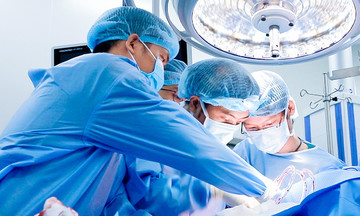
After medication proved ineffective, Hanh sought care at Tam Anh General Hospital Ho Chi Minh City, where he underwent urethrocystoscopy and an MRI to assess his prostate condition. Master of Science, Doctor Cao Vinh Duy, from the Department of Urology, Center for Urology - Nephrology - Andrology, diagnosed Hanh with benign prostatic hyperplasia (BPH). His prostate volume was 77 ml, three times larger than average for men, compressing the urethra and obstructing urine flow. This directly caused his prolonged urinary disorders and nocturia.
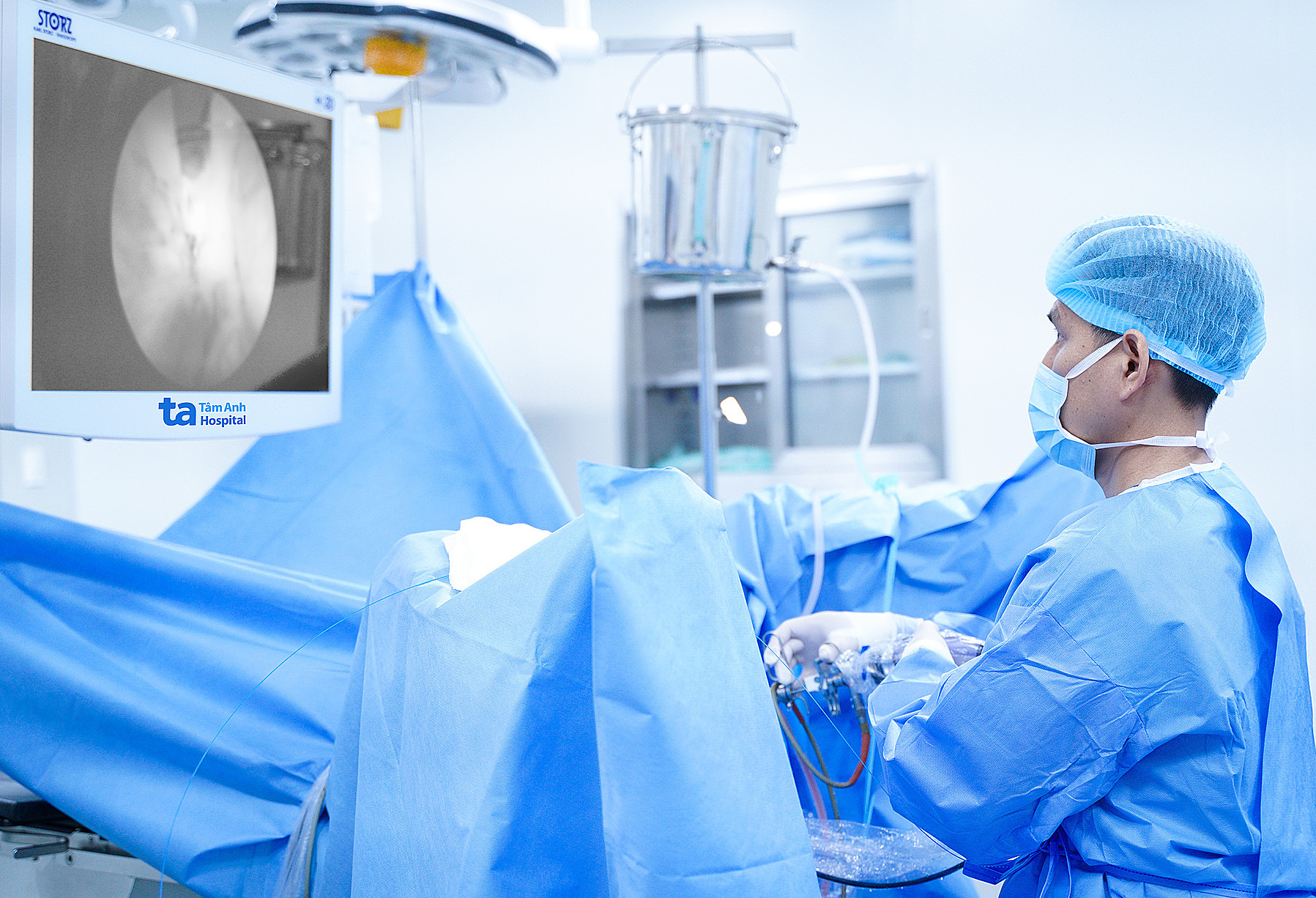 |
Doctor Duy performing laser enucleation of prostate (Holep) for Hanh. Photo: Tam Anh General Hospital |
Doctor Duy performing laser enucleation of prostate (Holep) for Hanh. Photo: Tam Anh General Hospital
Benign prostatic hyperplasia is a common condition among men. While early stages can be managed with medication, cases of excessive prostate growth, like Hanh's, require surgical intervention to relieve obstruction and prevent complications, according to Doctor Duy.
Doctor Duy recommended Holmium laser enucleation of the prostate (Holep) for Hanh. This method is suitable for large prostates, offering a lower risk of recurrence compared to traditional treatments. The procedure is performed transurethrally, without the need for skin incision. Holmium laser energy completely enucleates the hypertrophied prostate tissue, which is then morcellated and removed using a tissue morcellator. The precision of the Holmium laser helps control bleeding and limits damage to surrounding structures during dissection.
Following surgery, Hanh no longer experienced urgent urination and was discharged after three days.
Benign prostatic hyperplasia significantly impacts men's lives, causing characteristic urinary disorders. It can lead to complications such as acute urinary retention, urinary tract infections, or kidney failure due to prolonged obstruction. Factors contributing to the condition include age, hormonal changes, genetics, and a sedentary lifestyle.
Doctor Duy advises middle-aged and elderly men experiencing urinary symptoms to seek early examination and treatment, also ruling out prostate cancer. Patients with mild conditions may be monitored, adjust their lifestyle, or receive medical treatment. When necessary, surgical intervention may involve transurethral resection of the prostate (TURP), laser enucleation of the prostate such as Holep or Thulep, or open or laparoscopic prostatectomy. Less invasive methods, including Rezum water vapor thermal therapy or prostate artery embolization, are options for patients with moderate prostate size and symptoms.
To prevent the condition, men should drink sufficient water throughout the day but limit intake in the evening to avoid nighttime urination. They should also avoid alcohol, coffee, and stimulants. Maintaining a healthy lifestyle, increasing physical activity, and undergoing regular health check-ups are important for early detection and timely treatment.
Ha Thanh
*Patient's name has been changed