Answer:
Regaining full knee extension is an important goal after ligament reconstruction surgery. Incomplete knee extension can lead to walking difficulties, an altered gait, and quick leg fatigue as thigh muscles overcompensate. This persistent condition stems from various causes.
Ineffective rehabilitation is a common factor. Without proper exercise, the quadriceps muscles can weaken following injury and surgery. This makes it challenging for patients to control knee extension, often resulting in a sensation of leg weakness or a slightly bent knee when standing or walking.
Prolonged loss of extension can result from inadequate exercise, discontinuing rehabilitation prematurely, or failing to perform full-range knee extension exercises. Conversely, over-exercising or returning to strenuous activities too soon can cause persistent knee swelling and pain, hindering recovery.
Following ligament reconstruction surgery, adhering to a phased rehabilitation program is crucial. This program includes exercises to restore range of motion, build muscle strength, and enhance joint control. Consistent, guided exercise reduces joint stiffness and supports the knee's return to normal function.
Scar tissue can also cause joint stiffness. In some instances, excessive scar tissue forms within the joint, causing structures to adhere and restrict movement. Patients may experience increased knee stiffness, making extension or flexion difficult over time. Early detection allows for improvement through appropriate rehabilitation. However, severe cases may necessitate intervention to remove the movement-restricting scar tissue.
 |
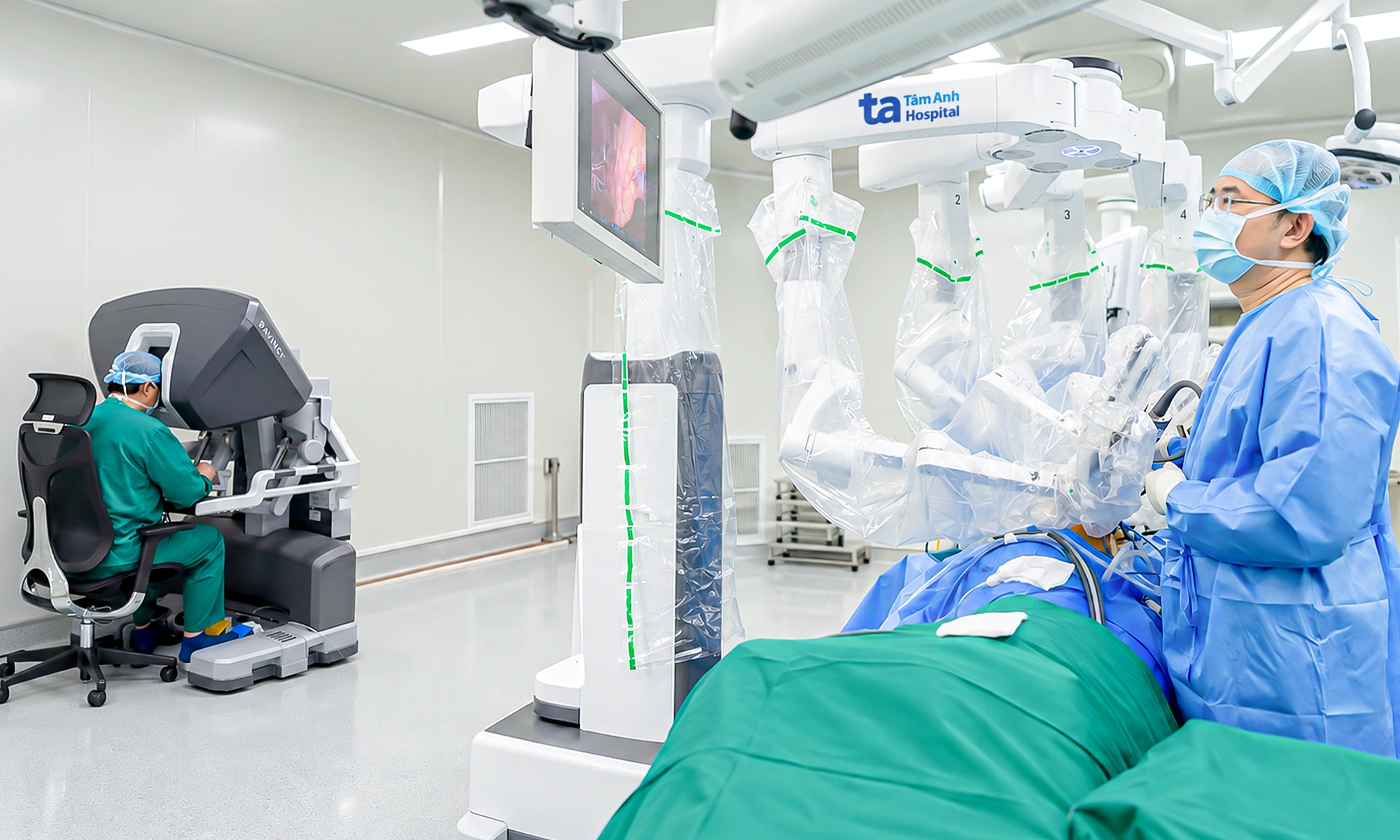
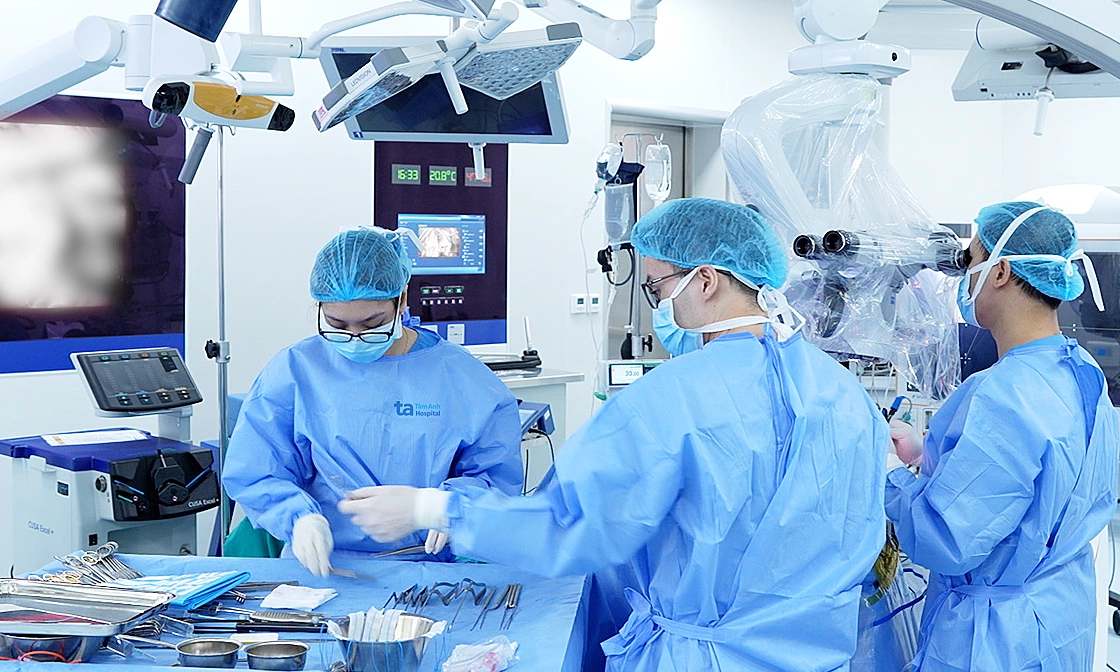
A doctor performs ligament reconstruction surgery on a patient. Illustration: Tam Anh General Hospital |
Fibrous tissue forming an obstruction in the joint, known as a Cyclops lesion, can develop after ligament reconstruction. This small mass of fibrous tissue, located in front of the new ligament, can cause patients to feel a blockage when attempting to fully extend their knee, particularly at the end range of motion. Some individuals also report clicking sounds or a sensation of locking within the joint.
If a Cyclops lesion is suspected, doctors may recommend magnetic resonance imaging (MRI) for diagnosis. Should the fibrous tissue cause significant obstruction, patients might require arthroscopic surgery. While not the most common cause, this condition should be considered in cases of prolonged extension loss.
Following ligament reconstruction surgery, it is advisable to seek medical re-evaluation if you experience prolonged knee extension loss, a sensation of obstruction during extension, or persistent knee swelling and pain. A specialist will diagnose the underlying cause and tailor the appropriate treatment plan.
Master, Doctor Vu Trung Hieu
Department of Orthopedic Trauma
Tam Anh General Hospital Hanoi
| Readers can ask questions about musculoskeletal conditions here for doctors to answer. |