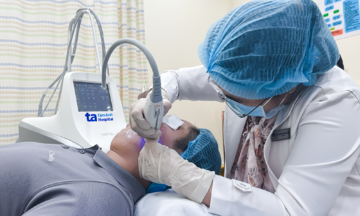
Tiny blisters first appeared on Ms. Sen's right cheek, then spread into red, painful clusters three days later. Some developed pus and gradually extended to her right eye, causing a burning sensation that disrupted her sleep and ability to eat.
Dr. Nguyen Thi Thuy Hau, from the Department of General Internal Medicine at Tam Anh General Hospital Hanoi, diagnosed Ms. Sen with facial shingles complicated by a superinfection and right eye conjunctivitis and keratitis. Clusters of blisters and red lesions emerged along the V2 branch of the trigeminal nerve. Some lesions ruptured, releasing a yellow fluid, accompanied by intermittent throbbing pain. Her right eye was swollen, difficult to open, watery, and pain intensified with light exposure.
While skin lesions were localized, facial shingles, particularly when affecting the eyes, can lead to severe complications like corneal scarring, reduced vision, neuritis, or facial paralysis. Doctors prescribed an aggressive intravenous dose of antiviral medication, combined with oral antibiotics to manage superinfection, neuropathic pain relievers, and treatments for conjunctivitis and keratitis.
After three days of treatment, the blisters dried, new lesions ceased to appear, and burning pain lessened. Her right eye swelling decreased, and vision improved. Ms. Sen continued outpatient treatment and skin care in the affected area to minimize scarring.
 |
Dr. Hau examines Ms. Sen before discharge. *Photo: Tam Anh General Hospital*. |
Dr. Hau explained that the disease originates from the varicella-zoster virus, the same agent causing chickenpox. After chickenpox recovery, the virus remains dormant in sensory nerve ganglia. Years later, factors like prolonged stress, physical debilitation, infection, old age, or immunosuppressant use can reactivate the virus, leading to shingles. Typical symptoms include clusters of blisters forming a band along a nerve path, usually on one side of the body, accompanied by burning pain and discomfort.
While shingles commonly affects individuals over 50, it is not exclusively a disease of the elderly. Dr. Hau noted that Ms. Sen's case, marked by significant year-end work pressure, two months of sleep deprivation, and physical debilitation, likely triggered the condition.
Effective shingles treatment depends heavily on early diagnosis. Antiviral medication offers optimal results within 72 hours of skin lesion onset. Individuals with blister clusters, burning pain in a band, or on one side of the body should seek immediate medical attention, avoiding self-medication or home treatment.
Beyond medication, patients recovering from shingles must maintain hygiene in the affected skin area, avoid scratching or breaking blisters, limit strong sun exposure, and ensure adequate nutrition and rest to support immune system recovery. Shingles can recur if favorable conditions for disease progression arise. Dr. Hau recommends vaccination for high-risk individuals to prevent shingles.
Thanh Ba
| Readers can submit questions about ophthalmic diseases here for doctors to answer |