Doctor Nguyen Thi Kim Dung, Head of Dermatology - Aesthetic Dermatology Unit at Tam Anh General Clinic District 7, observed the patient had numerous moderate to severe pitted scars. She designed a staged treatment plan, prioritizing the control of inflammatory acne. The 3 combined treatment methods included: subcision using a specialized needle to release fibrous bands causing boxcar scar retraction, trichloroacetic acid (tca) cross for ice pick scars, and microneedling radiofrequency (rf) to stimulate regeneration, collagen production, and fill scar tissue.
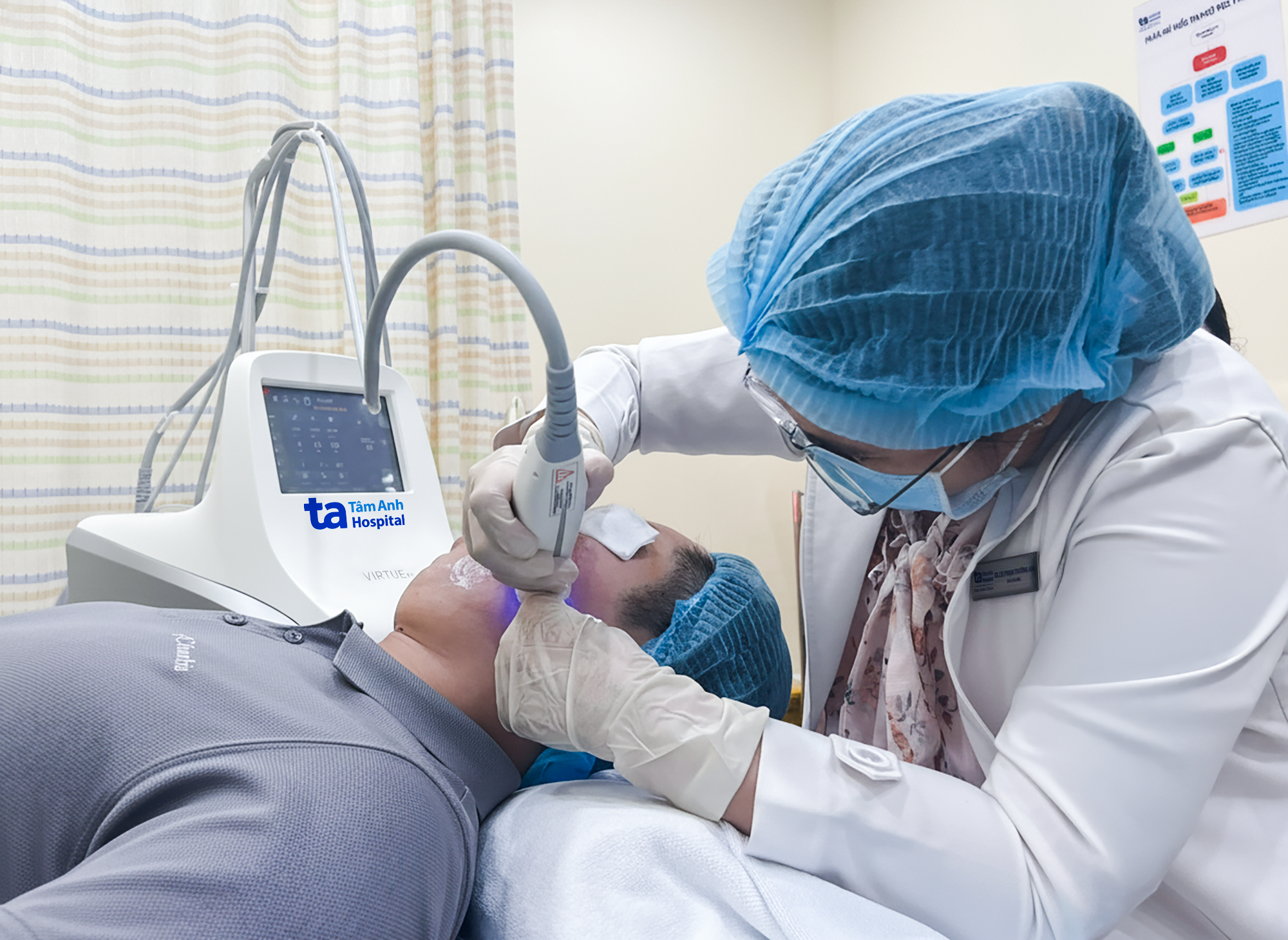 |
A doctor uses rf technology to treat pitted scars for Vu. Photo: Tam Anh General Clinic District 7
Two to 4 weeks after the initial subcision, Vu's skin surface improved significantly, with many deep pitted areas visibly filling in. The old scar regions showed slight redness, a normal occurrence as new tissue regenerates. He continued with several more subcision and microneedling radiofrequency sessions monthly to optimize the results.
After 3 treatments, the pitted scars improved by 80%, and his skin became smoother and firmer. He can further reduce red marks and even out skin tone using laser and intense pulsed light (ipl) treatments.
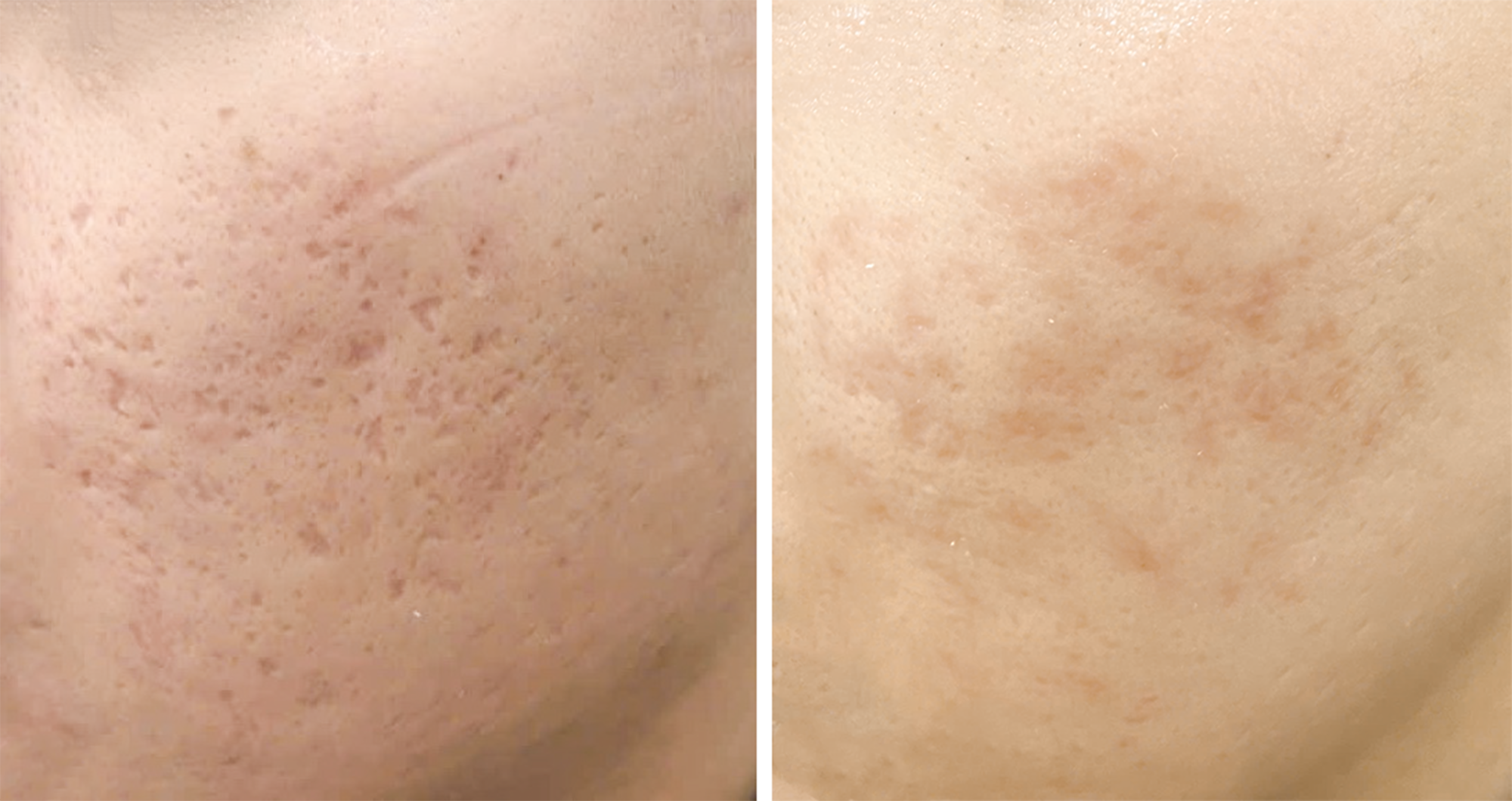 |
Vu's skin area was about 60% flatter after 1 subcision and rf technology treatment. Photo: Tam Anh General Clinic District 7
According to Doctor Dung, pitted scars like Vu's are old lesions where skin tissue is deficient and retracted, making them unresponsive to cosmetics or routine care. Cases with adherent scars require subcision to flatten the surface, and the effectiveness of this technique relies heavily on the practitioner's skill. Technologies such as microneedling radiofrequency, fractional co2 laser, and er:yag laser help restore deficient fibrous tissue and regenerate the skin surface. They do this by creating micro-injuries and focusing thermal effects in the dermis, which stimulates collagen production, causing scars to fill over time. Depending on the scar type, severity, and individual physiology, an average of 4-6 sessions may be needed for noticeable results.
Doctor Dung advises individuals with pitted scars to seek treatment at medical facilities specializing in Dermatology - Aesthetic Dermatology. This helps avoid the risk of infection or worsened scarring due to improper techniques. During the recovery process, sun protection, moisturizing, and appropriate aftercare are crucial to maintain the treatment's effectiveness.
Minh Huong
*Patient's name has been changed