Eng English
China 中国人

Eng English
China 中国人
  • News
  • World
  • Business
  • Entertainment
  • Sports
  • Law
  • Education
  • Health
  • Lifestyle
  • Travel
  • Science
  • Digital
  • Automobiles
  • Trở lại Thể thao
  • Health
Monday, 13/4/2026 | 16:01 GMT+7

Should oily skin be washed frequently?

My facial skin constantly produces oil, especially in the T-zone, so I often wash my face multiple times a day. Is this habit harmful to the skin? (Yen Thu, 18, Can Tho)

During hot weather, increased oil secretion is common, especially for individuals with oily or combination skin. High environmental temperatures stimulate sebaceous glands, increasing activity. Sweat and accumulated dirt contribute to greasy skin and clogged pores.

However, avoid washing your face more than three times daily. Over-washing can dehydrate the skin and disrupt its protective barrier, hindering effective oil control. A hydrolipid film, composed of water and lipids, covers the skin's surface, maintaining moisture and protecting it from external factors. Frequent washing, especially with strong cleansing products, breaks down this film. This leads to increased transepidermal water loss, making the skin sensitive and prone to irritation.

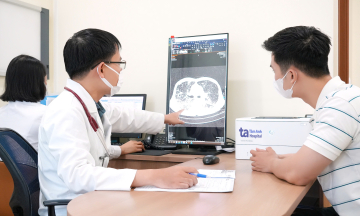
Dr. Duy advises a patient. Illustration photo: Tam Anh General Clinic District 7

Skin dehydration triggers a compensatory mechanism, increasing sebum secretion to re-establish the protective film. This results in the "the more you wash, the oilier it gets" phenomenon. Continuous face washing can also disrupt the skin's natural microbiome, fostering bacterial growth. This increases acne risk or worsens existing breakouts. For individuals with dermatitis or sensitive skin, excessive cleansing can cause stinging, redness, burning, or peeling.

You should wash your face about two times a day, in the morning and evening. This effectively cleanses dirt and excess oil while maintaining the skin barrier. If your skin becomes oily during the day, use oil blotting papers to control sebum or rinse with clean water if necessary. Avoid overusing facial cleansers.

Prioritize gentle cleansers with balanced pH, free of alcohol or harsh detergents. Ingredients like niacinamide, zinc, or low-concentration salicylic acid can help control oil and cleanse pores effectively. Use a suitable, lightweight, non-comedogenic moisturizer to rebalance skin moisture.

Dr. CKI Vo Thi Tuong Duy

Dermatology - Aesthetic Dermatology Unit

Tam Anh General Clinic District 7

Readers can send questions about dermatological and aesthetic skin conditions here for doctors to answer.
By VnExpress: https://vnexpress.net/da-do-dau-co-nen-rua-mat-thuong-xuyen-5061824.html
Tags: face washing oily skin dermatology

News in the same category

7 common misconceptions about heart health

7 common misconceptions about heart health

Misconceptions like heart patients should avoid all fats, heart failure means the heart stops, and diabetes doesn't affect the heart are common.

Urinary retention after prostate surgery

Urinary retention after prostate surgery

Mr. Nam, 72, experienced difficulty and weak urination. Doctors diagnosed him with urethral stricture, a complication following prostate enlargement surgery.

How hormones affect weight loss

How hormones affect weight loss

Hormones such as ghrelin, leptin, and cortisol regulate hunger, satiety, and cravings, thereby influencing the weight loss process.

5 leg signs warning of vitamin and mineral deficiencies

5 leg signs warning of vitamin and mineral deficiencies

Persistent numbness, tingling, cold hands and feet, or slow-healing wounds may indicate poor blood circulation or deficiencies in nutrients such as iron, zinc, and vitamin B12.

Two suspected meningococcal meningitis cases in Ca Mau test positive

Two suspected meningococcal meningitis cases in Ca Mau test positive

Ca Mau's Center for Disease Control confirms two of three suspected meningococcal meningitis cases tested positive for the bacteria, including one patient who died.

Salmonella bacteria causes food poisoning in over 200 Ho Chi Minh City students

Salmonella bacteria causes food poisoning in over 200 Ho Chi Minh City students

Salmonella bacteria has been confirmed as the agent behind food poisoning affecting 202 students at Binh Quoi Tay Primary School, based on test results from the Oxford University Clinical Research Unit.

Why do eyelid bumps appear?

Why do eyelid bumps appear?

Eyelid bumps are often due to styes, chalazia, or milia; most are benign, but some rare cases can signal skin cancer.

Ho Chi Minh City's 168 medical stations to simultaneously offer free health check-ups to residents starting 17/4

Ho Chi Minh City's 168 medical stations to simultaneously offer free health check-ups to residents starting 17/4

Ho Chi Minh City is launching health screenings and disease detection programs for residents at all 168 ward, commune, and special zone medical stations, with the participation of doctors from 101 hospitals, starting 17/4.

What are the signs of lung damage in non-smokers?

What are the signs of lung damage in non-smokers?

My father doesn't smoke, but recently he's been coughing in the mornings and feeling slightly tired. Has the doctor diagnosed chronic obstructive pulmonary disease? What are the signs of lung damage in non-smokers? (Hoai Vy, Hanoi)

4 deaths from meningococcal disease, Ministry of Health warns of epidemic

4 deaths from meningococcal disease, Ministry of Health warns of epidemic

The Ministry of Health has recorded 24 meningococcal cases nationwide, including 4 deaths, in the first three months of the year, an increase compared to the same period last year, prompting an epidemic warning.

Eng English
China 中国人
  • News
  • World
  • Business
  • Entertainment
  • Sports
  • Law
  • Education
  • Health
  • Lifestyle
  • Travel
  • Science
  • Digital
  • Automobiles
FPT Tower, 10 Pham Van Bach Street, Dich Vong Ward,
Cau Giay District, Hanoi, Vietnam
Email: contacts@vnportal.net
Tel: 028 7300 9999 - Ext 8556
Advertise with us: 090 293 9644
Register
© Copyright 2026 vnnow.net. All rights reserved.
Terms of use Privacy policy Cookies