


The Economic Police Department of Ho Chi Minh City Police recently initiated legal proceedings and temporarily detained Huynh Van Truong. This followed a raid on his processing facility in District 8, where he was caught using industrial chemicals to soak snail meat. Since 2021, Truong has used approximately 500 tons of sodium silicate (liquid glass) — a substance primarily used in cement and brick production — to "transform" over 3,000 tons of snails, making them white, crispy, and increasing their weight. This activity generated billions of VND in profit.
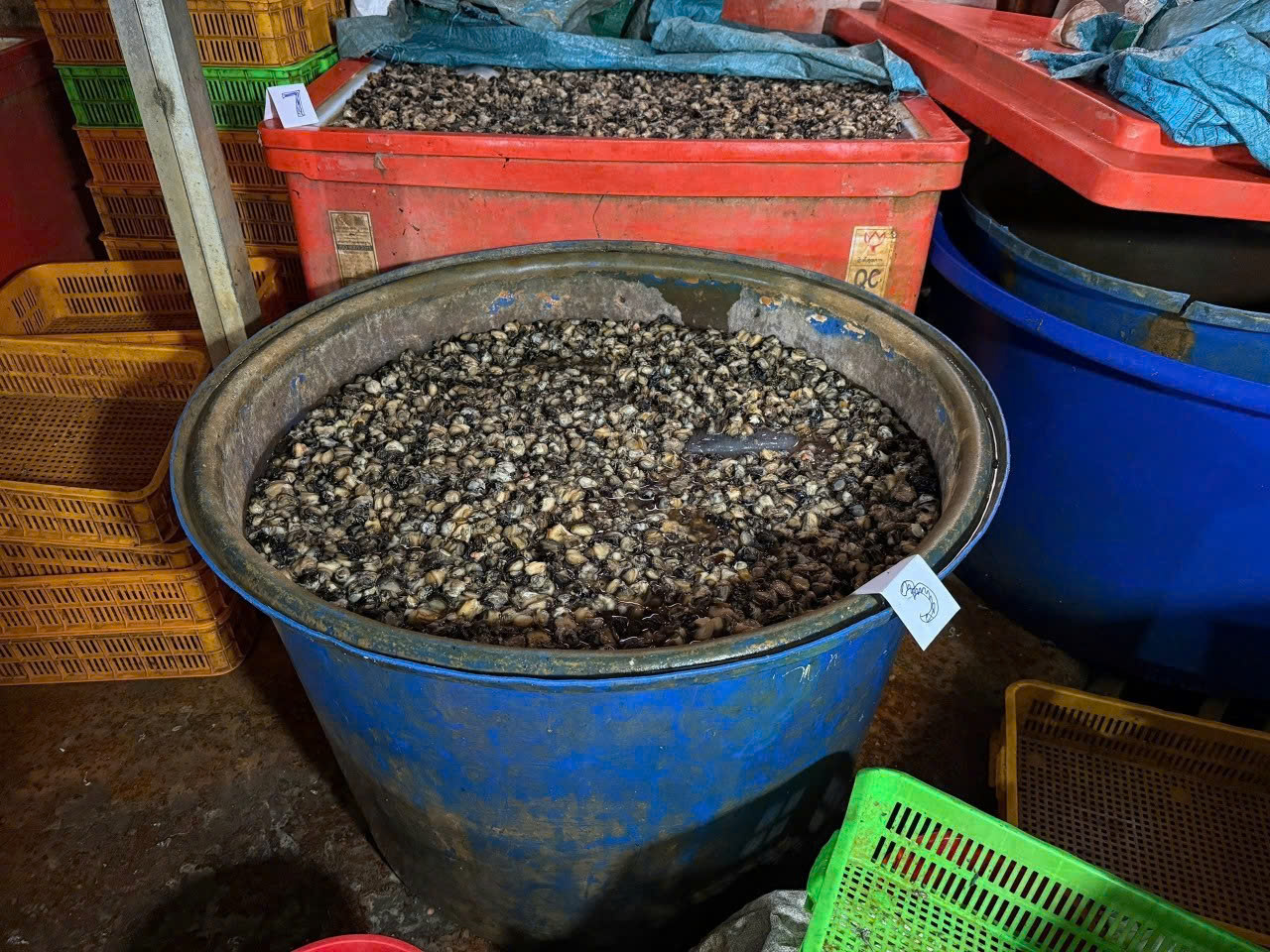 |
Snails soaked in liquid glass discovered by police. Photo: Ho Chi Minh City Police |
Snails soaked in liquid glass discovered by police. Photo: Ho Chi Minh City Police
Doctor Khuat Quang Son from the University of Fire Prevention and Fighting (Hanoi) explained that sodium silicate is a chemical in construction, often used to mix sealants, wall adhesives, or surface coatings. This substance is viscous, forming an adhesive network similar to glass, and solidifies when dry, hence its name, liquid glass.
Despite being prohibited for food use, liquid glass is misused to treat seafood, especially snails. Its alkalinity alters protein structure, making snail meat firmer, crispier, and enhancing water retention, which increases weight and gives a fresh, appealing look. The alkaline environment also cleans mucus, removes odors, and extends the food's shelf life.
According to Associate Professor Nguyen Duy Thinh from the Institute of Biotechnology and Food (Hanoi University of Science and Technology), this practice violates food safety laws. He stated that this is a silent, accumulating toxin that corrodes organs, yet it is difficult to detect because sellers often use small doses to evade regulatory bodies.
The harmful effects of liquid glass in the body do not manifest as immediate neurological symptoms. Instead, the chemical's alkalinity causes corrosive damage. The most dangerous complications include esophageal and gastric burns, leading to hemorrhage. Patients often experience a burning sensation in the throat, vomiting, chest pain, and difficulty swallowing. Serious cases may involve vomiting blood, black stools, or airway edema causing breathing difficulties.
Beyond chemical risks, snails themselves pose health hazards if not prepared correctly. Snails live deep in muddy bottoms, and each can harbor 3,000 to 6,000 parasites, particularly tube worms. Poor preparation or consuming dead snails increases the risk of poisoning.
Experts advise consumers to purchase snails from reputable sources and clean them thoroughly using rice water, vinegar, or salt water with chili to encourage them to expel mud. When eating, it is essential to remove the tail portion (which contains impurities) and the brain at the head (which contains toxins that cause dizziness).
Children with immature immune systems, individuals with a history of seafood allergies, those recovering from illness, or experiencing digestive disorders should limit this dish to avoid reactions such as abdominal pain, hives, or diarrhea.
Thuy An


