Orgalife collaborated with clinical nutrition experts at major hospitals to research medical nutritional products for kidney patients. Clinical results show that after four weeks of using Leisure Kidney 2, there was a reduced proportion of patients at risk of malnutrition (from 80% before intervention to 40% after intervention). Albumin significantly improved after intervention, while average urea and creatinine levels also decreased compared to before intervention. For Leisure Kidney 1, the risk of severe malnutrition decreased by 78% after two weeks of use in chronic kidney disease patients not yet undergoing hemodialysis.
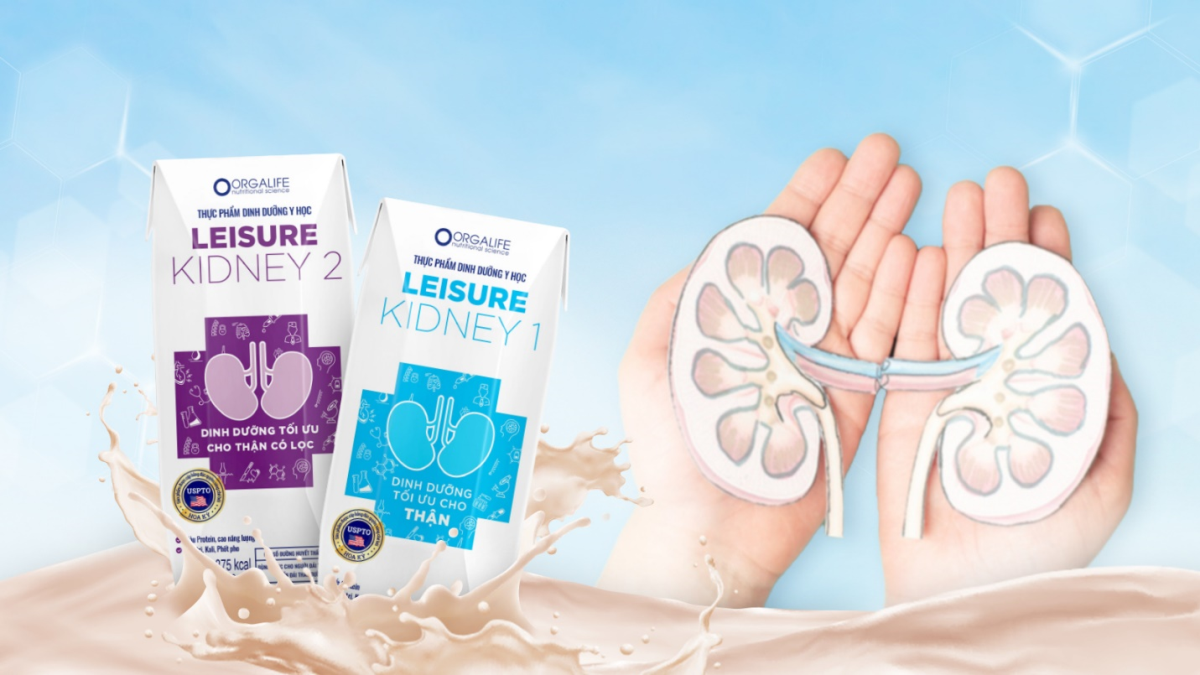 |
Leisure Kidney 1 (nutritional soup for kidney patients requiring protein restriction) and Leisure Kidney 2 (nutritional soup for kidney patients on dialysis) help reduce metabolic burden, support kidney functional recovery, and improve quality of life. Photo: Orgalife |
Leisure Kidney 1 (nutritional soup for kidney patients requiring protein restriction) and Leisure Kidney 2 (nutritional soup for kidney patients on dialysis) help reduce metabolic burden, support kidney functional recovery, and improve quality of life. Photo: Orgalife
Both product lines utilize protein hydrolysis technology, breaking protein into short-chain peptides that are easily absorbed. This reduces the digestive and metabolic burden on the kidneys, allowing patients to supplement high-quality protein without increasing blood urea or ammonia.
According to Nguyen Nhat Phi, deputy general director of Orgalife, the Leisure Kidney formula is based on recommendations from the European Society for Clinical Nutrition and Metabolism (ESPEN) and Ministry of Health standards. It ensures a balance of energy, protein, fat, and minerals. The product is UHT sterilized and aseptically packaged, allowing it to be stored at room temperature while retaining its nutritional value.
Protein metabolic disorder is a core issue in chronic kidney disease patients. As filtering function declines, urea and nitrogenous products accumulate, causing uremia and other disorders. Instead of completely cutting protein, the current approach is "selected protein": supplementing easily absorbed, high biological value protein sources and adjusting dosage according to disease stage and nutritional status.
Leisure Kidney 1 is a soup-form nutritional formula designed for chronic kidney disease patients not yet on dialysis or those requiring protein restriction. Each serving provides balanced energy from carbohydrates and fats, while the low controlled protein content (9% of total energy) helps preserve kidney function. Sodium, potassium, and phosphorus levels are controlled, helping stabilize electrolytes, limit edema, and hypertension. Complex carbohydrates help maintain stable blood sugar. The product also supplements B, C, E vitamins, zinc, selenium, and antioxidants, boosting immunity and reducing oxidative stress on kidney cells.
Leisure Kidney 2 is designed for chronic kidney disease patients undergoing periodic dialysis or post-dialysis, who have higher nutritional and energy needs to compensate for protein loss during treatment. With a higher protein content (20% of total energy) from hydrolyzed protein, Leisure Kidney 2 helps rapid protein replenishment, muscle mass recovery, and nitrogen balance maintenance. The optimized energy ratio from fats and carbohydrates provides high energy without increasing blood sugar or cholesterol. Controlled minerals help maintain electrolyte balance after dialysis. The product supplements B, C, E vitamins along with zinc and selenium, reducing inflammation, supporting increased resistance, and combating oxidative stress, a common factor in long-term dialysis patients.
 |
The prevalence of chronic kidney disease is rapidly increasing in Vietnam. Source: Pinterest |
The prevalence of chronic kidney disease is rapidly increasing in Vietnam. Source: Pinterest
The burden of chronic kidney disease is rapidly increasing globally and is projected to become the 5th leading cause of years of life lost worldwide by 2040. Notably, the burden of chronic kidney disease is increasing faster in low and middle-income countries, including Vietnam.
In Vietnam, an estimated over 10 million people suffer from chronic kidney disease, accounting for 10,1% of the population. Mortality from chronic kidney disease ranks 8th among the top 10 leading causes of death in Vietnam. Records at the Center for Kidney - Urology and Dialysis (Bach Mai Hospital) show approximately 30 to 40 new cases of kidney failure each day. Many patients are very young, some even under 30 years old. More concerning, some cases as young as 15-16 years old have been diagnosed with end-stage renal disease, requiring lifelong treatment with hemodialysis.
The Dan