Ms. Thao's CT scan results revealed that her entire stomach had herniated through the esophageal hiatus, residing in her chest cavity in an abnormally inverted position. Esophago-gastro-duodenoscopy images confirmed a sliding hiatal hernia, accompanied by mild congestive gastritis and atrophic gastritis.
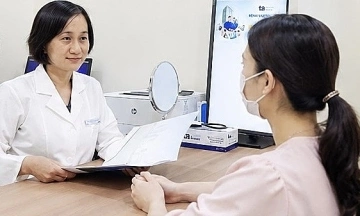
Doctor Nguyen Quoc Thai, a second-degree specialist and Head of the Department of Gastrointestinal Surgery at the Endoscopy and Laparoscopic Gastrointestinal Surgery Center, Tam Anh General Hospital, Ho Chi Minh City, diagnosed Ms. Thao with a type three hiatal hernia, indicating a severe condition. In this case, the esophageal opening in the diaphragm had significantly widened, allowing her entire stomach to be pushed into the chest.
A hiatal hernia occurs when abdominal organs abnormally move into the chest cavity through an opening in the diaphragm, the muscle separating the chest and abdomen. Depending on the size of this opening, organs such as the stomach, small intestine, or spleen can ascend into the chest.
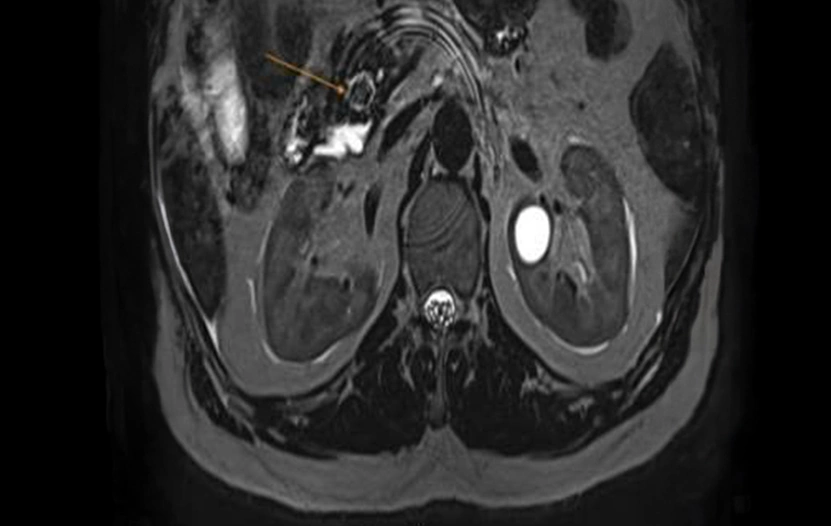 |
MRI image showing an intussusception mass (yellow arrow). Photo: Tam Anh General Hospital |
MRI image showing an intussusception mass (yellow arrow). Photo: Tam Anh General Hospital
According to Doctor Thai, medical treatment is ineffective for large hernias like Ms. Thao's. Surgery is the optimal approach to return the organs to their normal position and address the underlying cause of the hernia.
Ms. Thao underwent laparoscopic hiatal hernia repair combined with an anti-reflux valve creation. This procedure aims to control symptoms and prevent long-term complications.
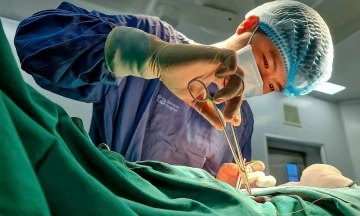
The surgical team made four to five small incisions in the abdominal wall to insert endoscopic instruments. They carefully returned the stomach from the chest to the abdominal cavity, then sutured the hernia defect to prevent recurrence. Finally, an anti-reflux valve was created to strengthen the closing mechanism of the lower esophageal sphincter.
Post-surgery, Ms. Thao recovered well, experiencing a reduction in vomiting, difficulty swallowing, and shortness of breath. She was discharged after two days of observation.
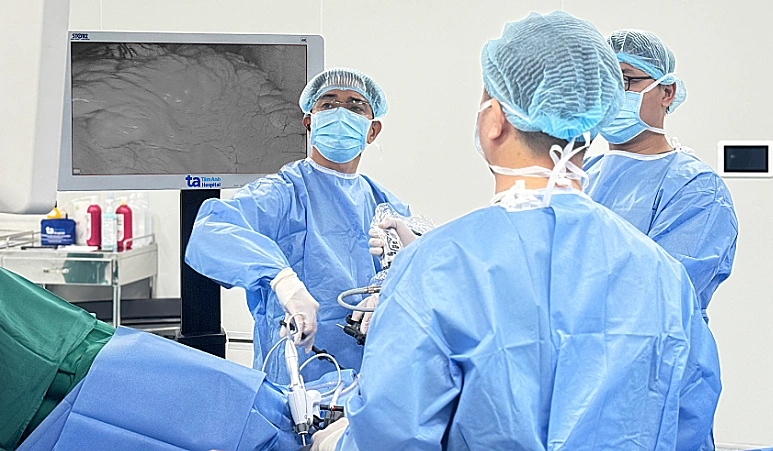 |
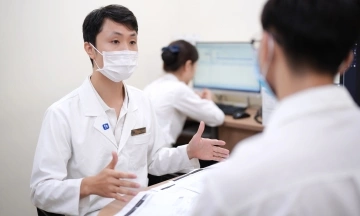
Doctor Thai (near screen) performing laparoscopic surgery on Ms. Thao. Photo: Tam Anh General Hospital |
Doctor Thai (near screen) performing laparoscopic surgery on Ms. Thao. Photo: Tam Anh General Hospital
The exact cause of hiatal hernia remains unclear. However, a common mechanism involves the weakening of muscle and connective tissue structures around the esophageal hiatus. Other risk factors include advanced age, chest or abdominal trauma, congenital hiatal hernia, prolonged increased abdominal pressure due to chronic cough, heavy lifting, obesity, or a history of diaphragmatic surgery.
Most mild hiatal hernia cases do not cause obvious symptoms. As the condition worsens, patients often experience chest pain, heartburn, difficulty swallowing, nausea, or persistent vomiting. These symptoms are easily mistaken for heart conditions or common digestive disorders, leading to delayed diagnosis.
In some cases, a hiatal hernia can lead to complications such as strangulation or gastric volvulus, causing obstruction and ischemia. Doctor Thai advises individuals with persistent digestive abnormalities, especially the elderly or those with multiple risk factors, to seek early medical examination for proper diagnosis and treatment. Detecting the condition in its early stages improves treatment effectiveness, limits complications, and enhances quality of life.
Quyen Phan
*Patient's name has been changed.