


Dr. Nguyen Huy Hoang, from the Vietnamese Society of Underwater and Hyperbaric Medicine, explained this phenomenon often occurs on winter evenings. At these times, a layer of warm air above "presses down" on the cold air near the ground, preventing fine dust and toxic gases from diffusing upwards. This stagnation causes the air quality index (AQI) in many areas to soar to "poor" (above 100) or "unhealthy" (above 150) levels. Ultrafine PM2.5 particles easily penetrate deep into lung alveoli, even directly entering the bloodstream.
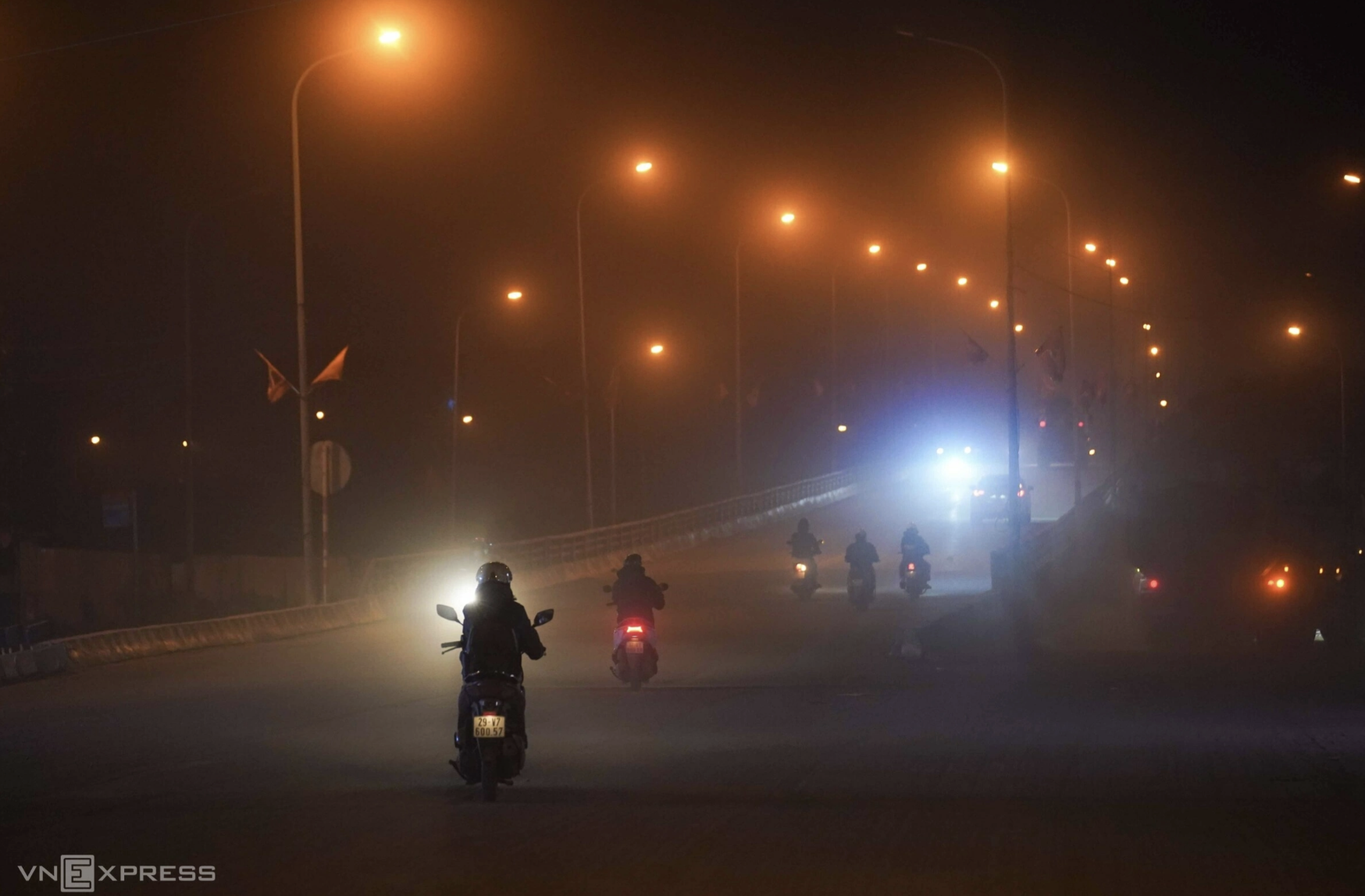 |
Pollution combined with cold weather harms health. Photo: Hoang Giang
When exposed to cold, the human body activates a self-defense mechanism: peripheral vasoconstriction in the skin, hands, and feet to redirect blood to the heart and brain. The sympathetic nervous system releases hormones that accelerate heart rate and spike blood pressure. Concurrently, low temperatures tend to thicken blood, increasing its viscosity. Blood flow through atherosclerotic vessels becomes difficult, facilitating the formation of blood clots. These clots can travel to the brain, causing blockages (stroke), or obstruct coronary arteries, leading to myocardial infarction.
Individuals with a history of hypertension and atherosclerosis face the highest risks because their hearts must overwork to overcome peripheral resistance. Furthermore, dense nighttime air pollution directly attacks the respiratory system, causing flu, runny nose, and pneumonia in children and the elderly.
Experts advise residents to closely monitor the AQI before leaving home. If the index exceeds 150 or fine dust concentration is very high, the elderly and those with cardiovascular disease should cancel outdoor exercise plans and opt for light indoor activities with air purification. When going out is unavoidable, it is essential to keep the head, neck, chest, and limbs warm, and wear a fine dust mask.
Regarding nutrition, families should maintain a balanced diet with carbohydrates, protein, and healthy fats from: nuts, fish, and lean meat. They should also increase fresh fruits and vegetables and drink sufficient water. Everyone should minimize stimulants like: alcohol, tobacco, and spicy foods to reduce the burden on the cardiovascular system.
At home, the ideal room temperature should be maintained between 25-28 degrees Celsius, ensuring ventilation while avoiding direct drafts. Residents can use air conditioners or heaters, but must never use charcoal stoves in enclosed rooms to prevent carbon monoxide poisoning. Keeping the room too warm is also not advisable, as it can cause thermal shock when stepping into the colder outdoor environment.
Thuy An





