


Sharing with BBC's "Outside Source" program, the Canadian man recounted that in 3/2023, he began feeling unwell with "Covid-like symptoms such as body aches, persistent headaches, and fatigue". His symptoms progressed rapidly, leaving him "sweating profusely and unable to breathe". Only after requiring life support equipment was he diagnosed with hantavirus, undergoing about three weeks of inpatient treatment.
"The severe illness I went through was a living hell. Getting through it and recovering was a process of enduring torture", he said on 10/5.
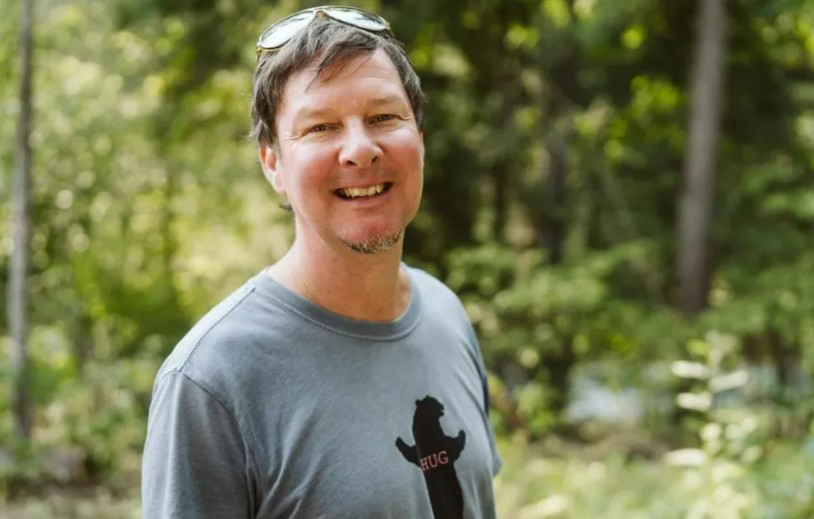 |
Lorne Warburton contracted hantavirus three years ago and said he felt lucky to be alive. *Photo: Lorne Warburton* |
In Germany, Christian Ege also recounted a similar experience with Covid-like symptoms in 5/2019. He suffered from a stomach flu for three days, experiencing vomiting, dizziness, and a sensation like a "strange flu". After a blood test, he was rushed to the emergency room with kidney failure and sepsis. He spent several days in the intensive care unit (ICU) and had a catheter inserted in his neck for dialysis. Christian shared that sepsis was his greatest concern. "My kidneys recovered normally, but the simultaneous outbreak of both bacteria and viruses truly worried me during those few days", he recalled.
Lorne and Christian are two of the fortunate survivors of hantavirus, a disease where some strains have a fatality rate of up to 20% to 40%. Both decided to share their stories after a rare hantavirus variant was found in patients linked to a deadly outbreak on the MV Hondius cruise ship.
Hantavirus, named after a river in South Korea, refers to a family of viruses, not a single disease. According to the World Health Organization (WHO), there are over 20 species of viruses in this family. They typically reside in rodents like rats and are transmitted to humans primarily through inhalation. When rodent waste (urine, feces) dries and becomes airborne as dust, humans can become infected by breathing it in. Additionally, the virus can also spread through rat bites.
Lorne believes he contracted the disease from rat feces after shaking a mat in his attic. Christian, despite not knowing about the virus beforehand, had a biologist find a positive sample in his garden, where his son had seen a dead rat a few days prior.
The recent outbreak on the MV Hondius cruise ship saw three passengers die after the vessel departed from Argentina on a trans-Atlantic voyage about a month ago. The ship operator confirmed that three individuals, including one British national, were evacuated on 6/5 for treatment in the Netherlands.
Currently, there is no widely available vaccine or specific antiviral medication for hantavirus. Treatment is mainly supportive and symptom-based, involving hospital care and respiratory support.
After being discharged, Lorne required one and a half years to fully regain his physical strength. He described this recovery process as "very slow". "The recovery involved such small, barely noticeable steps forward; there were times I felt I took two steps forward only to immediately take four steps back", he recounted. Following his hospital stay, he also suffered from a painful "frozen shoulder", making his recovery even more arduous.
Christian was more fortunate, achieving "complete health" with "no after-effects" after four months of recovery, though he admitted the dialysis process was a harsh challenge for his body.
While his health is now stable, Lorne continues to suffer from arrhythmia and requires daily medication. "My heart doesn't beat in sync. My heart is healthy, but the rhythm is no longer precise", he said. Lorne expressed gratitude to his medical team and now helps fundraise to acquire equipment and improve infrastructure for the local medical fund.
For Christian, the experience fostered greater humility: "Those were difficult days, but many others out there suffer more than me". Since his recovery, he has tried to maintain a habit of reading one book each week.
Through it all, Lorne is gradually returning to a normal life, working and raising his children. His near-death experience made him appreciate the simplest things that people often take for granted. He reminisced: "After two weeks of not being able to drink water in the intensive care unit, the first sip of clean water was the best thing I had ever tasted in my life".
 |
Christian Ege suffered kidney failure and sepsis when hospitalized with hantavirus. *Photo: Christian Ege* |
Binh Minh (According to BBC)


