On 7/4, Nguyen Quynh Nhi and Nguyen Van Dung sat together, carefully addressing pink wedding invitations. The two students from Hanoi University of Industry are set to marry at the end of the month. The serene scene in their small room contrasts sharply with medical reports stating 93% disability for Nhi and 97% for Dung. They are preparing for their most significant day, exactly two years after surviving a near-fatal accident.
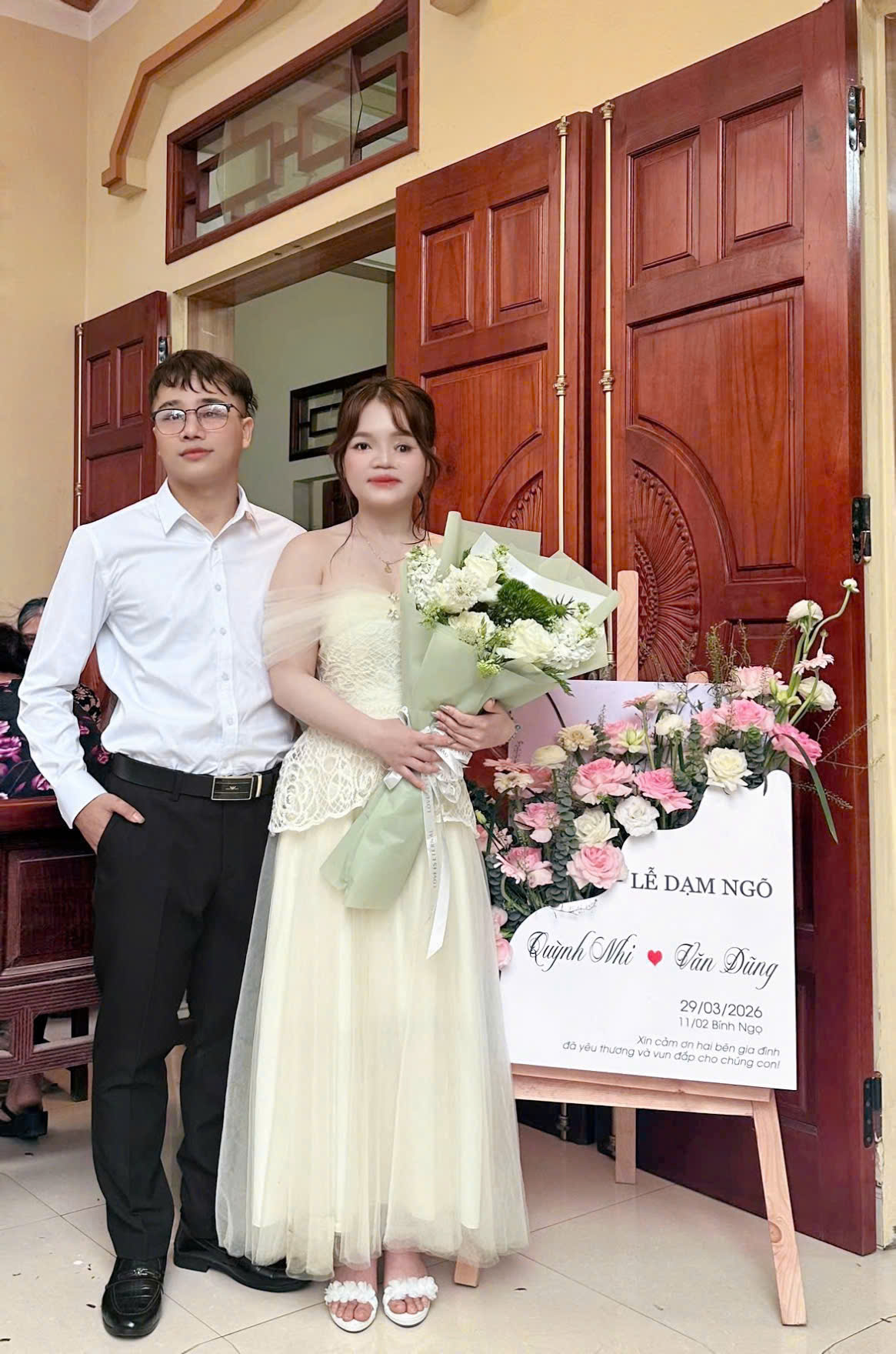 |
Dung and Nhi's engagement ceremony, held at the end of March, received many blessings. Photo: Provided by subjects.
Dung recounted that their trip to Ha Giang, celebrating their three-year anniversary, ended in a tragic accident. In 3/2024, their sleeper bus, carrying them and 22 other passengers, collided head-on with a container truck. The impact completely crushed the front of the bus, killing 5 people instantly. As the massive metal frame collapsed, Dung used his last bit of strength to pull Nhi towards him. This instinctive act saved Nhi's life but severed tendons in his hands and resulted in the loss of two fingers.
Rescue teams used specialized saws to cut through the bus frame, extricating both Nhi and Dung in critical condition. "At Viet Duc Hospital, doctors assessed our chances of survival as very low," Nhi recalled. Nhi was in a coma for 7 days, while Dung remained comatose for 17 days and experienced three heart stoppages.
The accident left severe and lasting injuries. Nhi sustained facial fractures, a crushed nasal bridge, multiple spinal fractures, and damage to her left eye, making her unable to look in a mirror. Once an independent 24-year-old, she had to adapt to relying on her parents for all daily activities, undergoing 7 surgeries, including a hip replacement.
Dung awoke after 4 complex surgeries to a body covered in scars and reduced vision in one eye. His greatest fear at the time was not death, but Nhi's disappointment when seeing his disfigured body.
According to reports published in The Lancet medical journal, over 30% of patients with traumatic brain injury and polytrauma experience post-traumatic stress disorder (PTSD) and clinical depression. However, global medical literature also demonstrates that a strong family support system acts as the most powerful psychological intervention. Thanks to the unwavering support from both families, the couple gradually overcame their initial panic and began to confront their new reality.
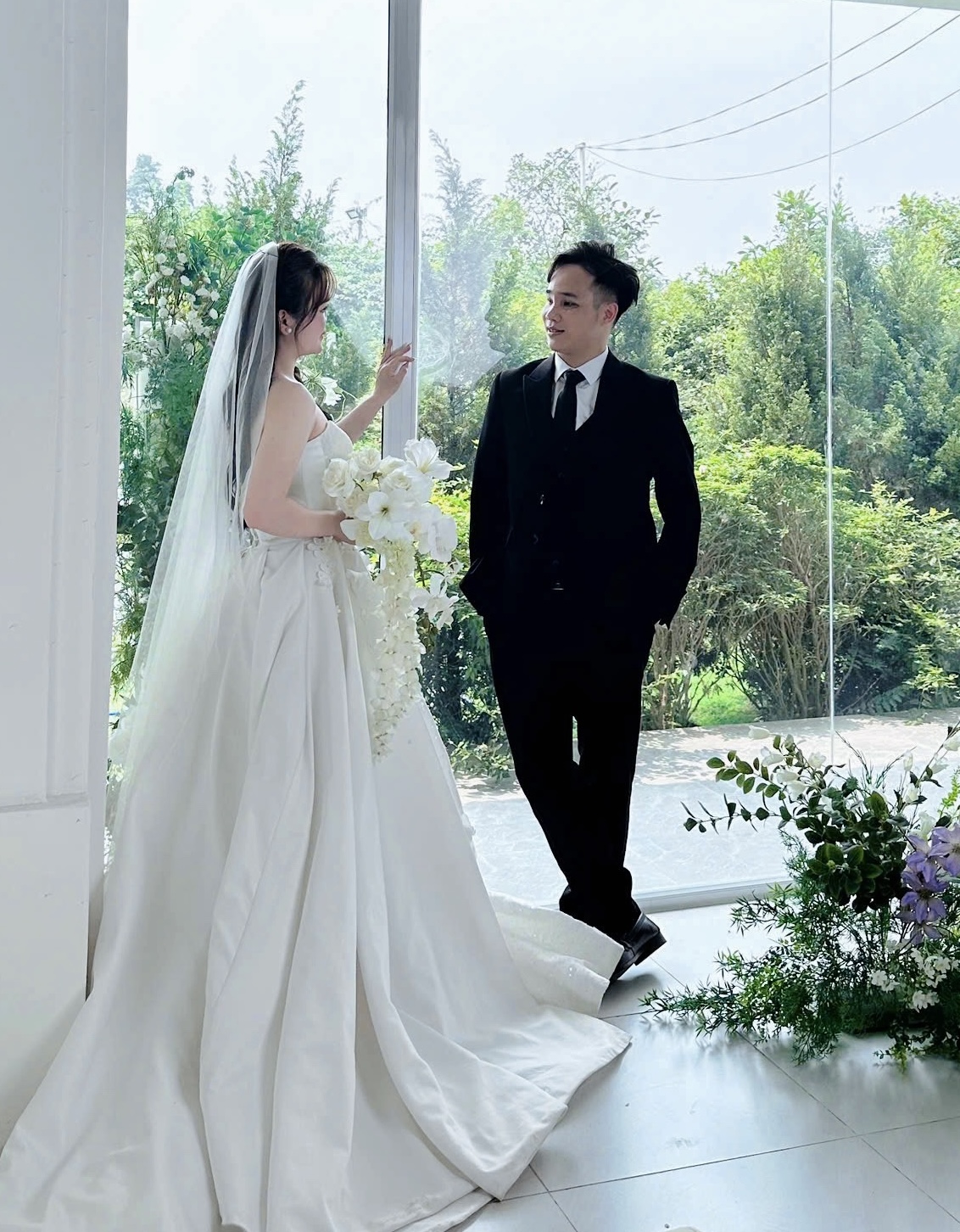 |
After two years of recovery, they decided to marry, becoming husband and wife to heal their wounds and live happily. Photo: Provided by subjects.
Their journey to regain balance began with small efforts. Refusing to remain bedridden, Nhi sought online marketing jobs to cover her living expenses. Dung worked to complete his university graduation project despite his worsening eyesight. From a neurological perspective, their return to work represents essential cognitive rehabilitation. Medical experts affirm that maintaining mental activity helps patients with traumatic brain injury stimulate brain neuroplasticity, preventing permanent cognitive decline.
Additionally, Nhi's acceptance of her face with a damaged eye and Dung's calm resolve to live with his disfigured hands reflect the principles of Acceptance and Commitment Therapy (ACT) in clinical psychology.
"Accepting permanent disability helps patients move beyond past nostalgia to actively establish a new life," stated Master Vuong Nguyen Toan Thien, Clinical Director of Lumos Psychological Counseling and Therapy Center.
The moment the metal bar collapsed on the bus remains vivid in Nhi's mind. Dung's action of pulling her hand became the primary reason she chose to live and select him as her life partner. Dung also shared that he continues to strive because he "does not want to abandon himself and his family."
 |
Dung and Nhi before the incident. Photo: Provided by subjects.
Thuy An