Mr. Hai was diagnosed with coronary artery disease three months prior. Doctors recommended stent placement to widen the vessels and prevent myocardial infarction. Initially, with no clear symptoms, he managed his condition with medication. However, he recently began experiencing intermittent left-sided angina, which gradually increased in intensity and frequency.
Professor Doctor Vo Thanh Nhan, Director of the Interventional Cardiology Center at Tam Anh General Hospital TP HCM, stated that the patient was at risk of myocardial infarction at any time. This was due to severe narrowing in three main arteries supplying the heart: the left anterior descending artery and circumflex artery were 85-90% narrowed, and the right coronary artery was over 90% narrowed.
The medical team determined that intervening on all three branches in a single session was difficult. The large amount of contrast agent required could potentially affect kidney function. Therefore, doctors first placed two stents to open the left anterior descending artery and the circumflex artery. Two weeks later, the team revascularized Mr. Hai's right coronary artery branch. This vessel was severely calcified and hardened, making balloon angioplasty and stent placement particularly challenging.
Mr. Hai received the new-generation Xience Skypoint stent. Its framework is designed to suit the anatomical structure of calcified blood vessels, reduce inflammation, and enhance stent expandability. Professor Nhan explained that, unlike the polymer coating of previous generation stents, Xience Skypoint's fluoropolymer coating interacts with blood proteins. This interaction helps reduce the risk of thrombus formation and late restenosis.
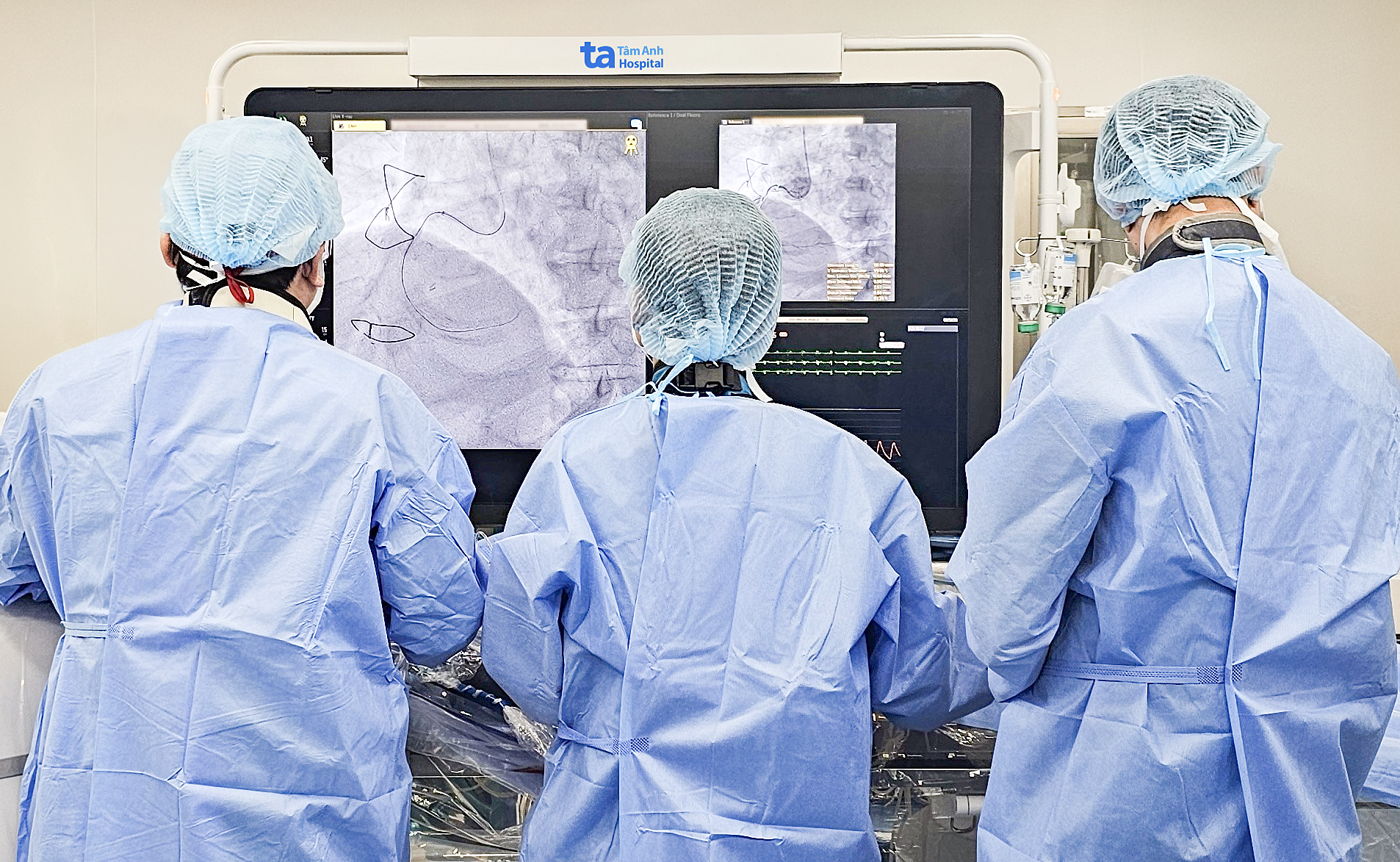 |
The team implanted new-generation stents for the patient. Photo: Tam Anh General Hospital |
During the procedure, the balloon could not pass through the severely calcified segment. The team utilized intravascular lithotripsy (IVL) to break up calcified plaques in the arterial wall with shockwaves, softening the vessel. This technique allowed patients with severe coronary artery blockages due to calcification to be treated with minimally invasive stent placement, thereby avoiding the need for bypass surgery.
The intervention proceeded smoothly. Thanks to powerful ultrasound pulses, the deeply embedded calcium plaques gradually fractured. Subsequently, the team positioned the stent correctly, immediately restoring blood flow to the heart. After the procedure, the stent fully expanded and closely apposed the vessel wall, ensuring abundant blood supply to the heart. Mr. Hai was discharged after three days.
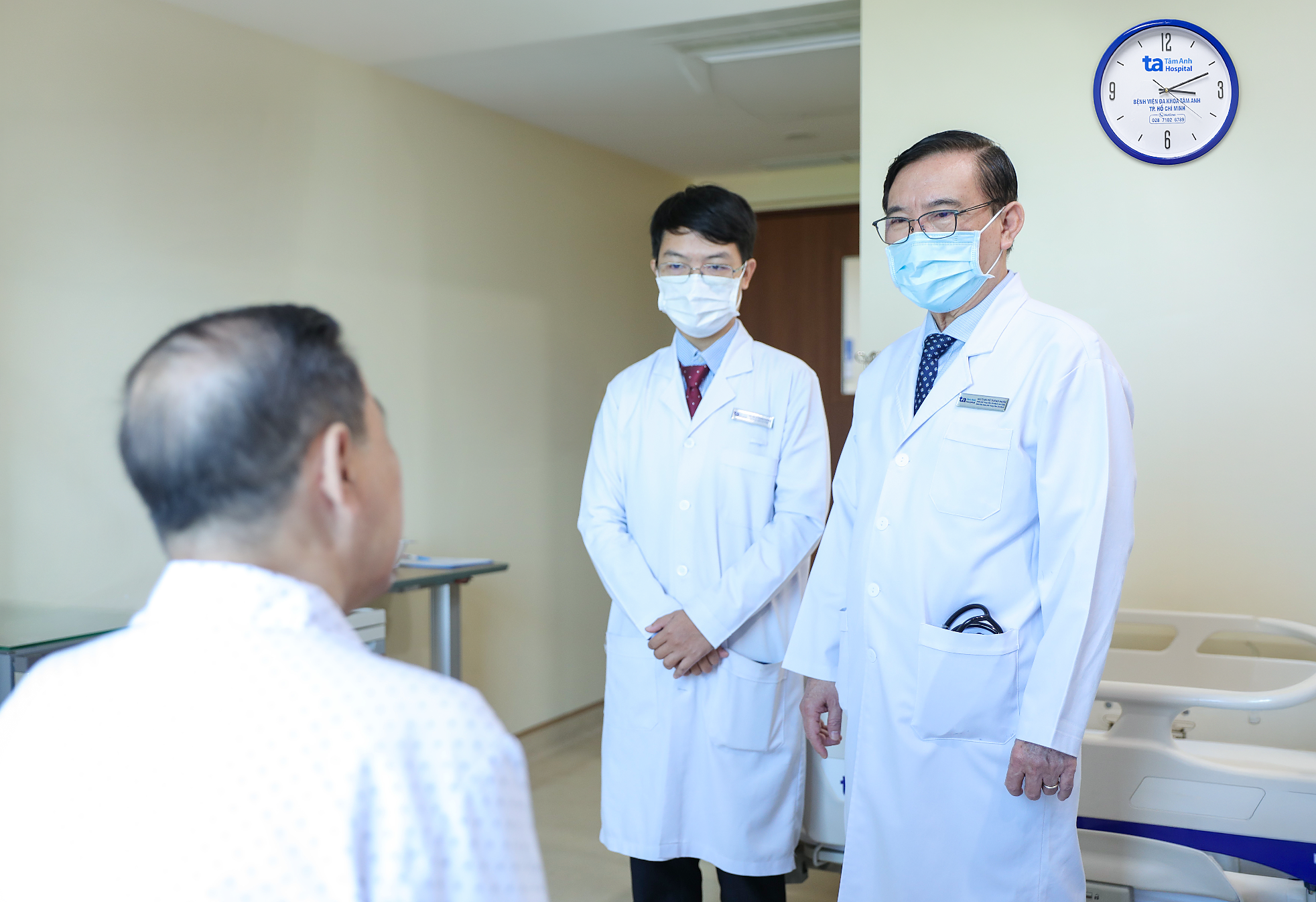 |
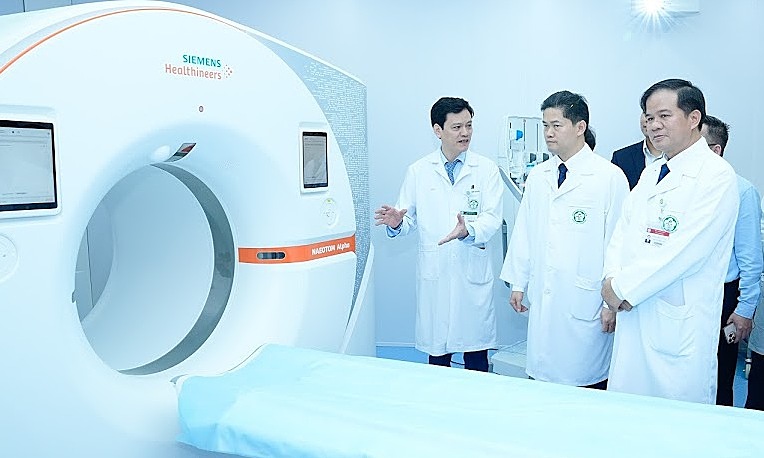
Professor Nhan (far right) guiding the patient on a suitable lifestyle regimen after stent intervention. Photo: Trung Vu |
Master Doctor Le Xuan Hoang, from the Interventional Cardiology Center at Tam Anh General Hospital TP HCM, noted that three-vessel coronary artery disease is one of the most serious cardiovascular conditions. When these blood vessels are narrowed or blocked, the heart does not receive enough oxygen, which can lead to myocardial infarction, arrhythmias, or heart failure.
Previously, severe three-vessel coronary artery narrowing was mostly treated with coronary artery bypass graft surgery. However, with modern interventional cardiology techniques and new-generation drug-eluting stents and balloons, many cases of severe narrowing can now be treated with minimally invasive stent placement, reducing complication risks.
Patients experiencing symptoms such as angina, shortness of breath, prolonged fatigue, palpitations, arrhythmias, or dizziness should consult a cardiologist to determine the cause. Individuals with risk factors like hypertension, diabetes, dyslipidemia, smoking, being overweight or obese, or a family history of myocardial infarction should undergo regular screening for early detection of the disease.
Thu Ha
| Readers can submit cardiovascular questions here for doctors to answer. |