Chanvatey initially developed blisters on his lower leg. Despite treatment, he continued to consume alcohol, preventing the condition from healing for an entire year. When his lower leg became swollen, red, discharged fluid, and he experienced reduced urination, he visited Tam Anh General Hospital in Ho Chi Minh City (HCMC). Doctors diagnosed him with subcutaneous cellulitis, chronic hepatitis C virus, and drug-induced adrenal insufficiency. He also presented with atherosclerosis and scattered calcification in the arteries of both lower limbs, alongside hypertension, but he refused further treatment.
Two months later, Chanvatey returned to Tam Anh Hospital with a fever, severe fatigue, a swollen and red right lower leg, and pus discharging from multiple sites. Doctors diagnosed him with sepsis originating from a soft tissue infection in his right lower leg, acute kidney injury, adrenal insufficiency, and chronic hepatitis C.
After his fever subsided and vital signs stabilized in the Emergency Department, Chanvatey was transferred for continued monitoring and treatment in the Endocrinology - Diabetes Department.
 |
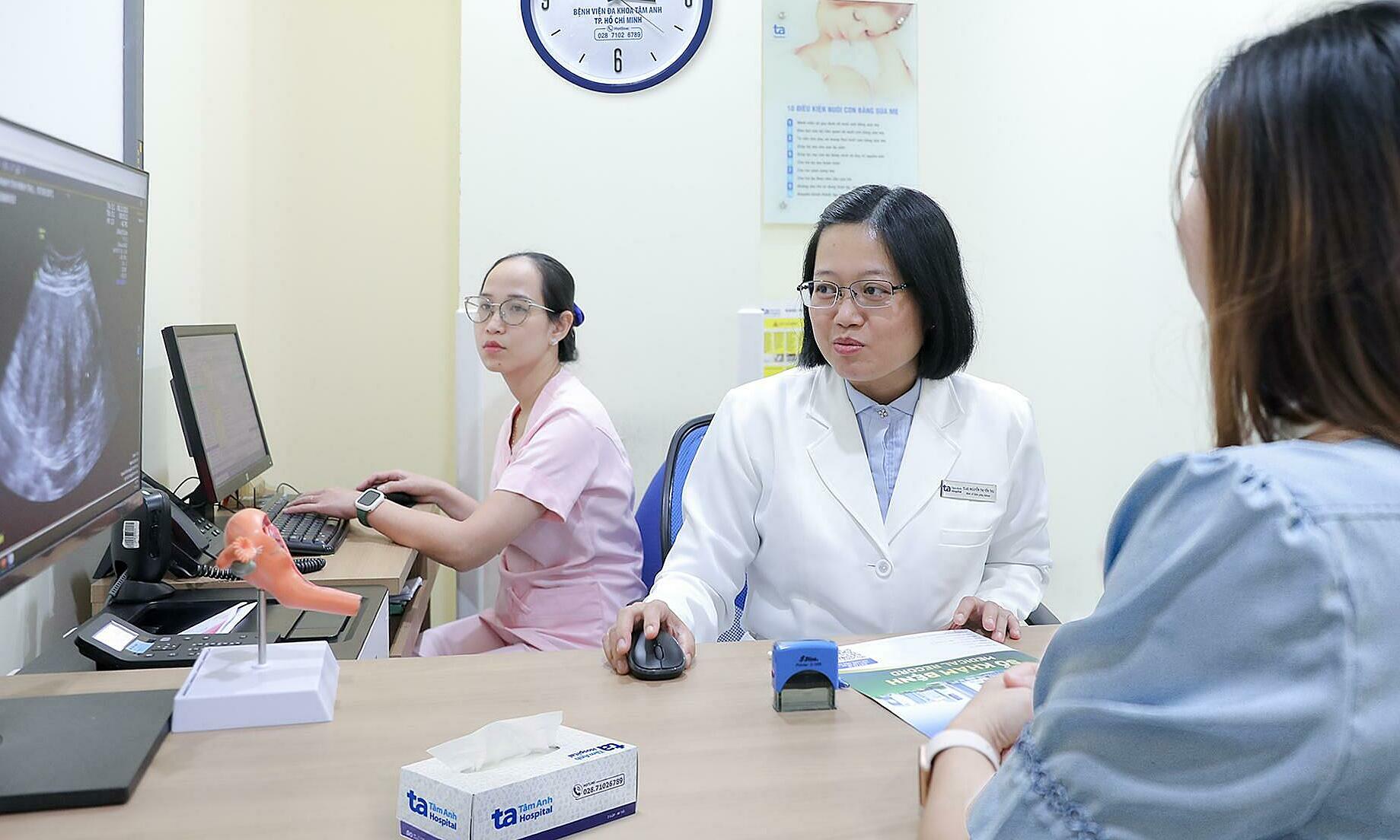
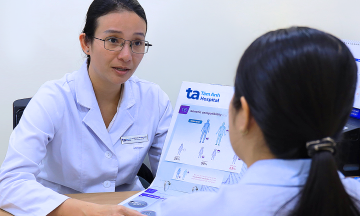
Doctor Tuyen examines Chanvatey. *Photo: Tam Anh General Hospital* |
Master of Science, Doctor Nguyen Thi Kim Tuyen, from the Endocrinology - Diabetes Department, stated that this time, the cellulitis on the dorsum of Chanvatey's foot had severely progressed, with continuous pus discharge from the wound. He underwent debridement to remove necrotic tissue, revealing deeply eroded ulcers that exposed the foot bones over a large area, accompanied by severe sepsis.
Chanvatey received fluid replacement and electrolyte correction to address the acute kidney injury. Concurrently, doctors treated the infection and necrosis using negative pressure wound therapy (VAC) to cleanse the wound, remove exudate, and promote healing.
Doctor Tuyen explained that Chanvatey suffered from secondary adrenal insufficiency, caused by prolonged abuse of corticosteroid-containing medications. This led to his adrenal glands ceasing or reducing cortisol production. The distinct manifestations of this condition include cushing's syndrome, characterized by a round face, easy bruising, thin skin, and central obesity around the abdomen. Doctors prescribed specific medication to help his body safely restore endocrine function.
After more than two months of inpatient treatment, Chanvatey's health improved significantly. The sepsis resulting from necrotic cellulitis resolved. The infected and necrotic tissues on the dorsum of his foot gradually regenerated, filling the wound. However, due to the extensive area of inflammation, he underwent skin grafting surgery to ensure both functional recovery and aesthetic outcomes.
Chanvatey's acute kidney injury and drug-induced adrenal insufficiency are now controlled. However, he must continue to take prescribed medication and attend regular follow-up appointments to manage his condition.
Bach Duong
*The patient's name has been changed.
| Readers can ask questions about diabetes here for doctors to answer. |