"This technology allows for a higher level of material analysis, supporting the early detection of very small lesions and accurate lesion assessment, especially in cardiovascular, neurological, and oncological diseases," said Associate Professor, Doctor Vu Van Giap, Deputy Director of Bach Mai Hospital, on 5/4.
This is the world's first photon-counting CT technology certified by the US Food and Drug Administration for clinical safety and efficacy. Bach Mai is the first public medical facility in Vietnam and Asia to operate two of these systems.
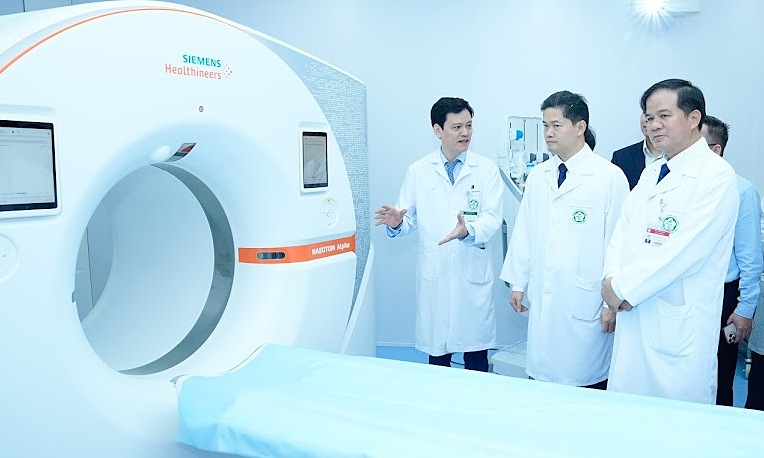 |
Bach Mai operates the new CT imaging system. *Photo: Thanh Duong* |
Compared to traditional CT, this technology can directly record individual X-ray photons, helping to eliminate signal noise, thereby significantly improving contrast and image quality, allowing doctors to observe microstructures and detect extremely small lesions. This technology is particularly useful in diagnosing complex cardiovascular diseases such as coronary artery stenosis, evaluating stents smaller than 2,5 mm, or detecting early-stage cancer.
Beyond detecting very small lesions, the system offers ultra-fast scanning, superior resolution, while optimizing radiation dose and reducing the amount of contrast agent used for patients. Associate Professor Giap considers this a major advantage for patients requiring multiple scans, such as those with man tinh diseases, cancer, or children.
This new CT system is part of an equipment package valued at approximately 1,000 billion VND, drawn from the hospital's increased revenue budget. Hospital leaders stated that this investment aims to standardize professional procedures, enabling people to access high-tech techniques right in Vietnam at a reasonable cost through health insurance, instead of having to seek treatment abroad.
Bach Mai Hospital is a tertiary medical facility; on average, it admits 7,000-10,000 outpatients and approximately 4,000 inpatients daily, performing nearly 10,000 tests. Many of these cases are severe, complex, and critical. The synchronized investment in modern, digitized medical equipment not only enhances early diagnostic capabilities, accurate treatment, and reduces complications and mortality, but also contributes to lowering social costs and easing the burden on patients and their families.
Le Nga