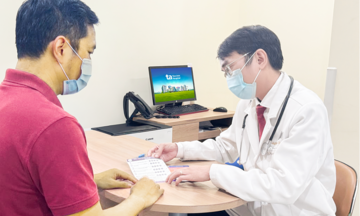
Ha experienced a miscarriage in 2019, followed by three years without conceiving. The couple underwent three in vitro fertilization (IVF) cycles, which resulted in one biochemical pregnancy and two failed implantations. They visited the Center for Reproductive Assistance, Tam Anh General Hospital Hanoi (IVF Tam Anh), where Dr. Le Quang Do reviewed the patient's old X-ray images. These images revealed uneven contrast uptake in the left corner of the uterine cavity, a deeply indented uterine fundus, and a blocked left fallopian tube.
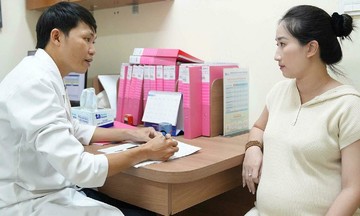
Dr. Do explained that an embryo can only implant successfully when the uterine lining is sufficiently thick, uniform, and well-nourished by a rich vascular system. When the uterine cavity is malformed, for example by adhesions or a septum, the blood supply and nourishment to the lining are reduced. This creates an unfavorable contact area for the embryo, making it difficult for even high-quality embryos to implant. If pregnancy does occur, the embryo may implant in an abnormal location, which increases the risk of early miscarriage.
Dr. Do developed a personalized IVF protocol combined with uterine surgery for Ha. She underwent ovarian stimulation, yielding 22 mature oocytes. With the aid of a specialized microscope, lab specialists injected sperm with optimal morphology and motility into the oocyte cytoplasm to create embryos. The embryos were cultured in a sterile lab, utilizing a timelapse incubator system integrated with artificial intelligence software and a 24/7 camera monitoring system. Consequently, Ha and her husband obtained 13 high-quality day 5 embryos, which were then cryopreserved.
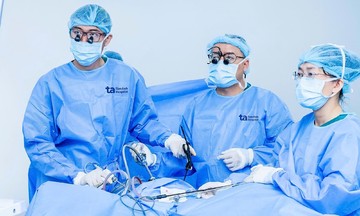
Before embryo transfer, Ha underwent hysteroscopic surgery to reshape her uterine cavity. A micro-camera system provided magnified, clear images of the uterine interior, enabling doctors to precisely identify and separate adhesions using a bipolar electrosurgical knife. This technique allowed for selective treatment of lesions, minimizing damage to healthy uterine lining. Following the surgery, a specialized gel was injected to create a protective coating for the lining, preventing re-adhesion and supporting the restoration of the uterine cavity structure.
Ha returned for a follow-up one month after surgery, and her uterine cavity volume had returned to normal. She received hormone medication to support endometrial regeneration, facilitating embryo implantation. She conceived on her first embryo transfer and successfully delivered a son via C-section, weighing nearly 2.8 kg.
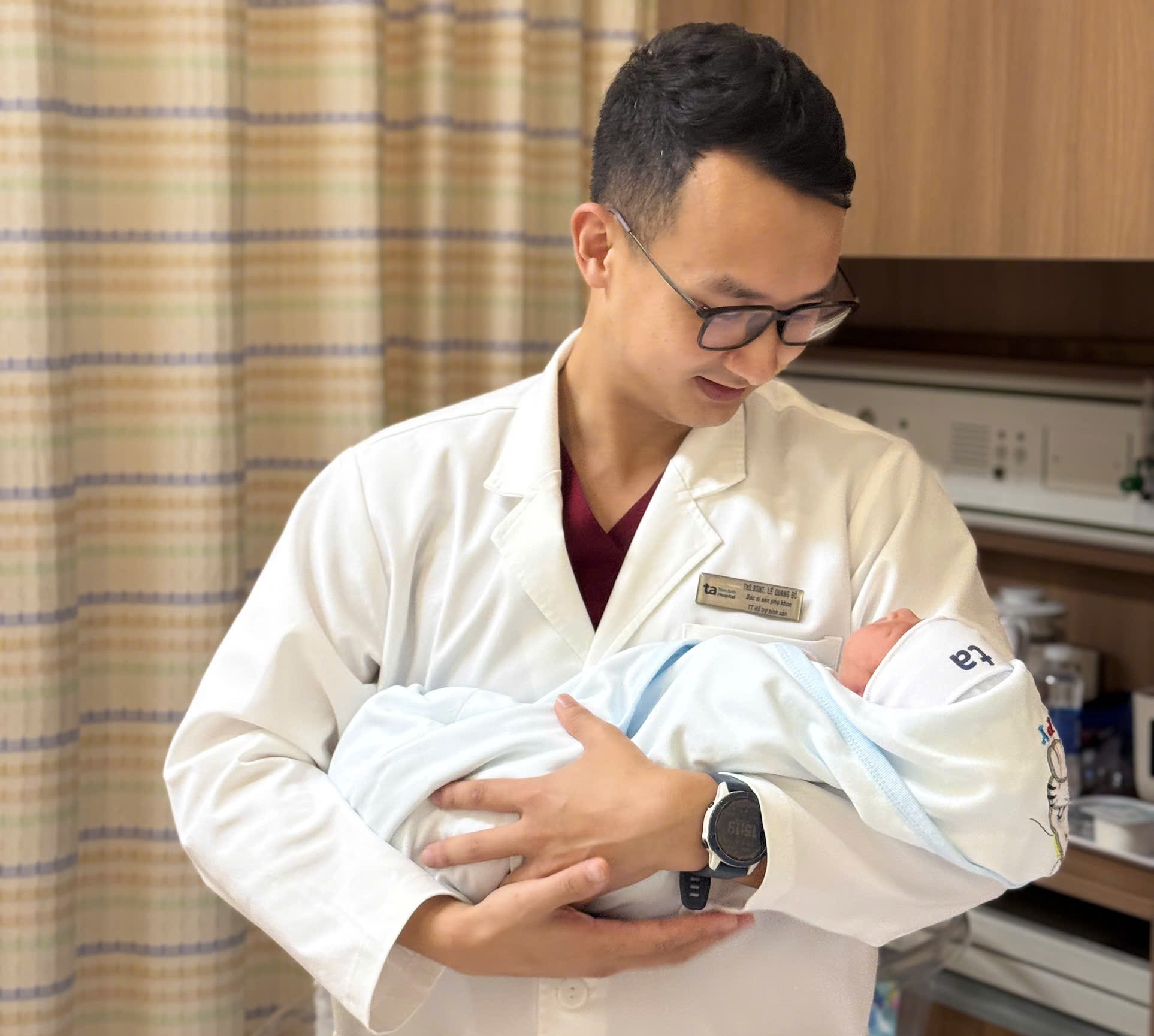 |
Dr. Le Quang Do visits Hang and her baby before discharge. *Photo: Phuong Hanh*
Dr. Do stated that beyond congenital abnormalities, uterine adhesions can form after prolonged gynecological infections, untreated genital tuberculosis, uterine interventions, or miscarriage. In such cases, the basal layer of the endometrium is damaged, impairing the regeneration of the functional endometrial layer and causing the anterior and posterior uterine walls to easily adhere. Many women show no clear symptoms, still having regular periods without abdominal pain, making the condition easily overlooked.
In addition to embryo quality, comprehensive uterine assessment before embryo transfer plays a pivotal role in improving in vitro fertilization success rates. At the IVF Tam Anh system, uterine abnormalities can be detected through: 2D and 3D ultrasound, foam contrast sonography, MRI, and hysteroscopy. These conditions can be safely and effectively treated using gynecological endoscopic surgery, creating favorable conditions for embryo implantation.
Thanks to a combination of couple therapy, personalized treatment protocols, and modern technologies, the average IVF success rate at IVF Tam Anh reached 78.7% in 2024. Approximately 65% of these successful cases involved couples over 37 years old, with long-term infertility, underlying medical conditions, and multiple previous failed embryo transfers.
Trinh Mai