Spondylolisthesis is a condition where a vertebra shifts forward or backward from its normal position. This can result from aging, congenital defects, injuries, or certain diseases affecting the spinal structure.
Doctor Nguyen Duc Anh, Head of Neurosurgery - Spine Department at Tam Anh General Hospital Hanoi, explains that patients typically experience persistent lower back pain, pain radiating to the buttocks or legs, particularly with movement, numbness in the limbs, leg weakness, and restricted mobility. Undiagnosed and untreated, prolonged nerve compression can impair walking ability and overall quality of life.
Treatment is determined by a doctor following a comprehensive assessment of clinical symptoms, physical examination findings, and diagnostic test results.
Conservative treatment is typically recommended for mild to moderate spondylolisthesis cases that do not severely impact mobility.
Doctors may prescribe braces, pain relievers, or anti-inflammatory medications to manage symptoms, facilitating easier movement and participation in rehabilitation programs. For pain radiating down the leg caused by irritated or compressed nerves, appropriate neuropathic pain medications may also be prescribed.
Patients should avoid prolonged self-medication, adhering instead to their doctor's guidance to minimize potential side effects.
 |
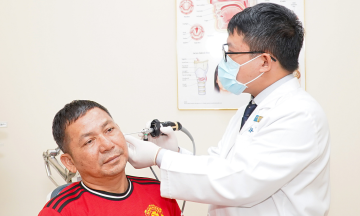
Doctor Duc Anh advises a patient on spondylolisthesis treatment methods. *Illustration: Tam Anh General Hospital*.
Physical therapy and rehabilitation are crucial for spondylolisthesis treatment. Exercises aim to strengthen abdominal, back, and other muscles supporting the spine, reducing pressure on the affected area and improving mobility.
Beyond exercises, patients receive guidance on adjusting daily posture for sitting, standing, and lifting to prevent pain recurrence or progression. Regular follow-up appointments are necessary during conservative treatment for doctors to assess effectiveness and monitor the condition.
Surgery is considered when conservative treatments fail or when the condition significantly affects a patient's mobility and daily life.
Surgical intervention is typically indicated for: persistent back pain or sciatica unresponsive to medical and rehabilitation treatments, numbness, leg weakness, or difficulty walking caused by nerve compression or spinal stenosis with nerve compression. Patients experiencing urinary or bowel dysfunction due to nerve damage may also be candidates for surgery.
According to doctor Duc Anh, surgical goals include stabilizing the spine and decompressing nerves, which helps alleviate pain, reduce numbness, and improve mobility. In many spondylolisthesis cases, specialized screw and rod systems are used to fix unstable vertebrae, preventing further slippage.
Minimally invasive endoscopic surgeries are now available for spondylolisthesis. This approach reduces muscle and soft tissue damage around the spine, limits blood loss, decreases postoperative pain, and shortens recovery.
Doctor Duc Anh advises patients to seek specialized medical care for persistent lower back pain, radiating leg pain, numbness, leg weakness, or difficulty walking. Worsening leg weakness, loss of sensation in the buttocks-genital area, or urinary/bowel dysfunction requires immediate evaluation to rule out nerve damage. Early detection and treatment control symptoms, preserving mobility and enhancing quality of life.
Hieu Nguyen
| Readers can submit questions about neurological conditions here for doctors to answer. |