Ms. Hoa developed pleural effusion in 7/2023. A CT scan revealed a 3 cm tumor in her right lung. A histopathology report confirmed highly differentiated adenocarcinoma, non-small cell type, with an EGFR gene mutation. She was diagnosed with stage 4 cancer due to pleural metastasis and began first-generation targeted therapy in 9/2023. Doctor Le Tan Dat, Deputy Director of the Oncology Center at Tam Anh General Hospital, TP HCM, stated that the medication effectively inhibited malignant cells, helping the patient maintain health and quality of life.
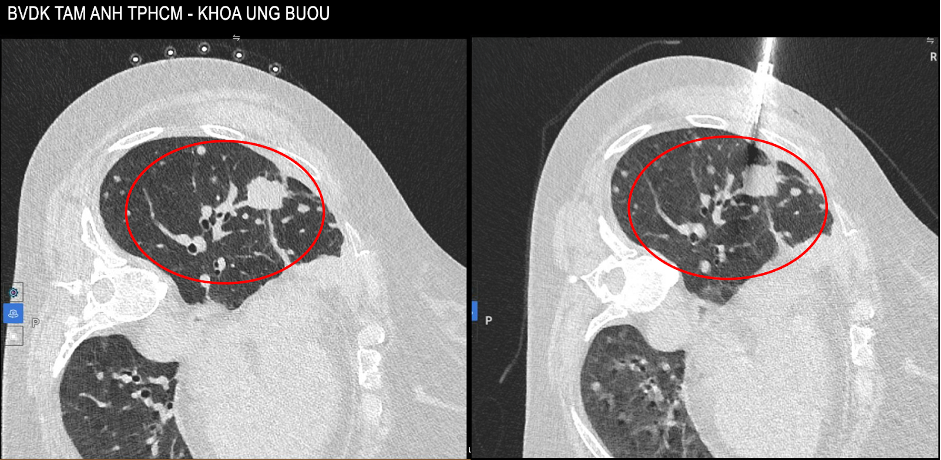 |
A CT image from 10/2025 showed the tumor increased to 4 cm and scattered lesions surrounding it. *Photo: Tam Anh General Hospital* |
After approximately 1.5 years of treatment, Ms. Hoa experienced sudden pain in her right chest and shoulder. A chest CT scan showed multiple scattered solid nodules in both lungs and bilateral lung fibrosis. Doctors suspected drug resistance, meaning the medication was no longer effective at inhibiting cancer cells after prolonged treatment. However, as the signs were not yet clear and symptoms were minor, she continued with the first-generation medication under close medical supervision.
Her chest pain worsened. A CT scan in 10/2025 revealed the lesion had increased to 4 cm. Doctors ordered a lung tumor biopsy to identify drug-resistant gene mutations. Histopathology and immunohistochemistry results after two biopsies revealed a T790M mutation on the EGFR gene and several other mutations on the mTOR and TP53 genes, increasing the complexity of her condition.
 |
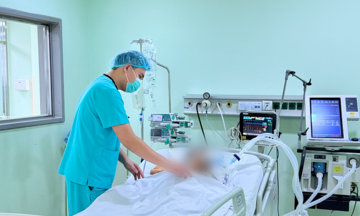
Doctor Tan Dat examining Ms. Hoa. *Photo: Tam Anh General Hospital* |
Doctor Dat stated that identifying the drug-resistant genes provided Ms. Hoa with an opportunity to use third-generation targeted therapy, which more effectively inhibits lung cancer growth. She also suffers from chronic hepatitis B; using third-generation targeted therapy helps reduce the risk of hepatitis B flare-ups compared to chemotherapy.
Explaining the mechanism of drug resistance in cancer treatment, Doctor Dat noted that cancer cells can self-modify to evade medication. For example, cancer cells may switch to alternative growth signaling pathways to continue proliferating. Some cancer cells develop new mutations, making them no longer susceptible to the effects of older drugs.
Following the third-generation medication, Ms. Hoa's health is now stable, her right chest pain has decreased, and her blood indices are normal. Lung cancer patients require regular check-ups at specialized hospitals for monitoring through routine tests and imaging diagnostics. Common signs of drug resistance include tumor enlargement and an increase in the lung cancer antigen CEA. Doctors will then order a repeat biopsy to identify mutations and resistance mechanisms, allowing for a change in treatment direction, such as switching to newer generation drugs. If the cancer transforms or no subsequent targeted therapy is available, patients may undergo chemotherapy, radiation therapy, or a combination of immunotherapy.
Doctor Tan Dat noted that with medical advancements and the advent of third-generation and fourth-generation targeted therapies, high-tech radiation therapy, and immunotherapy, patients with late-stage lung cancer have improved chances of successful treatment. Patients should adhere to their treatment protocols and maintain a positive mindset to achieve optimal treatment efficacy.
Bao Tram
*Patient's name has been changed
On 18/12 at 20h, Tam Anh General Hospital system will host an online consultation: "Effective international standard cancer treatment in Vietnam - New generation drugs - Targeted radiation therapy - Robotic surgery" broadcast on VnExpress's fanpage. The consulting doctors include: Doctor Le Tan Dat - Deputy Director of the Oncology Center; Doctor Nguyen The Hien - Head of Radiation Therapy Department, Oncology Center; and Doctor Pham Cong Khanh - Head of Liver, Biliary, Pancreatic Department, Endoscopy and Endoscopic Digestive Surgery Center. Readers can submit questions here. |