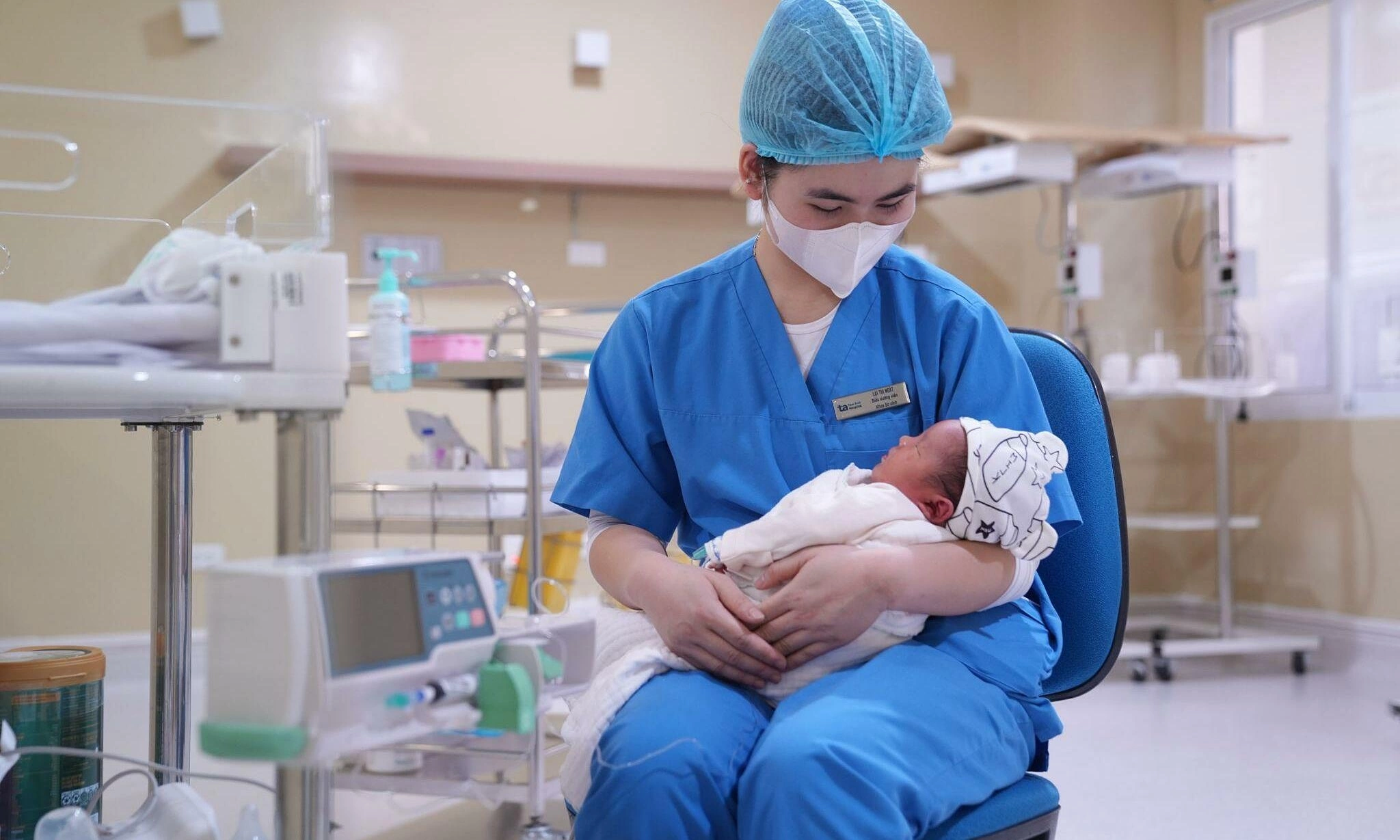
Tu Du Hospital reported the patient's pregnancy was uneventful before the complication. On 17/6, at 39 weeks and five days of gestation, the mother had a C-section due to ruptured membranes and an abnormal fetal heart rate. A healthy baby girl was born, weighing 3,1 kg.
Three days postpartum, the mother appeared to have fully recovered, eating normally, with a dry incision and no fever. However, on the afternoon of 19/6, she suddenly felt weak and fainted. The on-call team immediately initiated resuscitation for shock. The patient experienced severe respiratory failure, with blood oxygen saturation at only 86%, blood pressure dropping to 85/50 mmHg, and a rapid, irregular heart rate of about 220 times per minute. After transfer to Tu Du Hospital's intensive care unit, her condition worsened. She became cyanotic, sweated profusely, and her blood pressure plummeted to 60/40 mmHg, indicating a high risk of cardiac arrest.
A bedside echocardiogram revealed a thrombus in the patient's right heart chamber, along with right ventricular dilation and signs of pulmonary hypertension. A Doppler ultrasound of the lower limb blood vessels also detected a thrombus in the right popliteal vein. Doctors identified a very high risk of pulmonary embolism, a condition where a blood clot travels to the pulmonary artery, which can be fatal rapidly.
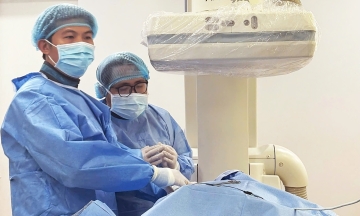
Doctors at Tu Du Hospital urgently consulted with cardiology experts from Cho Ray Hospital, agreeing to transfer the patient for specialized intervention. Immediately upon arrival at Cho Ray Hospital, the patient's hemodynamic status became unstable. The medical team performed cardiopulmonary resuscitation and initiated VA-ECMO, an extracorporeal circulation and respiratory support method typically used for critical cases.
A unique aspect of this case was the patient's management with awake ECMO, providing extracorporeal circulatory support without intubation. This approach helped limit the risk of lung damage and complications associated with mechanical ventilation.
After 48 hours of intensive treatment, the patient's hemodynamics stabilized. On 24/6, once her condition allowed, doctors surgically removed the pulmonary artery thrombus, then continued ECMO support for four more days. The mother is now almost fully recovered.
 |
Resuscitation treatment for the patient at Cho Ray Hospital. *Hospital provided* |
Pulmonary embolism is a life-threatening obstetric complication that can occur during pregnancy or the postpartum period. It often results from the physiological hypercoagulable state in pregnant women, particularly after surgery or prolonged immobility.
Warning signs include sudden shortness of breath, chest pain, a rapid heart rate, dizziness, or fainting. Early symptom recognition and emergency treatment are crucial for patient survival.
Le Phuong