Ly Quoc Bien, Head of the Department for Capacity and Future Skills Development at the Vietnam Institute of Educational Sciences, shared this information at the final round and award ceremony of a competition focused on applying and integrating the 6C strategy into primary school physical education teaching on 27/3. The initiative aims to improve physical fitness, develop motor skills, and foster students' interest in daily exercise.
The 6C strategy comprises six elements: Confidence, Contribution, Connection, Clear/Concise, Choice, and Celebration. This strategy is part of the project "Developing Physical Education in Primary Schools in Vietnam", which was launched in 2020. The project's objective is to enhance physical education across primary schools nationwide.
According to the World Health Organization (WHO) in 2024, approximately 80% of adolescents globally do not meet recommended physical activity levels, with the 11-17 age group accounting for a high proportion. Girls show lower activity levels than boys. In Vietnam, most students in this age range do not get enough exercise, with the rate for girls reaching 92%.
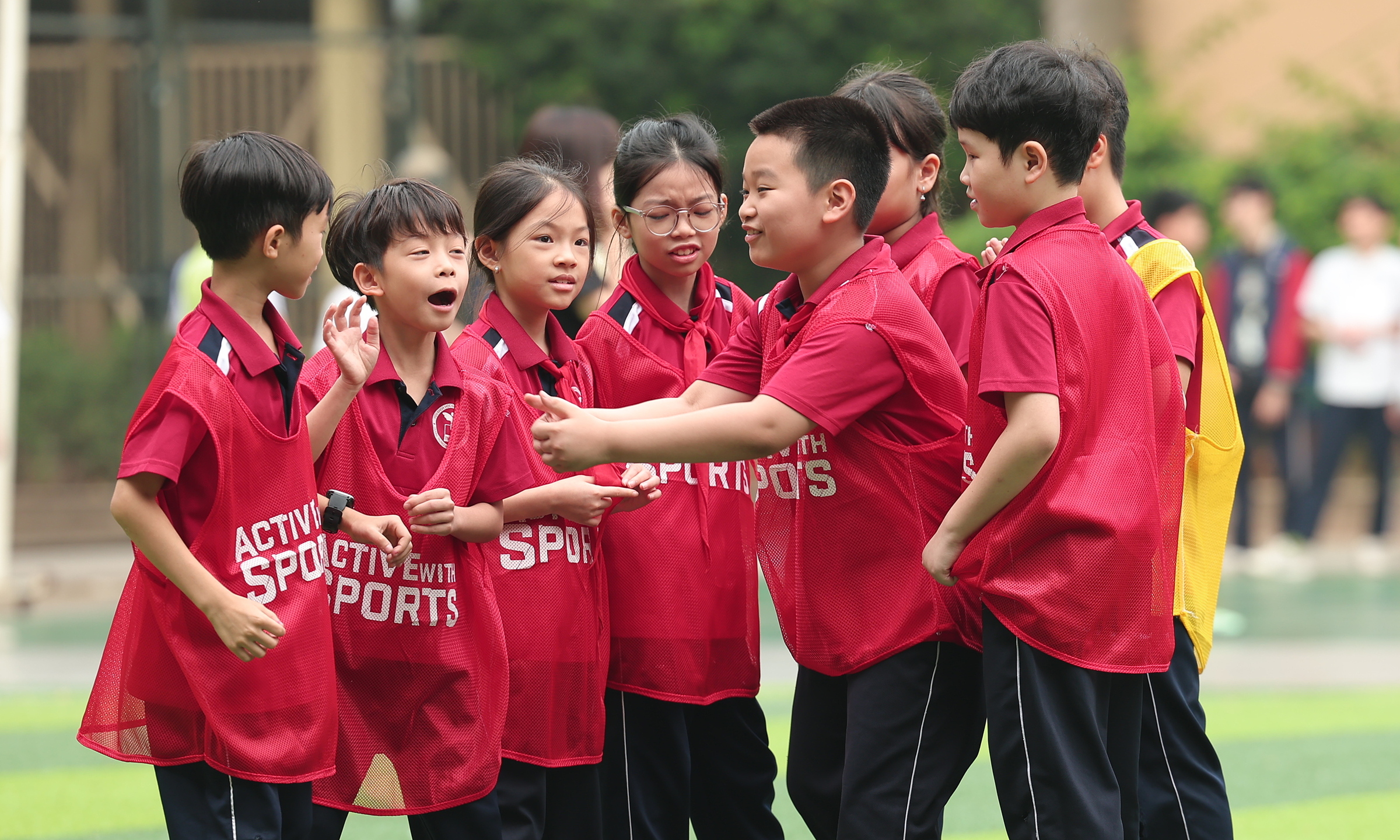 |
Primary school students participate in physical activities at school. Photo: Trung Hieu
Three factors influence stature and physical development: gene, nutrition, and physical activity. Regarding physical activity, many urban students today have limited opportunities for movement outside of school. Students often spend all day at school, returning home in the afternoon with little time for outdoor activities. Consequently, if they do not actively participate in physical activities at school, their overall exercise time remains very low.
In reality, the stature of Vietnamese people has improved, but at a relatively slow pace compared to other countries in the region. Currently, the average height for young men is 168,1 cm, while for young women it is 156,2 cm. Among Southeast Asian nations, Vietnamese height ranks behind Singapore, Malaysia, and Thailand.
Physical activity encompasses all body movements that expend energy, extending beyond sports to include activities like walking, cycling, doing housework, or climbing stairs. Maintaining regular physical activity improves cardiovascular health, bone density, concentration, and mental well-being, while also supporting weight management. Conversely, a sedentary lifestyle increases the risk of overweight, obesity, cardiovascular disease, diabetes, depression, and negatively impacts academic performance.
According to Mr. Bien, many schools have organized extracurricular clubs to boost sports activities; however, not all institutions can meet the necessary conditions regarding facilities and funding. Additionally, participation in these clubs often requires fees, which limits access for many students to suitable physical activities.
"The education sector is implementing solutions based on the 6C strategy, aiming to transition students from passive to active physical activity," Mr. Bien stated. He added that applying the 6C strategy in physical education classes through games will help all children participate confidently, thereby fostering their excitement and love for physical activity.
By Le Nga