The U.S. Centers for Disease Control and Prevention (CDC) reported on 26/3 that the new Covid-19 BA.3.2 variant, nicknamed "Cicada", has been detected in at least 25 states. This hyper-mutated variant is rapidly spreading across the US and 23 other countries. Despite its rapid transmission, experts suggest it is less likely to cause severe illness. Latest data from Stanford University’s WastewaterSCAN monitoring program also found "Cicada" in 3,7% of wastewater samples nationwide. Health experts are closely monitoring the new strain's transmission, even with current disease surveillance systems being more limited than before.
The BA.3.2 variant possesses 70-75 mutations in its spike protein. Dr. Andrew Pekosz, a microbiologist at the Johns Hopkins Bloomberg School of Public Health, noted that this significant number of mutations allows the variant to change its form entirely, making it difficult for the immune system to recognize and activate protective mechanisms. CDC research confirms the variant's ability to effectively evade antibodies, reducing the efficacy of vaccines and natural immunity. However, these structural changes also make it harder for the virus to attach and enter human cells, according to infectious disease physician Dana Mazo from NYU Langone Health System.
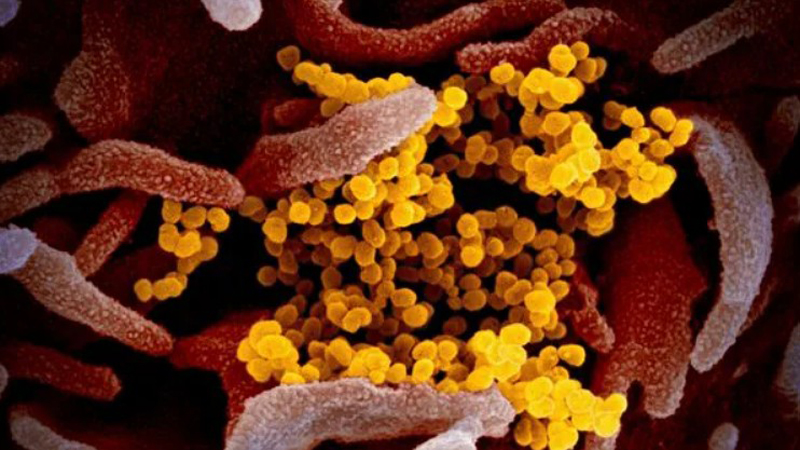 |
The new Covid-19 BA.3.2 variant is spreading across the U.S., raising concerns among experts about its mutation characteristics, transmissibility, and impact on the immune system. Photo: AP
South African health officials first detected BA.3.2 in 11/2024. It is a descendant of BA.3, an Omicron sublineage that emerged in 2022. Professor of Evolutionary Biology Ryan Gregory from the University of Guelph nicknamed the variant "Cicada". He explained that the virus silently accumulated mutations over several years, similar to cicadas hiding underground before rapidly spreading. The US recorded its first infection in 6/2025 from a passenger entering through San Francisco International Airport. The World Health Organization (WHO) classified BA.3.2 as a "variant under monitoring" in 12/2025.
Dr. Adolfo Garcia-Sastre, director of the Global Health Institute at Mount Sinai, affirmed that BA.3.2 has not increased rates of severe illness or hospitalization in countries where it is circulating. Patients infected with "Cicada" exhibit symptoms similar to previous Covid-19 strains, including cough, fever, chills, sore throat, nasal congestion, and loss of taste and smell. Most cases resolve with appropriate rest at home, and antiviral medications remain effective in treatment. Doctors advise individuals over 65 years old or those who are immunocompromised to get booster shots, test if symptoms appear, and wear masks in crowded areas.
By Binh Minh (Source: Today)