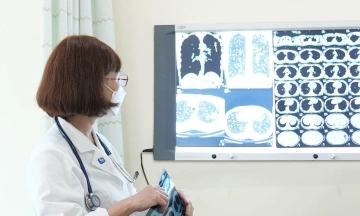
The Ho Chi Minh City People's Committee recently issued a plan for regular health check-ups for residents in 2026, with the goal of ensuring 100% of the population receives a free check-up at least once. Under this initiative, Vietnamese citizens residing in the city, encompassing both permanent and temporary residents verified through VNeID, are eligible for one free health check-up annually.
The program will be implemented in phases throughout the year, aiming to shift residents' healthcare habits from reactive treatment to proactive disease prevention and early risk detection. Each age group will receive a tailored check-up package, focusing on identifying potential health issues early, facilitating continuous health management, and integrating results into electronic health records.
Young children: growth monitoring, autism risk screening
For children under 6 years old, the check-up package focuses on monitoring comprehensive development, facilitating early detection of malnutrition, developmental disorders, and common abnormalities.
The check-up includes: taking medical, nutritional, and vaccination history; measuring weight, length, and head circumference; checking vital signs; assessing mental and motor development; and a full body examination. Children aged 16 to 30 months also undergo screening tests for autism risk.
For those aged 6 to under 18 years, examinations focus on early detection of common school-related conditions such as refractive errors, scoliosis, nutritional issues, or psychological disorders.
Beyond measuring height, weight, body mass index (BMI), and vital signs, students receive specialist examinations in internal medicine, ophthalmology, dentistry, and ear, nose, and throat to screen for common illnesses.
The check-up also includes mental health assessment, nutritional counseling, hygiene education, sex education, and adolescent reproductive health.
Adults: blood tests, liver and kidney checks, chest X-rays
For individuals aged 18 years and above, the health check-up package includes more paraclinical tests, designed for early detection of chronic diseases and associated risk factors.
Beyond reviewing medical history, measuring height, weight, BMI, and vital signs, residents will undergo specialist examinations and basic tests. These include: complete blood count, blood sugar, liver function, kidney function, urinalysis, and a frontal chest X-ray.
Working women receive gynecological examinations based on professional guidelines. They also receive counseling and screening for early detection of breast and cervical cancer.
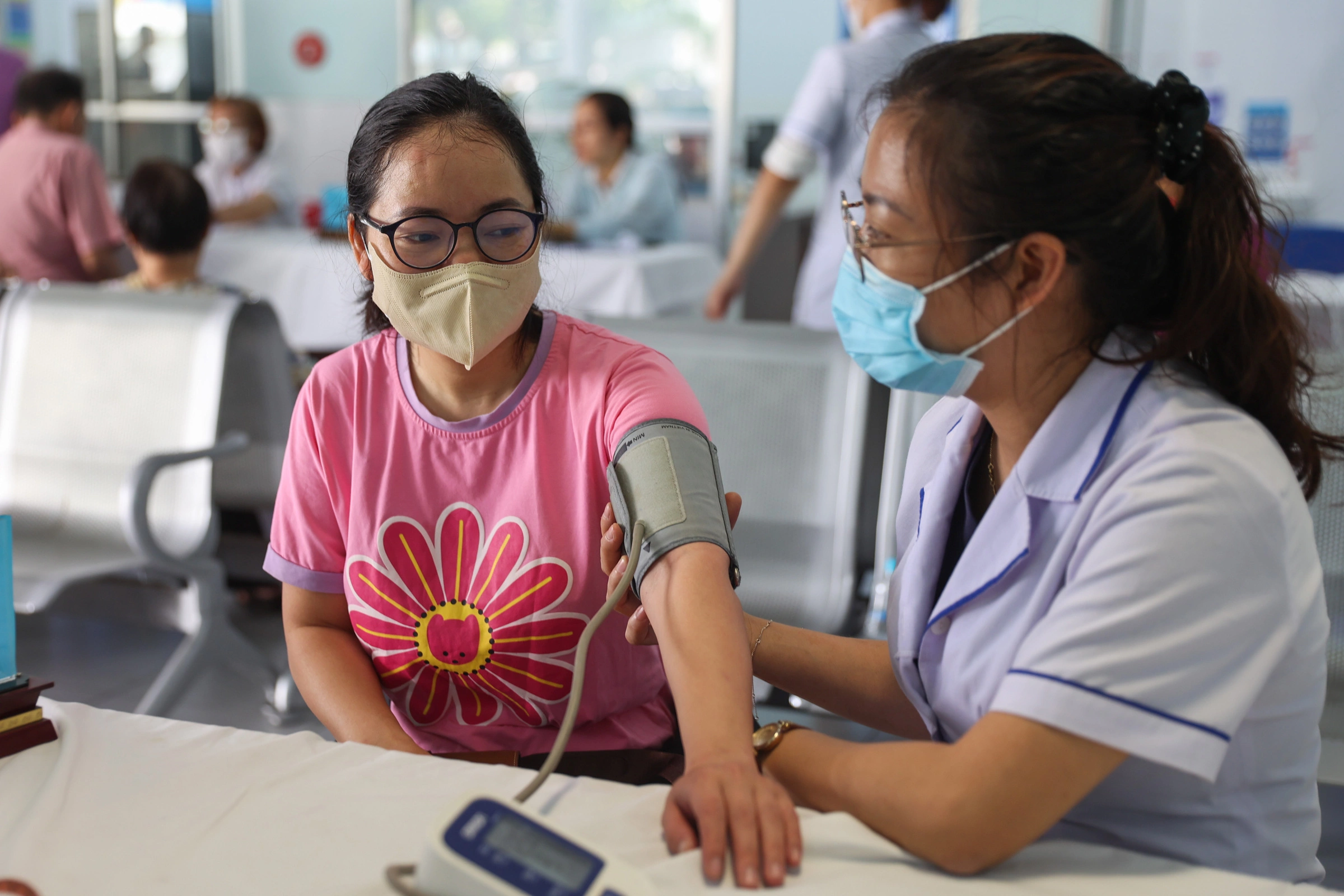 |
Residents receive free medical examinations at a ward health station in Ho Chi Minh City. *Quynh Tran* |
Convenient access, results in 24-48 hours
Residents cannot go to any hospital for a free check-up; they must visit eligible facilities announced by the Department of Health. Currently, the city has 65 hospitals, medical centers, and polyclinics participating. While local authorities will inform or invite residents to mobile check-up points in wards and communes, individuals can also proactively register at any listed facility.
When attending the check-up, residents need to bring a phone with the VNeID application logged in or a chip-enabled citizen ID card. This is required to verify information and update electronic health data.
After the check-up, results will be updated to the community health management platform and synchronized with the Ho Chi Minh City Digital Citizen application for residents' access. Should any abnormalities be detected, the medical facility will guide residents toward specialized examinations or further treatment. Results are expected within 24-48 hours.
Students, employees, and specific groups will have their check-ups organized separately through schools, businesses, or specialized healthcare systems. For self-employed individuals, homemakers, and other groups not covered by an organizing body, the city budget will cover the costs.
Le Phuong