Response:
Myopia, a common refractive error, often leads individuals to seek surgical solutions for quick vision restoration. However, for those preferring non-surgical options, temporary alternatives exist to reduce reliance on eyeglasses. A prominent method is orthokeratology (Ortho-K) using rigid contact lenses.
Ortho-K lenses are custom-designed, highly gas-permeable rigid contact lenses. Worn for 6-8 hours overnight during sleep, they are removed in the morning. While worn, the lenses gently reshape the corneal surface, allowing light to focus correctly on the retina. This temporary reshaping corrects refractive errors, enabling clear daytime vision without the need for eyeglasses or conventional contact lenses.
This method offers optimal correction for individuals with myopia under 6 diopters and astigmatism under 2,5 diopters. In some cases, higher myopia (up to 10 diopters) or mild hyperopia might be considered, depending on specific corneal structure, to achieve maximum unaided visual acuity. While commonly used to control myopia progression in children and adolescents, Ortho-K is also suitable for adults with appropriate refractive errors who wish to reduce reliance on glasses or delay refractive surgery.
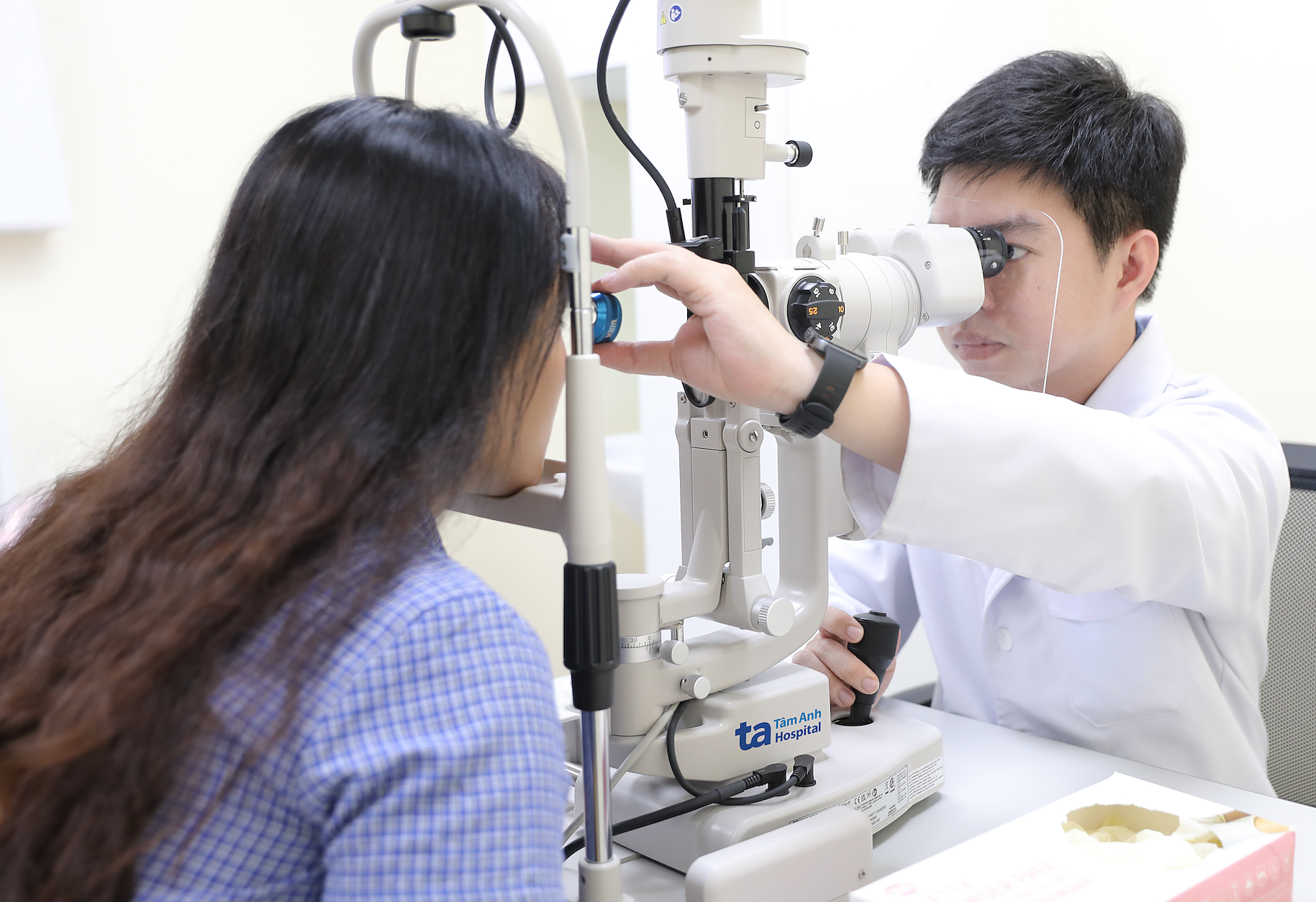 |
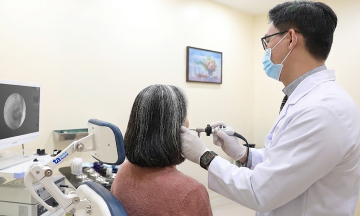
Doctor Phuc examines a woman's eyes. Illustration: Tam Anh General Hospital
Given nearly 4 diopters of myopia in both eyes, you may be a suitable candidate for Ortho-K if your cornea and ocular surface meet professional criteria. Before considering Ortho-K, a comprehensive eye examination is essential. A specialist will assess corneal suitability, ocular surface health, and rule out conditions like keratitis, blepharitis, or eye infections. Any detected abnormalities require stable treatment before lens use to ensure effective vision correction and prevent complications.
It is important to note that Ortho-K does not offer permanent myopia correction. Its effectiveness relies on consistent lens wear as directed. If use is discontinued, the cornea will gradually revert to its original shape, and the refractive error will reappear. This method demands strict hygiene, proper lens handling and storage, and regular follow-up appointments to maintain eye health and minimize the risk of corneal infections.
Beyond choosing a suitable myopia treatment, adopting healthy eye care habits is crucial. Maintain correct posture to reduce eye strain and the risk of increasing myopia. For prolonged computer use, follow the 20-20-20 rule: every 20 minutes, take a 20-second break to look at an object about 6 meters away. This reduces eye accommodation and prevents fatigue. Regular eye check-ups every 6 months also help screen for myopia-related conditions.
Master, Doctor Duong Minh Phuc
High-Tech Eye Center
Tam Anh General Hospital, TP HCM
| Readers can submit ophthalmology questions here for a doctor's response. |