Prostate cancer is a common malignancy among Vietnamese men, yet it often goes undetected due to its silent progression and minimal early symptoms. This leads to a high mortality rate, nearly double the global average (48% compared to 27%). Doctor Le Chi Hieu, deputy head of the Oncology - Radiotherapy Department at Huu Nghi Hospital, noted that this reflects the reality of late diagnosis, often when tumors have already spread. The risk of prostate cancer increases significantly with age, commonly affecting men in their 60s and 70s. As the population ages, the incidence of prostate cancer detection is also rising.
The prostate is a small gland situated below the bladder, encircling the initial section of the urethra, playing a vital role in reproduction and urine excretion. Epidemiological data indicates several risk factors for the disease: increasing age, a family history of prostate cancer, and occupational exposure to radioactive substances. Additionally, a diet high in grilled meat and animal fat also contributes to disease risk. Animal proteins cooked at high temperatures produce heterocyclic amines, while meat grilled over an open flame generates polycyclic aromatic hydrocarbons, both known carcinogens.
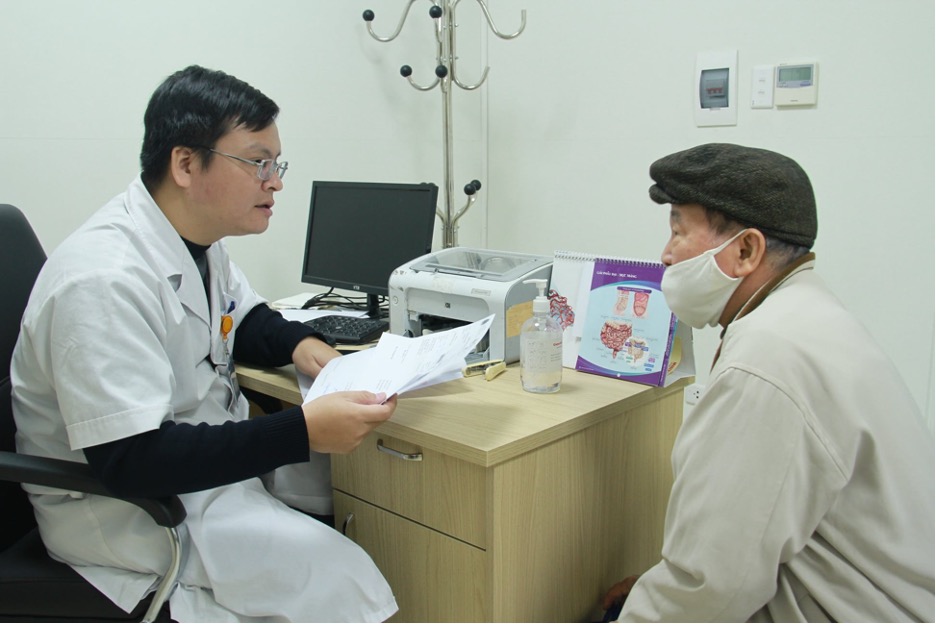 |
A doctor consults with a patient about treatment. *Photo: Hospital provided* |
Early-stage symptoms are often subtle or mimic benign prostatic hyperplasia, making diagnosis challenging. These can include frequent urination, urinary urgency, incontinence, or straining. Many individuals experiencing nocturia, painful urination, or frequent urination often attribute these issues to aging or benign prostatic hyperplasia. This misconception can delay patients from seeking medical attention, resulting in late diagnoses. As the disease advances, it can lead to complete or incomplete urinary retention, urinary tract infections, and hematuria. In advanced stages, symptoms of cancer metastasis may appear, such as urinary dysfunction due to tumor invasion of the bladder neck and ureteral orifices, and bone metastasis causing bone pain. Spinal metastasis can compress the spinal cord, resulting in limb paralysis and sphincter dysfunction. Pelvic lymph node metastasis may cause leg swelling, and seminal vesicle metastasis can lead to blood in semen.
Early detection is crucial for successful treatment. If detected in early stages (stages one, two, and three), patients can receive curative treatment with a 5-year survival rate or more. However, when cancer reaches an advanced stage (stage four), it causes severe complications, significantly reducing the success rate of treatment. Doctors advise at-risk groups to undergo timely screening, rather than waiting for symptoms to manifest before seeking medical examination. Even without a cancer diagnosis, regular check-ups should be maintained as guided by a doctor.
Thuy Quynh