Anais Legand, an expert with the WHO's Health Emergencies Program, stated at a press conference in Geneva, Switzerland, on 30/1 that the threat from Nipah virus is considered low at national, regional, and global levels.
This conclusion is based on the fact that over 190 close contacts of the two confirmed patients showed no infection or symptoms. Additionally, the two positive cases were isolated and treated in a hospital, with one patient recovering. Significantly, neither case traveled far during symptom onset, which considerably limited potential pathogen spread.
While the situation is controlled, WHO is awaiting India's publication of the virus's gene sequence to analyze potential mutations. However, Legand emphasized that there is no specific evidence of concern currently.
Following India's confirmation of infections, several Asian countries and territories proactively activated their epidemic prevention systems. Hong Kong, Malaysia, Singapore, Thailand, and Vietnam simultaneously tightened health screening procedures at air entry points to prevent external transmission. Vietnam has not reported any infections to date.
Regarding the outbreak's origin, health officials have not reached a final conclusion. Experts are examining the hypothesis that the virus spread through people consuming contaminated fresh palm sap or direct exposure in healthcare settings.
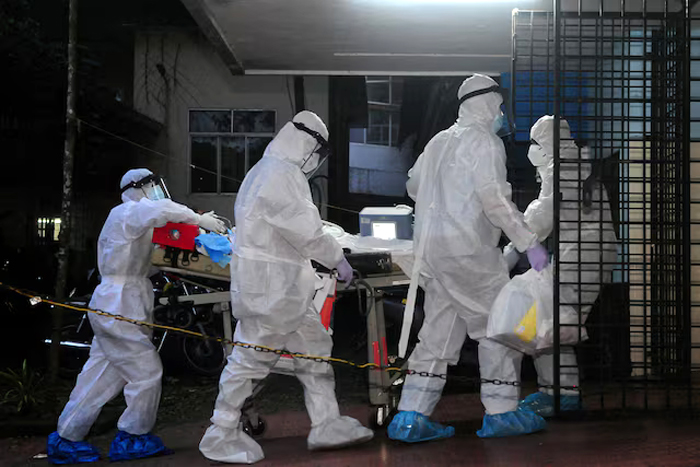 |
An individual suspected of Nipah virus infection is transferred to a special isolation unit at Kozhikode Medical College in Kozhikode district, Kerala state, southern India, on 20/7/2024. Photo: *Reuters/CK Thanseer*.
WHO classifies Nipah virus among the most dangerous, with a fatality rate up to 75%. The disease begins with flu-like symptoms, rapidly progressing to encephalitis, coma within 24-48 hours, and leaves permanent neurological complications in about 20% of survivors. Currently, there is no specific vaccine or treatment; protocols primarily involve supportive care. Experts advise people to avoid contact with bats and sick pigs; absolutely do not consume untreated fresh palm sap; and thoroughly wash and peel fruits before eating.
Binh Minh (According to Reuters)