Response:
In the treatment of head and neck cancers, including brain tumors, doctors often prescribe an immobilization mask for patients during the simulation CT scan, which prepares for radiation therapy, and during the actual radiation sessions. This mask keeps the treatment area stable, limiting movement during each session. This ensures the radiation beams are precisely delivered, reducing damage to surrounding healthy tissue and increasing treatment effectiveness and safety.
These immobilization masks are typically made from a soft thermoplastic material that becomes pliable when heated. Depending on the patient's treatment area, the mask is custom-made to fit snugly around the head or the head, neck, and shoulders.
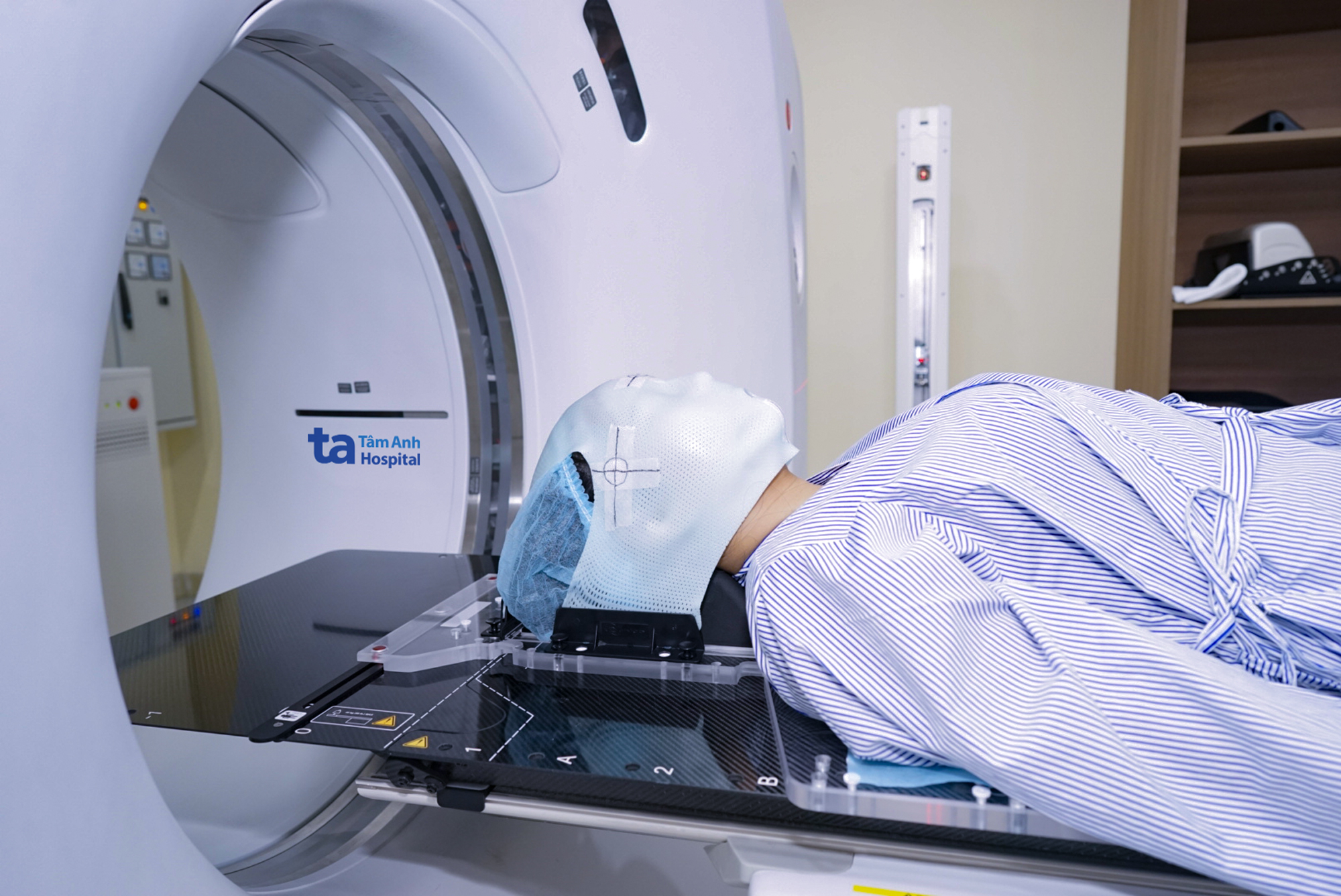 |
A mask helps immobilize the patient's treatment area during the simulation CT scan before radiation therapy. Photo: Tam Anh General Hospital
The mask-making process involves four steps, takes approximately 10-20 minutes, and is painless. Radiation therapy technicians guide and assist the patient throughout.
First, the patient lies on the mask-making table, usually in a supine position with arms at their sides. The technician adjusts the patient's head, neck, and shoulders to the correct position. Concurrently, the mask mold is heated to make it soft and easy to shape.
Next, the technician places the heated mask mold over the patient's treatment area, then stretches and adjusts it to fit snugly around the face and upper body.
Third, the mask gradually cools and forms to the patient's head and neck region within a few minutes, creating a custom-fit mold. The technician uses a marker to indicate important points for precise localization of the treatment area. The completed mask is used for the simulation CT scan and reused for all subsequent radiation therapy sessions.
Patients experiencing feelings of claustrophobia, fear, or anxiety while wearing the immobilization mask, especially for the first time, should inform the technician. They will then be guided through relaxation breathing exercises.
Before the mask is made, patients must change into a hospital gown and remove all jewelry, such as earrings and necklaces. Hair cutting is not required, but technicians may request a beard shave to ensure a tighter fit. After the mask is made, patients should maintain a consistent hairstyle and facial shape to ensure the mask continues to fit correctly.
For some individuals, a specialized mouthguard or bite block is needed during mask creation to maintain the correct position of the tongue and jaw. This device is safe and does not affect breathing. Technicians provide specific instructions if a patient requires its use.
Master of Science, Doctor Phan Thi Hong Dang
Department of Radiation Therapy, Oncology Center
Tam Anh General Hospital, Ho Chi Minh City
| Readers can submit questions about cancer here for doctor consultation. |