Eng English
China 中国人

Eng English
China 中国人
  • News
  • World
  • Business
  • Entertainment
  • Sports
  • Law
  • Education
  • Health
  • Lifestyle
  • Travel
  • Science
  • Digital
  • Automobiles
  • Trở lại Thể thao
  • Health
Friday, 1/5/2026 | 04:57 GMT+7

Why scuba diving can cause eardrum perforation

The significant and sudden pressure difference between the middle ear and the external environment during scuba diving can overstretch the eardrum, potentially leading to perforation or rupture.

The middle ear is an air-filled cavity located behind the eardrum, which lacks the ability to self-regulate pressure. The eardrum itself is a thin membrane that separates the outer ear from the middle ear.

Doctor Nguyen Duc Ngoc, a senior specialist at the Ear, Nose, and Throat Center, Tam Anh General Hospital TP HCM, explains that during scuba diving, if middle ear pressure is not equalized promptly, the stronger external pressure pushes inward, causing the eardrum to stretch excessively and easily rupture or perforate. The deeper one dives, the greater the surrounding pressure on the body.

Symptoms of eardrum perforation often include pain, ringing in the ears, earache, hearing loss, or discharge and bleeding from the ear. If water enters through the perforation, it can lead to middle ear infection and acute vertigo due to irritation of the vestibular system. Untreated, this condition can cause chronic middle ear infection with perforation or mastoiditis.

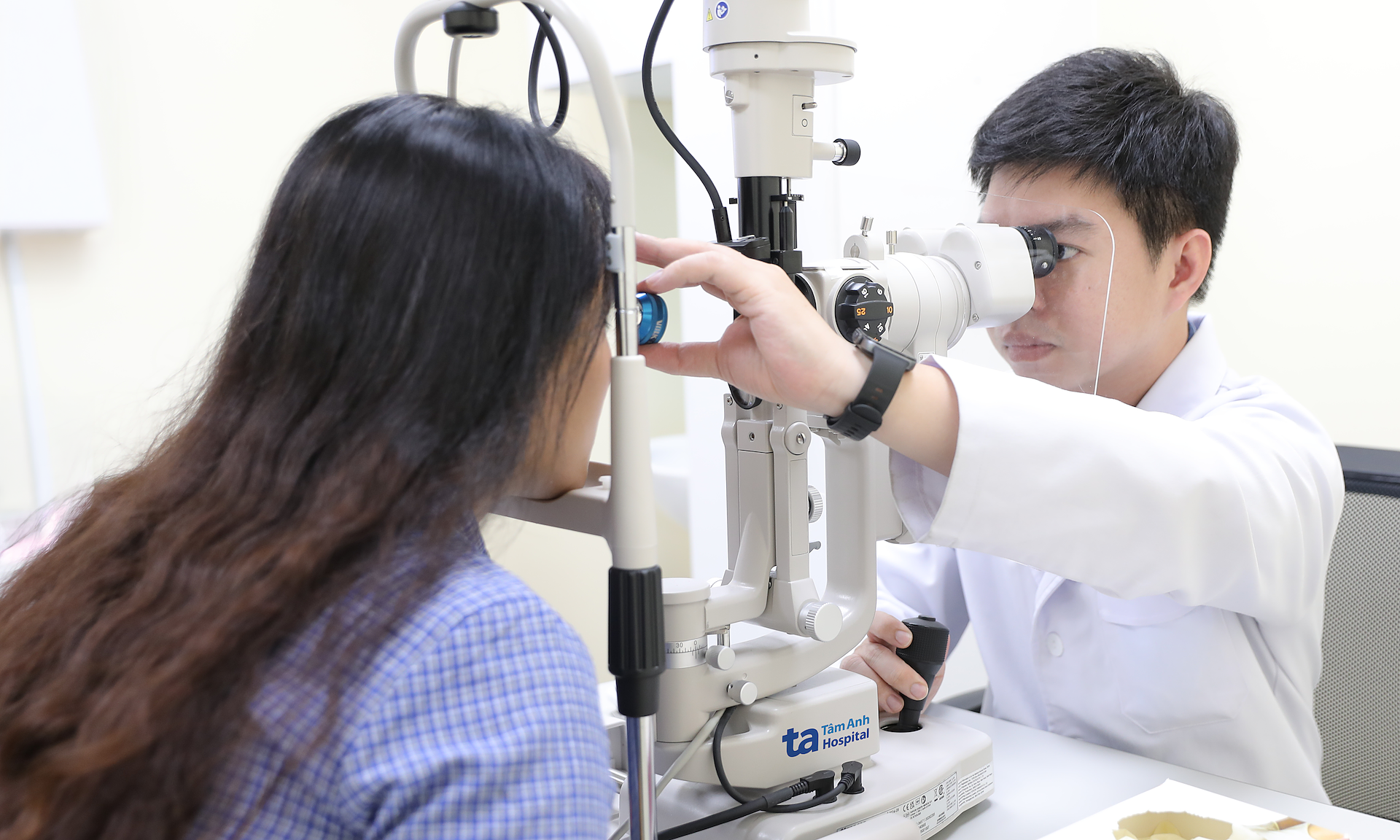
Doctor Ngoc performing an ear endoscopy on a patient. *Photo: Tam Anh General Hospital*

A doctor uses an endoscope to assess the perforation, prescribes medication, and supports the healing process of the eardrum. Small perforations can heal on their own with careful management following medical advice or internal medicine treatment. Patients must keep their ears dry, prevent water from entering, avoid swimming or sea bathing during this period, and limit contact with individuals suffering from respiratory infections.

If the eardrum does not heal naturally, or if perforation is accompanied by a middle ear infection, doctors will stabilize the infection before recommending endoscopic eardrum repair surgery.

Doctor Ngoc advises divers to prevent barotrauma by gradually descending, avoiding sudden changes, to maintain pressure balance between the middle ear and the external environment.

During a dive, actively equalize pressure using the Valsalva maneuver: pinch your nose, close your mouth, and gently breathe out through your nose to introduce air into the middle ear. If you experience ear pain, stop or ascend slightly to equalize pressure. Individuals with colds, stuffy noses, sinusitis, or ear infections should avoid scuba diving, as these conditions can block the Eustachian tube, making pressure equalization difficult and significantly increasing the risk of eardrum perforation.

If gentle pressure equalization does not alleviate ear pain, ringing in the ears, or fullness, stop diving. A "pop" sound in the ear indicates an eardrum perforation, requiring immediate cessation of diving. After scuba diving, if you experience ear pain, ringing in the ears, hearing loss, or ear discharge, seek prompt examination, assessment, and treatment from an ENT specialist.

Uyen Trinh

Readers can submit questions about ear, nose, and throat conditions here for doctors to answer.
By VnExpress: https://vnexpress.net/vi-sao-lan-bien-co-the-gay-thung-mang-nhi-5068506.html
Tags: ear condition eardrum perforation

News in the same category

Doctor reveals 'golden' habits for a longer life

Doctor reveals 'golden' habits for a longer life

The secret to longevity lies in combining high-intensity exercise, prioritizing posterior chain muscles, managing stress, achieving deep sleep, maintaining healthy nutrition, and fostering social connections.

What happens if you drink cucumber water regularly?

What happens if you drink cucumber water regularly?

Cucumber water hydrates, aids weight loss, provides antioxidants, and may reduce cancer risk.

Doctor advises on protecting knee joints during holiday trekking

Doctor advises on protecting knee joints during holiday trekking

Utilize protective gear, move correctly, and avoid overexertion to safeguard knee joints while trekking.

Five travel habits that harm the urinary tract

Five travel habits that harm the urinary tract

Holding urine, inadequate hydration, and prolonged sitting during travel are factors that increase the risk of infection, leading to urinary tract inflammation.

Is it safe to take fever medication during pregnancy?

Is it safe to take fever medication during pregnancy?

I am 13 weeks pregnant and have a fever of 38.5 degrees Celsius. Can I take fever medication, and will it affect my baby's development? (Thao, TP HCM)

Signs of heart failure often mistaken for middle-aged fatigue

Signs of heart failure often mistaken for middle-aged fatigue

Fatigue during exertion, shortness of breath, and mild leg swelling are often attributed to aging, but these could be early indicators of heart failure.

How to snack without gaining weight?

How to snack without gaining weight?

I am trying to lose weight but often feel hungry between meals. Can I snack, and what should I choose? (Duc Huy, 28 years old)

Doctor explains how to differentiate between stroke and heatstroke

Doctor explains how to differentiate between stroke and heatstroke

Heatstroke occurs during strenuous activity in hot weather with profuse sweating, while a stroke has a sudden onset and does not cause sweating.

Bloating with diarrhea: what does it signal?

Bloating with diarrhea: what does it signal?

Bloating accompanied by diarrhea can indicate gastroenteritis, irritable bowel syndrome, or a malabsorption disorder.

Severe coughing causes eye capillary rupture

Severe coughing causes eye capillary rupture

Duyen, 33, developed bloodshot eyes after a five-minute severe coughing fit; doctors diagnosed a ruptured capillary causing subconjunctival hemorrhage in her right eye.

Eng English
China 中国人
  • News
  • World
  • Business
  • Entertainment
  • Sports
  • Law
  • Education
  • Health
  • Lifestyle
  • Travel
  • Science
  • Digital
  • Automobiles
FPT Tower, 10 Pham Van Bach Street, Dich Vong Ward,
Cau Giay District, Hanoi, Vietnam
Email: contacts@vnportal.net
Tel: 028 7300 9999 - Ext 8556
Advertise with us: 090 293 9644
Register
© Copyright 2026 vnnow.net. All rights reserved.
Terms of use Privacy policy Cookies