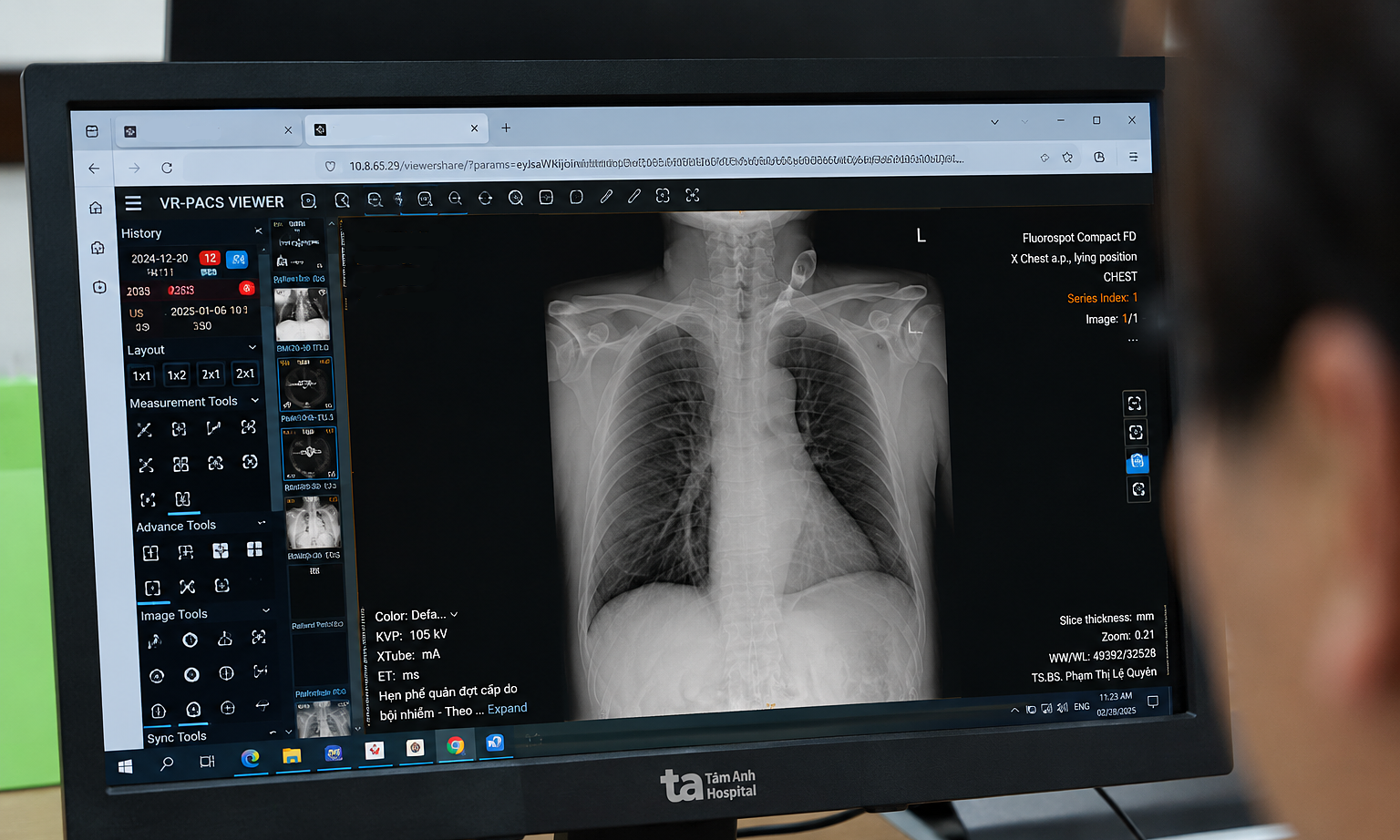
The patient has now been discharged and returned to work, maintaining outpatient follow-up after treatment at the Institute of Mental Health, Bach Mai Hospital. Previously, she was admitted in a state of physical and mental exhaustion. Doctors diagnosed her with paranoid schizophrenia, accompanied by a severe hallucinatory syndrome, notably refractory auditory hallucinations.
Her family recounted that this delusional condition had lasted for 5 years. Initially, the patient heard vague whispers. Later, the voices became more frequent, constantly praising, criticizing, threatening, and commanding actions. Believing she was affected by spiritual factors, her family sought rituals, but her symptoms worsened, forcing her to quit her job. She had previously used antipsychotic medication from local health facilities, but after experiencing improvement, she arbitrarily stopped treatment, leading to multiple, more severe relapses.
 |
A patient undergoing treatment at the Institute of Mental Health. Photo: Le Nga |
Doctor Nguyen Thi Hoa, Deputy Head of the Clinical Psychology Department, explained that about 60-80% of schizophrenia patients experience hearing voices in their heads. Many cases cannot control symptoms even when taking at least two types of medication. To definitively resolve this condition, the medical team prescribed repetitive transcranial magnetic stimulation (TMS) combined with medication adjustment. This non-invasive technique uses high-intensity magnetic fields to act on the brain regions that process language and sound, helping to correct abnormal activities.
Thanks to the individualized treatment protocol, the patient gradually stopped experiencing auditory hallucinations, stabilized her emotions, and significantly improved her sleep quality and appetite. Associate Professor, Doctor Nguyen Van Tuan, Director of the Institute of Mental Health, evaluated the TMS technique as highly beneficial for drug-resistant cases. Many international studies have proven that the combination of TMS and medication helps control symptoms much more effectively than taking medication alone. However, Doctor Tuan warned that this method does not completely replace therapeutic medication. Only specialist doctors have the authority to prescribe it, and professionals must carefully assess the risks if the patient has a history of epilepsy or has metal implants in the skull.
Le Nga