At the 4/6 conference "3D printing technology: from research to personalized clinical applications", doctor Nguyen Thi Ngoc My, representing the Tissue Engineering and Biomedical Materials Research Group, stated that following the development trend of 3D printing technology, 3D bioprinting uses "bioink" (a combination of living cells) to create biological tissue similar to the body's natural tissue structure. The research group utilized components such as gelatin, alginate, collagen, tissue proteins, and skin cells to construct skin tissue in the laboratory.
Skin tissue, the body's largest organ, not only performs protective and physiological functions but also holds aesthetic importance. Therefore, the goal of bioprinting technology extends beyond wound healing; it aims to regenerate skin structure, minimizing scar formation.
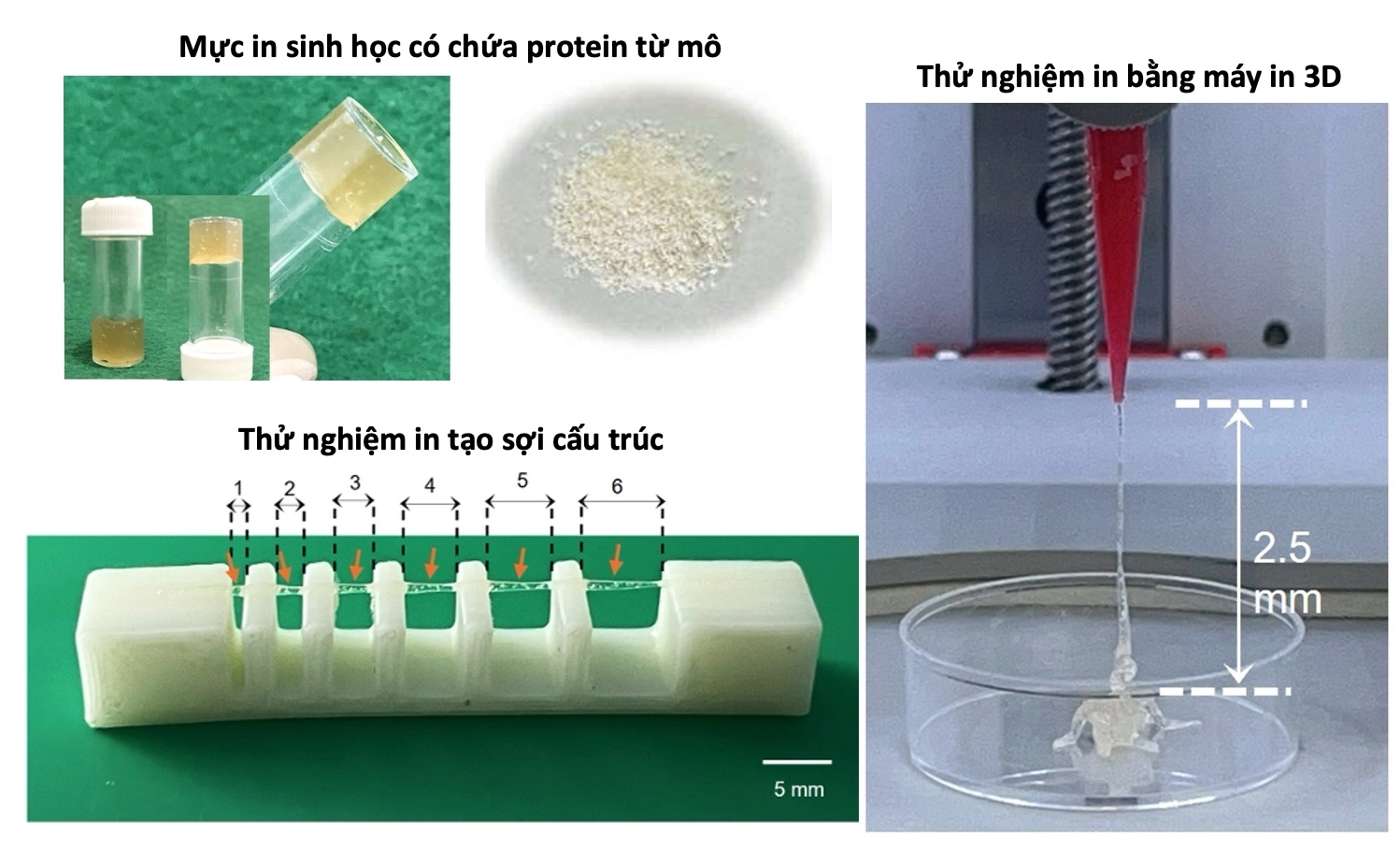 |
The process of printing skin tissue using 3D bioprinting technology. *Photo courtesy of the research group*. |
According to doctor My, bioprinted skin tissue can serve purposes: researching skin physiology to better understand skin diseases, testing drugs, cosmetics, and biomedical materials, and contributing to a reduction in animal testing. Critically, this technology is expected to aid in treating burns, difficult-to-heal wounds, or regenerating skin tissue for patients.
The research direction began in 2019 with a first-generation bioprinting system, and since then, many of the group's studies have been published in reputable international scientific journals. The trend in 3D bioprinting is advancing towards personalized medicine. In the future, doctors could use a patient's own stem cells and excised tissue to create bioink, then use printers to directly apply skin tissue onto open wounds. This accelerates the wound healing process, limits contraction, and enables superior epidermal regeneration.
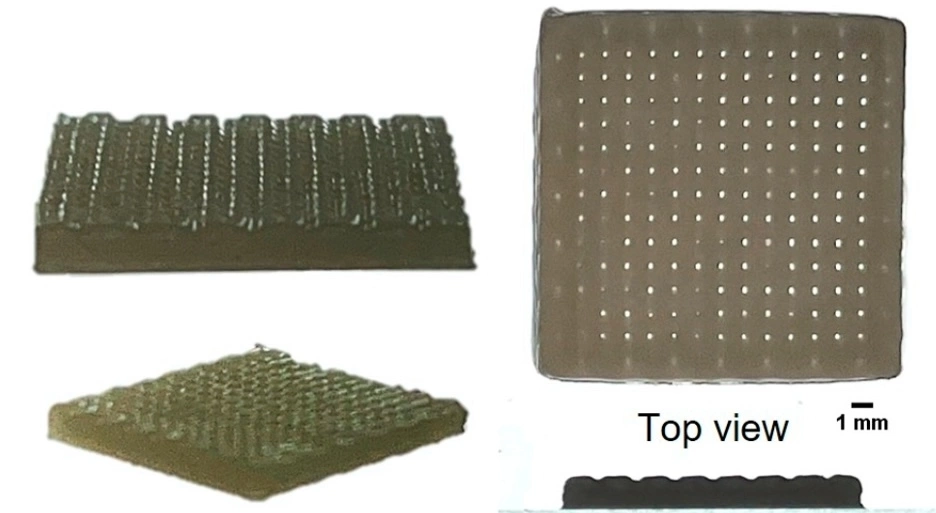 |
Bioprinted skin tissue product from the laboratory. *Photo courtesy of the research group*. |
According to professor doctor Tran Le Bao Ha, head of the conference organizing committee and head of the Tissue Engineering and Biomedical Materials Laboratory at the University of Science, Vietnam National University Ho Chi Minh City, this technology still requires further research before widespread human application.
"To develop a final product that serves public health, we critically need support and collaboration from agencies, partner organizations, and medical professionals", said professor Ha.
Video: 3D bioprinting technology used to print skin tissue
Le Phuong