Upon admission, Mr. Duan, 77, presented with severe respiratory distress, including shortness of breath, persistent coughing, and hoarseness. Dr. Pham Thi Le Quyen, Deputy Head of the Respiratory Department at Tam Anh Hanoi General Hospital, noted widespread wheezing and rhonchi in his lungs, indicating severe airway constriction typical of bronchial asthma. Despite receiving non-invasive ventilation and bronchodilator infusions, his symptoms improved slowly, prompting further investigation.
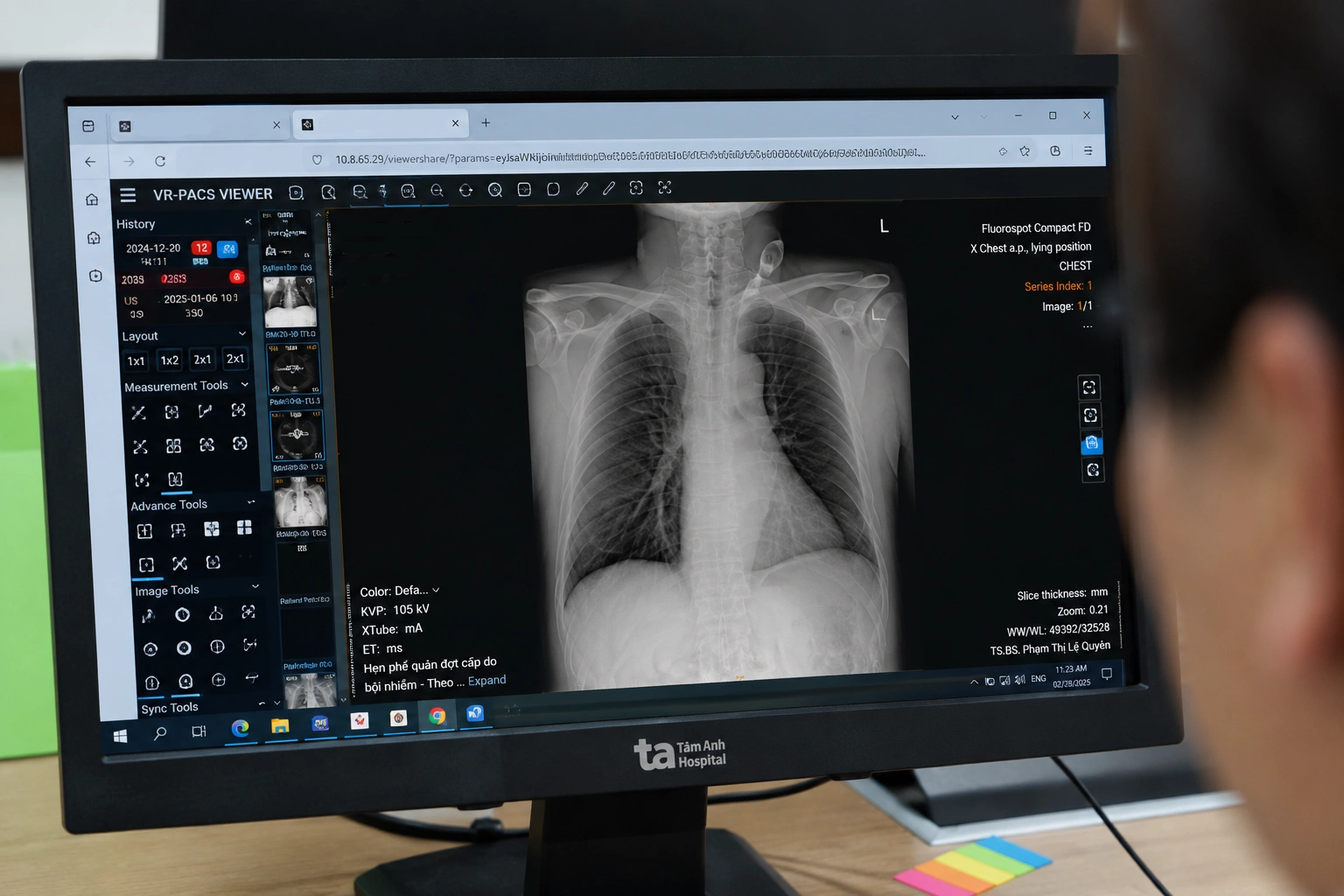 |
Dr. Quyen reviewing the patient's X-ray film. Photo: Tam Anh General Hospital. |
Unconvinced by the lack of progress, doctors initiated further specialized investigations. An endoscopy revealed edematous and ulcerated vocal cords covered with thick, white pseudomembranous plaques. These lesions extended into the trachea and main bronchi, where the airway mucosa was red, congested, and diffusely inflamed. Dr. Quyen then suspected a respiratory fungal infection.
Microbiological tests of bronchial fluid confirmed the diagnosis: invasive pulmonary aspergillosis. This fungal infection was the underlying cause of Mr. Duan's prolonged shortness of breath and respiratory failure.
Mr. Duan received specific antifungal medication alongside continued asthma management. His respiratory condition gradually improved, shortness of breath lessened, and his health stabilized.
Dr. Quyen emphasized that prolonged shortness of breath in asthma patients is not always due to worsening asthma. She advised that if symptoms persist or if unusual signs develop, such as chronic hoarseness, persistent cough, or progressive lung lesions on imaging, other causes, including invasive aspergillus infection, must be considered.
Invasive pulmonary aspergillosis can progress rapidly, leading to severe respiratory failure. However, early detection and appropriate antifungal treatment significantly improve recovery chances and reduce the risk of dangerous complications.
Hoang Duong
*Patient's name has been changed
| Readers can send questions about respiratory diseases here for doctors to answer |