On 25/11, during a National Assembly discussion on the revised Law on Drug Prevention and Control, the Ministry of Public Security (MPS) introduced an electronic monitoring device. This device is designed for individuals who illegally use drugs, those addicted, and those after rehabilitation.
Minister of Public Security Luong Tam Quang stated that the sector has been "very concerned" about post-drug rehabilitation management. Consequently, the MPS developed a device for both monitoring and health tracking. While this electronic monitoring measure will not be "mass-applied," approximately 100,000 individuals will be subject to it once the revised Law on Drug Prevention and Control takes effect.
Currently, there are about 300,000 individuals nationwide who illegally use drugs, are addicted to drugs, or are under post-rehabilitation management.
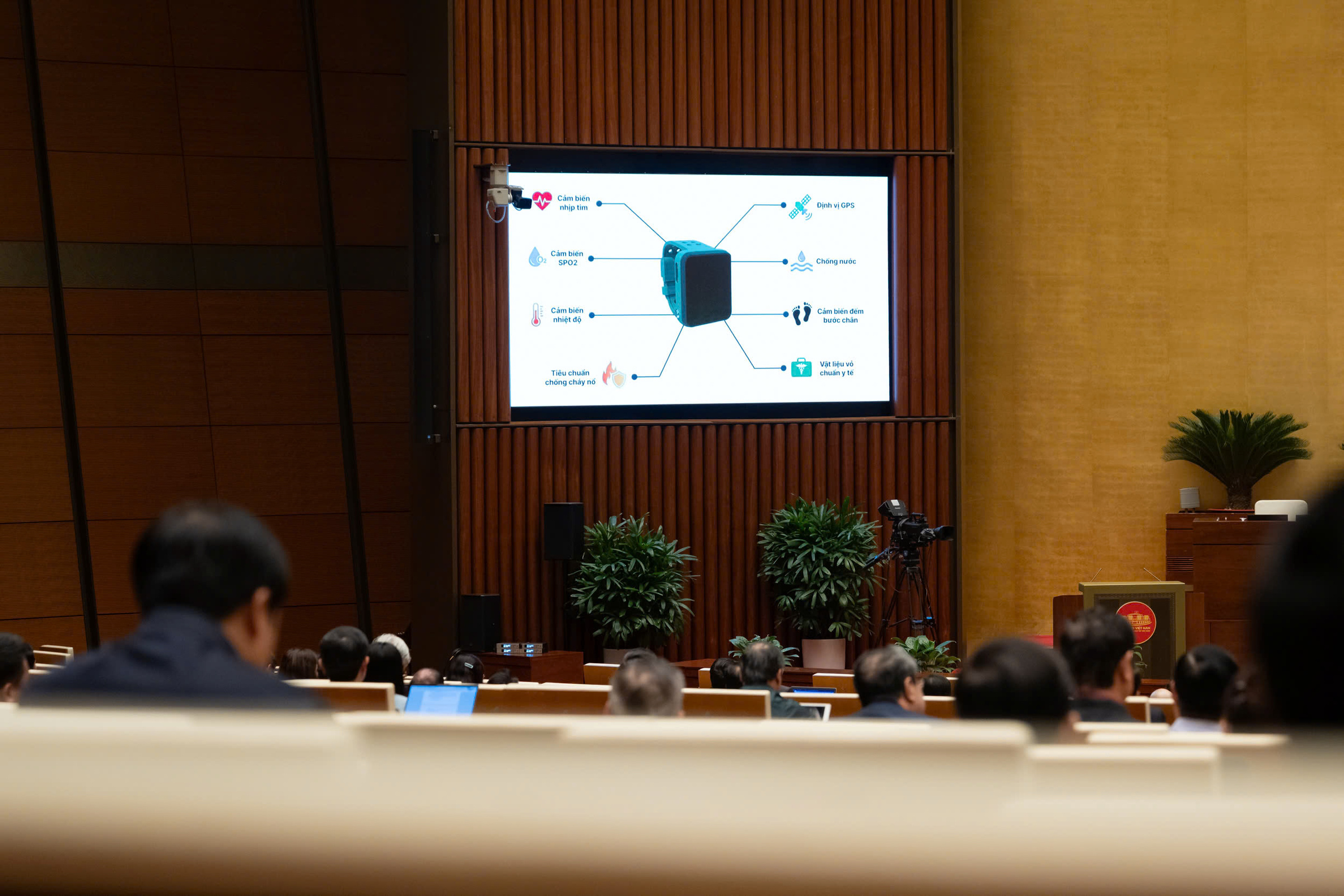 |
A video showcasing the wristband for managing rehabilitated individuals was shown before the National Assembly. *Hoang Phong* |
According to the MPS, the smart wristband features technology and data security entirely developed by Vietnamese engineers. The compact device integrates modern bio-sensors, global positioning system (GPS), and offers resistance against tampering, explosions, water, and impacts.
The 24/7 real-time location monitoring system enables authorities to manage the residency and movements of individuals, particularly those without stable housing.
Any actions, such as leaving one's residence or traveling to known drug hotspots, trigger immediate alerts to law enforcement. Furthermore, data analysis helps authorities detect unusual gatherings early and pinpoint suspicious locations prone to becoming sites for organizing, harboring, or illegally using drugs.
Data from the wristband also supports a compliance scoring feature, which helps classify individuals in rehabilitation and effectively reduces the burden of manual monitoring on local officers. Authorities can detect illegal drug use through artificial intelligence, which analyzes the wearer's stress levels and psychological state. The system can automatically detect abnormal signs, such as overdose, and immediately alert relevant agencies. The psychological and humane aspects are also a key focus.
 |
Minister of Public Security Luong Tam Quang. *Hoang Phong* |
The MPS believes the wristband's modern design will make wearers feel comfortable and confident in social interactions, at work, and during community activities. A smart dual-charging mechanism allows users to charge while working, even in manual labor or environments exposed to water and dust. This ensures continuous, uninterrupted monitoring and data collection.
Through a smartphone application, wearers can monitor their own health indicators, fostering positive motivation to lead constructive lives, comply with legal regulations, and contribute to society.
During an earlier group discussion, delegate Le Nhat Thanh (Hanoi delegation) highlighted that many individuals undergoing medication-assisted treatment or post-rehabilitation management frequently change residences, especially those without stable housing. Lax manual monitoring makes them prone to drug relapse or legal violations, as current manual methods cannot provide 24-hour control.
Thanh argued that the current management mechanisms for this stage are incomplete. He suggested adding electronic monitoring regulations for individuals undergoing rehabilitation at home or in the community, those receiving medication-assisted treatment, and those under post-rehabilitation management. He cited examples of countries using electronic monitoring devices, such as wristbands or ankle monitors, for individuals released on bail during investigations to track their location. This approach helps control movement, reduces the burden on detention centers, and moves towards a community-based management model.
Son Ha